
Introduction to Torque Control and Overload Protection Functions of Electric Valve Actuators
author: ATHENA GROUP
2026-10-08
In complex working conditions such as petroleum, chemical industry, electric power and water supply, the operational accuracy, safety and stability of actuators directly determine the operating efficiency of the entire pipeline system. Among them, electric valve actuator torque control and overload protection are two core safety functions of Valen Tech electric valve actuators. They can precisely control the opening‑closing force of valves and effectively avoid risks of overload damage, thus providing reliable guarantee for the stable operation of industrial pipelines.
I. Electric Valve Actuator Torque Control: Core Support for Precise Valve Opening and Closing
Electric valve actuator torque control relies on a closed‑loop mechanism of torque sensing and signal feedback. It collects real‑time torque of the output shaft, converts it into electric signals and sends the signals to the control module to dynamically adjust the operating status of the motor.
- The torque threshold can be set via a remote controller or commissioning software, ranging from 40% to 100% of the rated torque. When the torque reaches the preset value, the actuator automatically shuts down or reverses direction.
- Multi‑turn actuators: Torque is measured directly through worm displacement, free from interference from voltage and temperature fluctuations, delivering higher accuracy for this control function.
- Part‑turn actuators: Torque is indirectly calculated based on motor current to reduce detection errors caused by voltage and speed variations in electric valve actuator torque control.
Proper torque setting can not only ensure proper valve sealing, but also prevent damage to valve stems and seats caused by excessive torque squeezing, and mitigate mechanical wear under normal working conditions.
II. Overload Protection: Protective Barrier for Safe Equipment Operation
Overload protection adopts closed‑loop protection of real‑time monitoring‑abnormality judgment‑emergency shutdown. It continuously monitors motor conditions by means of current and temperature sensors.
- Trigger conditions: When the current reaches 1.1‑1.5 times the rated value, or the winding temperature exceeds the limit value, the system immediately cuts off power and outputs a fault alarm.
- Valve jam protection: If an opening or closing command is received yet the valve fails to move, power is cut off within a time limit to prevent motor burnout from idling.
- Multi‑layer combined protection: Stator thermostats, thermal relays and fuses work in coordination to cope with faults such as over‑temperature, locked‑rotor condition and short‑circuit respectively.
As an emergency backup protection measure, this function protects gears, valve stems and motors from permanent damage under sudden working conditions such as medium jamming, pressure surges and rust‑induced sticking, and cuts downtime and maintenance costs. It acts as an important safety complement to electric valve actuator torque control.
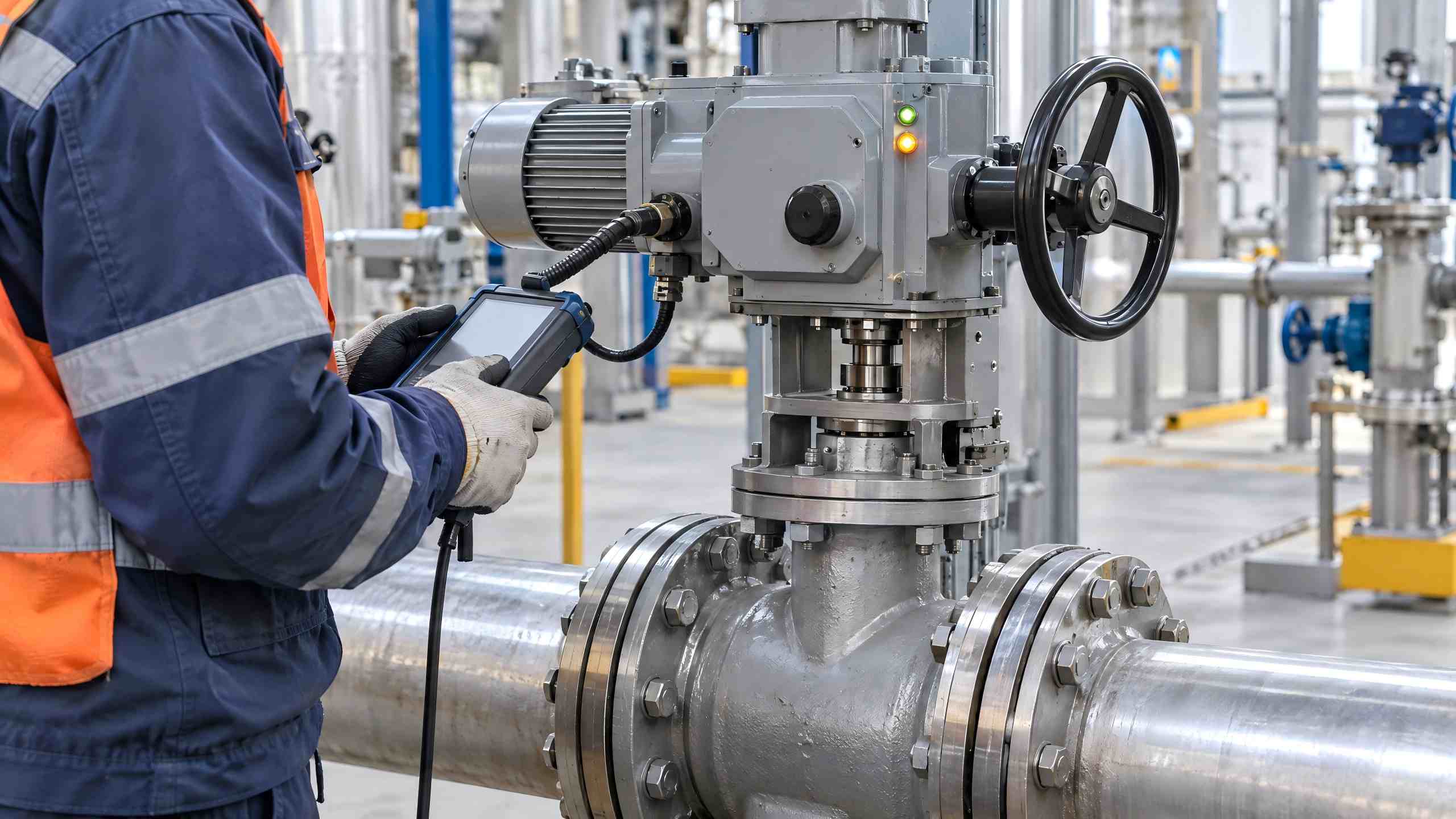
III. Synergistic Effect of Torque Control and Overload Protection
Complementing each other, electric valve actuator torque control and overload protection form a complete safety control system:
1. Torque control (active regulation): Under normal working conditions, reasonable torque is preset to precisely control opening‑closing force and lower the probability of overload from the source.
2. Overload protection (passive protection): It rapidly shuts down equipment to stop losses during sudden abnormalities, serving as the safety line of defence upon torque control failure.
2. Overload protection (passive protection): It rapidly shuts down equipment to stop losses during sudden abnormalities, serving as the safety line of defence upon torque control failure.
Their synergy can extend actuator service life, lower failure rates, reduce unplanned shutdowns, and ensure continuous and safe production of industrial pipelines.
Summary
Electric valve actuator torque control and overload protection are essential core functions of electric actuators for industrial valves, as well as key safety and stability advantages of Valen Tech products. Accurate torque regulation guarantees valve operating accuracy, while comprehensive overload protection builds a solid safety line of defence for equipment. Reasonable parameter setting combined with regular maintenance according to on‑site working conditions can maximise actuator reliability for various industrial fluid control scenarios.
Valve Actuator Wiring
Detailed Explanation of the Differences Between On‑Off and Modulating Electric Actuators
Related Article
Learn about electric actuator response speed, internal and external influencing factors and key selection points, to select suitable actuators for valve automation projects and ensure efficient and stable system operation.
Response Speed of Switch‑Type Electric Actuator
Valve Actuator Wiring describes wiring, commissioning and troubleshooting for electric valve actuators, guiding technicians to adopt standard wiring for stable industrial control.
Valve Actuator Wiring

This article compares on‑off and modulating electric actuators, covering their functional differences, control logic and application conditions to provide practical actuator selection guidance.
Detailed Explanation of the Differences Between On‑Off and Modulating Electric Actuators
This guide covers common electric‑actuator on‑site commissioning faults, causes & practical fixes. It delivers practical actuator commissioning troubleshooting for power, chemical and water‑treatment industry engineers.
Actuator Commissioning Troubleshooting: Causes and Complete Solutions