Actuator Commissioning Troubleshooting: Causes and Complete Solutions
author: ATHENA GROUP
2026-09-23
As a premium brand under the Athena Group, ValenTech electric actuators leverage proven European manufacturing craftsmanship and over a decade of mass‑production experience. Our products are exported to hundreds of countries and regions worldwide, and are widely applied in power generation, chemical, water treatment, oil‑gas and other industries. Despite reliable product quality, on‑site commissioning is frequently affected by factors including power supply, wiring, signals, installation and software parameters. Effective actuator commissioning troubleshooting helps resolve valve malfunction and automatic control failure caused by these factors. This document compiles high‑frequency on‑site commissioning problems, clearly sorts out fault causes and practical solutions, and assists engineers in actuator commissioning troubleshooting and efficient commissioning completion.

I. Power Supply Abnormalities
Unstable power supply, mismatched voltage and incorrect wiring are the most fundamental and frequently‑occurring faults during commissioning. Excessively high or low on‑site voltage, frequent voltage fluctuations, or phase loss in three‑phase power supply may cause actuator failure to start, motor stalling and automatic shutdown. Furthermore, phase‑neutral reversal, loose terminal connections and aged or damaged cables can prevent equipment operation; in severe cases, the power supply and control board may be burnt out.
Solutions: Use a multimeter prior to power‑on to verify that voltage and phase sequence comply with rated equipment parameters. Install voltage stabilizers for working conditions with significant voltage fluctuations. Perform construction strictly in accordance with wiring diagrams, fasten terminals, replace aged cables, confirm full reset of on‑site emergency‑stop push‑buttons and release equipment lock‑out status. These basic checks form the first step of actuator commissioning troubleshooting.
II. Mismatched Control Signals and Interference Faults
Electric actuators receive remote commands via control signals; signal‑related issues constitute the primary cause of failed remote commissioning. Different actuators support either 4‑20 mA analogue or digital on‑off signals. Mismatch with control‑system signal types leads to invalid commands and no equipment response. Meanwhile, numerous frequency converters and high‑voltage equipment on industrial sites produce electromagnetic interference, which may distort signals and trigger unintended actuator movement or loss of remote control.
Solutions: Prior to commissioning, confirm consistency between equipment signal mode and DCS output parameters, and unify communication protocols and baud rates. Deploy shielded cables for wiring, keep cables away from high‑voltage interference zones, install signal amplifiers for weak signals, and switch the equipment to remote‑controllable mode. Signal inspection is an essential part of **actuator commissioning troubleshooting**.
III. Mechanical Installation and Operating Resistance Faults
Mis‑alignment during installation, shaft mis‑coupling and loose fixing directly result in incomplete valve opening/closing, equipment shaking and abnormal noise. Valve fouling, corrosion, foreign‑object jamming, together with insufficient lubrication of actuator transmission assemblies and gear wear increase operating load substantially, frequently trigger torque‑overload protection and cause mid‑run shutdowns.
Solutions: Re‑calibrate coaxial alignment between actuator and valve, fasten mounting bolts and eliminate equipment resonance. Manually stroke the valve prior to commissioning to identify jamming and clear foreign debris; apply lubrication to valve components and transmission structures. Fine‑tune torque protection thresholds appropriately based on actual operating conditions. Always check mechanical conditions when carrying out actuator commissioning troubleshooting.
IV. Inaccurate Feedback Signals and Calibration Failure

Typical feedback‑fault manifestations include inconsistency between actual valve status and DCS display, deviation in opening data, and reversed open‑closed status. Root causes mainly cover reversed feedback wiring, aged acquisition modules and failure to re‑calibrate stroke, as well as on‑site signal interference.
Solutions: Inspect polarity of feedback wiring; replace faulty potentiometers and signal modules. Reset original parameters to zero, then re‑calibrate full‑open and full‑closed stroke following standard procedures. Conduct repeated tests to guarantee accurate and stable feedback data.
V. Software‑Parameter and Firmware‑Version Issues
Incorrect parameter settings of smart electric actuators directly degrade operational performance. Improper configuration of switching speed, operating duration and protection parameters may lead to abnormal operation and frequent alarms. In addition, compatibility defects in outdated firmware may bring about latent faults such as slow response and malfunction.
Solutions: Revise parameters in accordance with process requirements and equipment manuals, and archive parameter records. Inspect firmware versions periodically and upgrade to the latest release in a timely manner to improve compatibility and operational stability.
VI. On‑Site Commissioning Precautions
Follow the troubleshooting sequence: Power Supply → Mechanics → Signals → Parameters for on‑site commissioning. Exclude mechanical faults by manual valve stroking before energization. Avoid arbitrary modification of core protection parameters. Implement waterproof and dust‑proof measures for outdoor humid and dusty environments. Archive parameter records after commissioning for future operation and maintenance.
Summary
Most on‑site commissioning faults of electric actuators stem from external factors such as installation, parameter configuration, power supply and signals, rather than intrinsic hardware defects. Standardized processes for actuator commissioning troubleshooting and precise calibration can rapidly eliminate hidden risks and ensure stable system operation.
As a professional actuator manufacturer, ValenTech draws on proven European technologies and over ten years of global project experience to deliver high‑performance electric actuators and complete valve‑control solution packages. The complete unit comes with an 18‑month warranty, and is widely used in chemical, power‑generation, oil‑gas, water‑treatment and other industries.
For product selection guidance, technical commissioning support or custom solution consultation, please reach us via:
Detailed Explanation of the Differences Between On‑Off and Modulating Electric Actuators
Analysis of Applicable Environments for Multi‑turn Electric Actuators
Related Article

This ValenTech guide compares two pneumatic quarter‑turn actuators: compact, low‑cost rack‑and‑pinion for standard valves, and scotch yoke for large, high‑torque and ESD service.
Scotch Yoke vs Rack and Pinion Actuators: Which Mechanism Fits Your Valve?
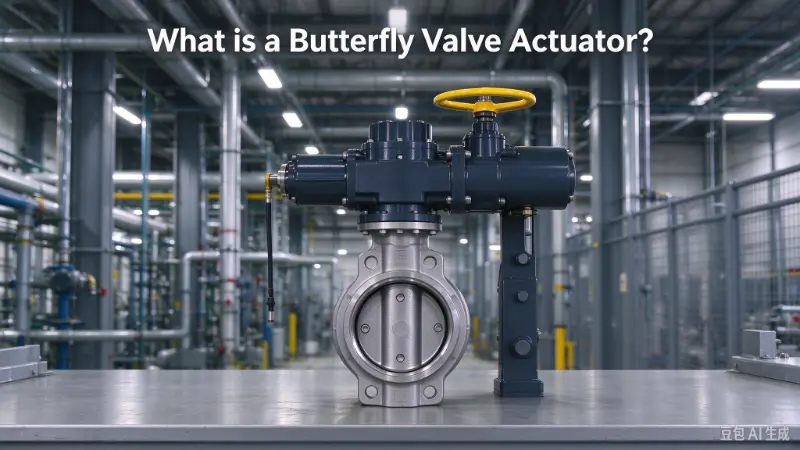
This article introduces butterfly valve actuators, which drive valve disc rotation for pipeline on‑off and flow regulation. It covers working principles, electric/pneumatic types, five key selection parameters, industry applications and common faults. It highlights torque‑curve‑based sizing and ISO 5211 mounting interface verification.
What is a Butterfly Valve Actuator?

Learn differences among part‑turn, linear‑stroke and multi‑turn electric actuators. This guide covers matching valves, torque‑thrust calculation, 5‑step selection process and typical pitfalls for your industrial actuator applications.
How to Select Part‑Turn, Linear‑Stroke and Multi‑Turn Electric Actuators