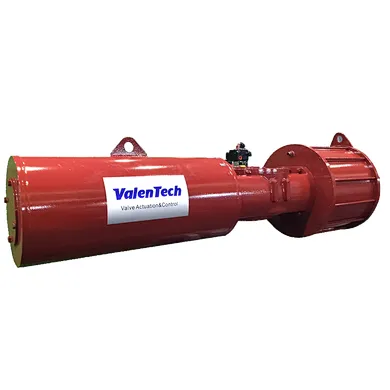
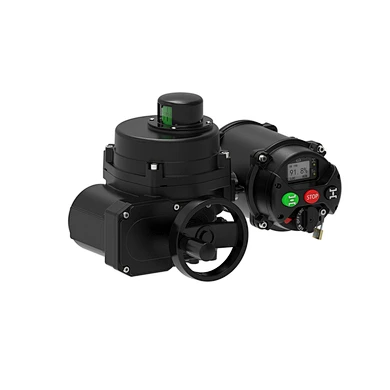
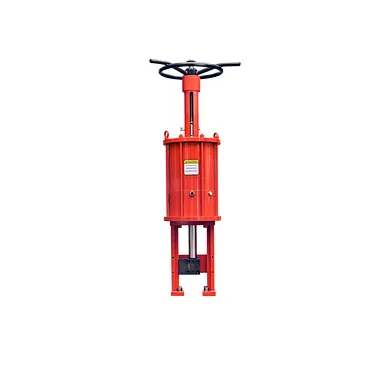
What is Marine-Grade Electric Linear Actuator
What Makes a True "Marine-Grade" Electric Linear Actuator? A Deep Technical Analysis
When specifying components for marine environments, the term “marine-grade” is often used loosely — sometimes as little more than a marketing label. But in reality, true marine-grade engineering is not about appearances; it’s about survivability under extreme conditions: relentless saltwater exposure, constant vibration from engines and waves, UV degradation, electrical instability, and wide thermal cycling.
An electric linear actuator on a boat isn’t just moving a hatch or adjusting a trim tab — it may be the difference between safe operation and catastrophic failure. For this reason, a true marine-grade electric linear actuator must be engineered with far greater rigor than its industrial counterpart.
Let’s go beyond surface-level claims and examine what actually defines a marine-grade actuator at the material, mechanical, and systems level.
1. Corrosion Resistance: The Core Survival Mechanism
Saltwater is one of the most aggressive corrosive agents known to engineering. It causes pitting, crevice corrosion, and galvanic (electrolytic) corrosion — especially when dissimilar metals are in contact and immersed in an electrolyte like seawater.
A standard industrial actuator may have a painted aluminum housing or mild steel components that will begin to degrade within weeks in a marine environment. A true marine-grade actuator uses materials and coatings designed to resist these forces for years.
Critical Material Specifications:
| Component | Recommended Marine-Grade Material |
|---|---|
| Housing | AISI 316 Stainless Steel or marine-grade aluminum with powder coating |
| Lead Screw | Hardened stainless steel with epoxy or nickel plating |
| Rod & Shaft | Polished AISI 316 stainless steel |
| Fasteners | A4 (316) stainless steel screws and nuts |
| Seals | EPDM or Viton® O-rings (resistant to saltwater and UV) |
? Why 316 Stainless Steel?
Unlike common 304 stainless, AISI 316 contains molybdenum (2–3%), which dramatically improves resistance to chloride-induced pitting — essential for saltwater applications.
Additionally, many high-end marine actuators include sacrificial zinc anodes. These are attached directly to the actuator body and corrode preferentially, protecting the more critical metal components through cathodic protection — a principle widely used in ship hulls and propellers.
2. Sealing Integrity: Multi-Layer Defense Against Water Ingress
Water doesn’t just come from above — it sprays, condenses, wicks along wires, and seeps into micro-gaps. Even brief immersion can destroy internal electronics or cause mechanical binding.
Industrial actuators might claim “IP65” or “IP66,” but marine-grade units demand IP67 or IP68 certification — tested under real-world submersion conditions.
Sealing Hierarchy in a True Marine Actuator:
- Double-Sealed Bearings: Prevent water entry at the rod interface.
- Multi-Lip Wiper Seals: Remove debris and moisture before it reaches inner seals.
- O-Ring Glands: High-durometer Viton® rings compressed in precision-machined grooves.
- Cable Entry System: Molded boots or IP68-rated cable glands prevent capillary action.
- Potting Compound: Epoxy resin encapsulates circuit boards, blocking moisture migration.
This multi-barrier approach ensures that even if one seal degrades over time, others remain intact — a key factor in long-term reliability.
3. Internal Electronics: Engineered for Harsh Power Environments
Boats run on 12V or 24V DC systems, but these are far from stable. Voltage can dip below 9V during engine cranking or spike above 15V due to alternator regulator issues. Electrical noise from motors, inverters, and generators adds further stress.
A generic industrial actuator may fail under such conditions. A marine-grade unit includes robust electronic protection:
Essential Circuit Protections:
- Wide Input Voltage Range (e.g., 9–32V DC): Ensures operation across fluctuating voltages.
- Reverse Polarity Protection: Prevents damage if wired incorrectly.
- Overcurrent & Thermal Cut-Off: Shuts down motor if stalled or overheated.
- Surge Suppression (TVS Diodes): Absorbs voltage spikes.
- EMI/RFI Filtering: Reduces interference with navigation and communication systems.
- Potted PCBs: Encapsulation prevents condensation-induced short circuits.
These features transform the actuator from a simple motion device into a ruggedized control node capable of surviving the chaotic electrical ecosystem of a vessel.
4. Mechanical Design: Built for Vibration and Shock
Engines, propellers, and wave impacts generate continuous vibration — enough to loosen fasteners, crack solder joints, or misalign gears over time.
Marine actuators must withstand constant dynamic loading without fatigue.
Key Mechanical Enhancements:
- Vibration-Damping Mounts: Rubber or silicone isolators absorb shocks.
- Reinforced Gear Train: Precision-cut helical gears made from hardened steel or composite polymers.
- Self-Locking Worm Drive: Prevents back-driving under load, crucial for holding hatches open in rough seas.
- Shock-Resistant Internal Components: Secure wiring harnesses, strain relief on cables.
- Lubrication Compatibility: Grease formulated for low-temperature performance and water resistance.
Unlike pneumatic actuators — which rely on 60–100 psi of compressed air for power — electric actuators deliver force through mechanical gearing. This means every component must be optimized for torque transmission efficiency and long-term wear resistance.
5. UV and Environmental Stability
Sunlight breaks down plastics, rubber, and insulation. On deck-mounted actuators, prolonged UV exposure leads to brittle wires, cracked connectors, and degraded housings.
True marine-grade actuators use:
- UV-stabilized cable jackets (e.g., XLPE or PUR)
- Non-yellowing polymer coatings
- Weatherproof connectors (M12, IP68-rated)
- Sealed terminals with anti-corrosion grease
These details ensure longevity even in tropical climates where sun intensity is extreme.
6. Smart Integration: Beyond Simple On/Off Control
Modern marine vessels are increasingly digital — equipped with PLCs, touchscreens, autopilots, and sensor networks. A marine-grade actuator should integrate seamlessly into these systems.
Advanced Control Features:
- Position Feedback: Via potentiometer or Hall effect sensor
- Analog Outputs: 0–10V or 4–20mA signals for closed-loop control
- Digital Communication: Modbus RTU, CANopen, or Ethernet/IP
- Programmable End Limits & Speed Profiles
- Status Monitoring: Fault reporting, temperature sensing, duty cycle tracking
For example, a hatch actuator can report its position to the central monitoring system, triggering alarms if left open during heavy rain — a feature impossible with basic pneumatic cylinders.
7. The Hidden Difference: Signal vs. Power
It’s worth noting that while pneumatic actuators dominate certain safety-critical roles (like valve isolation), their control logic relies on a subtle but vital distinction discussed in the Valen Tech article:
Signal Air (3–15 psi) ≠ Power Air (60–100+ psi)
The 3–15 psi signal is a proportional command — 3 psi = 0%, 9 psi = 50%, 15 psi = 100%. It tells a valve positioner how much high-pressure air to send to the actuator.
Electric actuators now fulfill this same role digitally:
- 4–20 mA replaces 3–15 psi as the analog signal standard.
- Modbus or CANbus enables full two-way communication.
- Smart actuators can self-diagnose, adjust torque limits, and report health status.
In essence, modern electric actuators don’t just replace pneumatic ones — they evolve the control paradigm from pneumatic signaling to intelligent digital integration.
Why Industrial Actuators Fail at Sea
Many users assume an “IP66-rated” industrial actuator is sufficient for marine use. But there’s a fundamental mismatch:
| Factor | Industrial Actuator | True Marine-Grade Actuator |
|---|---|---|
| Corrosion Resistance | Basic paint or mild steel | 316 SS + sacrificial anodes |
| Sealing | Single O-ring | Double-sealed bearings + potting |
| Vibration Tolerance | Moderate | Designed for engine environments |
| Electrical Protection | Minimal | Full surge, reverse polarity, thermal |
| Long-Term Salt Exposure | Fails within months | Validated for 10+ year service |
Industrial actuators are built for clean factory floors. Marine-grade actuators are built for survival at sea.
Final Thoughts
A true marine-grade electric linear actuator is not a modified version of an industrial model — it’s a purpose-built system engineered from the ground up for the unique challenges of marine environments.
It combines:
- Advanced materials science (corrosion-resistant alloys),
- Precision sealing technology,
- Robust electrical design,
- Mechanical resilience, and
- Digital intelligence
to deliver reliable, long-lasting performance where failure is not an option.
While pneumatic actuators still play a role — particularly in hazardous zones where spark-free operation is required — electric actuators offer superior precision, quieter operation, and seamless integration with modern vessel automation systems.
When choosing an actuator for your boat, don’t settle for “water-resistant.” Demand true marine-grade construction — because at sea, reliability isn’t optional. It’s everything.
Looking for rugged, high-performance electric linear actuators built for life at sea?
Explore Valen Tech Co., Ltd. www.valen-tech.com — where innovation meets industrial strength. From precision motion control to robust system integration, Valen Tech delivers solutions engineered to perform in the toughest conditions, on land or offshore.