
Actuator Anti-jamming Selection for Pulverized Coal and Ash Slurry Media
author: ATHENA GROUP
2026-06-11
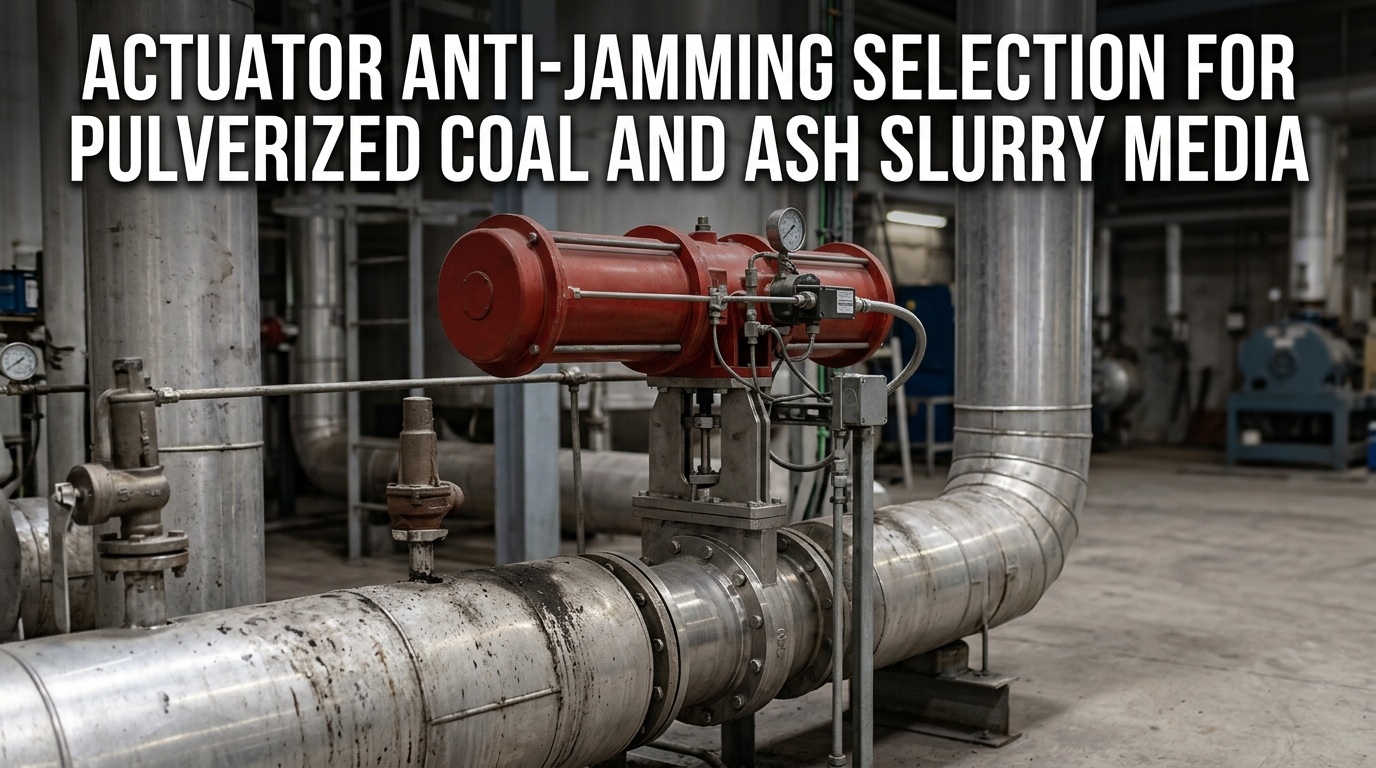
This paper combines the operating characteristics of pulverized coal and ash slurry media as well as the core causes of actuator jamming, elaborates on the key points of standardized anti-jamming selection, applicable models and practical tips to avoid mistakes, providing implementable selection references for industrial users.
Operating Characteristics of Pulverized Coal and Ash Slurry Media
To complete accurate anti-jamming selection, it is essential to clarify the special operating conditions of pulverized coal and ash slurry media, which differ from clean water and gas media. These characteristics are the fundamental causes of frequent actuator jamming.
Abrasion and Accumulation of Solid Particles
Pulverized coal, boiler slag and fly ash contain a large quantity of hard solid particles with non-uniform particle sizes. During valve opening and closing, particles easily penetrate into the gaps of valve cores, valve stems and actuator transmission components. Long-term accumulation forms blocking resistance and directly leads to operational jamming.
Adhesion and Scaling under Humid Conditions
In industrial desulfurization and slag discharge scenarios, ash slurry usually carries moisture. Wet dust adheres to valve sealing surfaces and actuator transmission parts, and forms hard scale layers after air-drying. This increases mechanical friction resistance, resulting in excessive actuator load and jamming.
Frequent Start-Stop and Impact Loads
Pulverized coal conveying and ash slag discharge operate intermittently with frequent valve switching. Actuators are repeatedly subjected to impact loads. Combined with blocking resistance from particles, the internal gears and shaft sleeves are prone to wear and deformation, further causing structural jamming.
Erosion in Harsh Environments
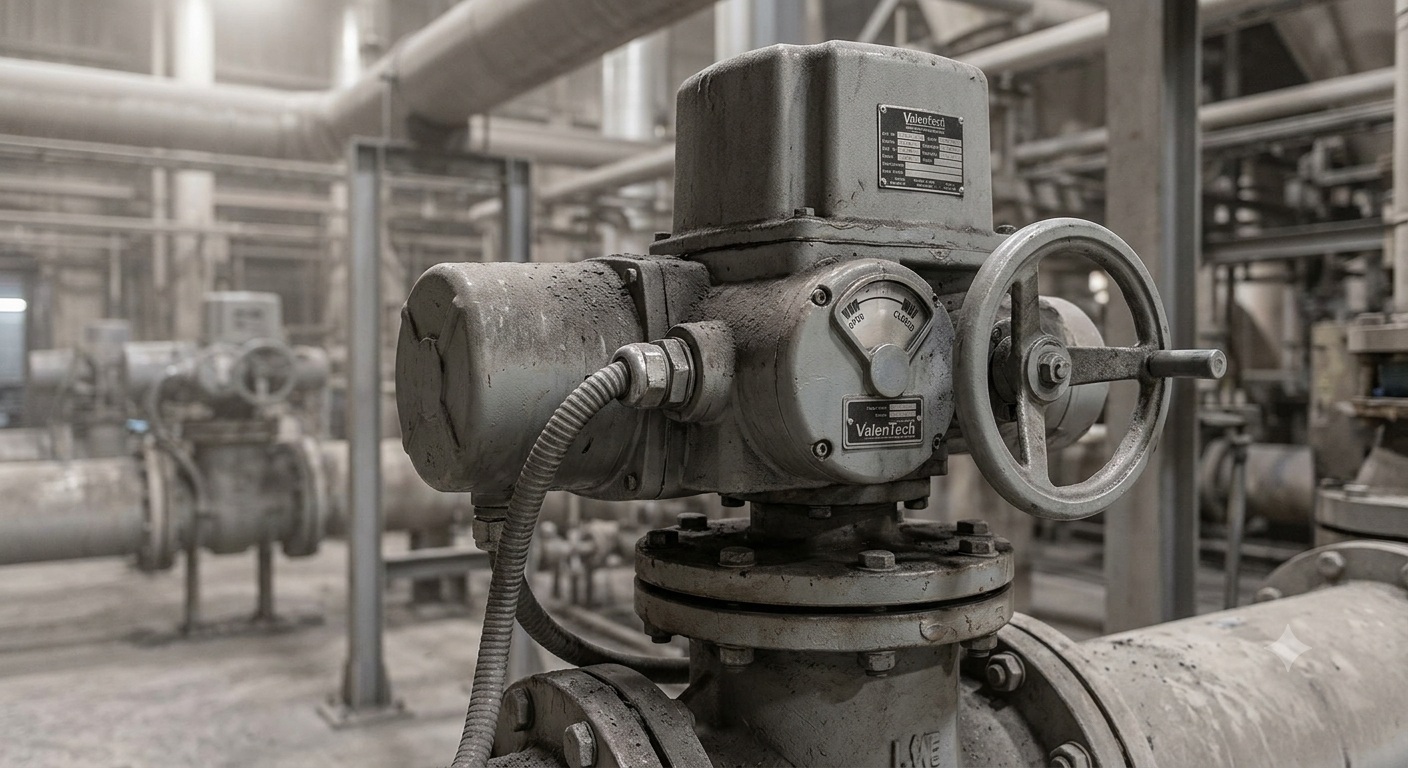
The on-site environment features heavy dust, high temperature and slight corrosion. Ordinary actuators have insufficient sealing performance. Dust invades internal transmission structures, accelerating component wear and jamming, and even causing motor overload and burnout.
Chain Hazards Caused by Jamming
- Minor jamming: Manifested as slow operation and stroke deviation. Direct consequences include incomplete valve closure, powder and slag leakage, which reduces conveying efficiency and severely pollutes the on-site environment.
- Severe jamming: Complete seizure of transmission structures or motor overload tripping. The valve fully malfunctions, which may easily lead to ash and coal blockage in pipelines, emergency production line shutdown, and even permanent damage to valves and actuators.
Core Selection Parameters for Anti-jamming Actuators for Pulverized Coal and Ash Slurry Media
The core logic of anti-jamming selection is to match operating load, enhance sealing protection, optimize transmission structure and reserve overload margin. The selection criteria for actuators used in conventional clean water media shall not be adopted. The following four core parameters shall be prioritized:
1. Torque Margin Selection
The opening and closing resistance of valves for pulverized coal and ash slurry media is unstable. Accumulation and scaling will instantly increase the load. Actuators with rated torque for general use are likely to jam due to excessive instantaneous resistance. Sufficient torque margin must be reserved during selection. A torque margin of 1.2 times is sufficient for clean water media, while the torque margin for pulverized coal and ash slurry working conditions shall be no less than 1.5 to 2 times.
Example: If the steady-state opening and closing torque of a valve is 200 N·m, an anti-jamming actuator with a rated torque of 300 to 400 N·m shall be selected. It can effectively offset the instantaneous resistance caused by particle accumulation and scaling and prevent operational jamming.
2. Fully Sealed Protective Structure
Dust intrusion is a major cause of internal actuator jamming. Semi-sealed and simply sealed actuators are strictly prohibited for pulverized coal and ash slurry applications. The selected products must meet the following requirements:
- The protection class shall be no lower than IP67, and IP68 is preferred for superior dust and water resistance to completely block fine pulverized coal and fly ash from entering transmission cavities.
- The output end of the valve stem adopts a combined design of multiple oil seals and dust-proof sleeves to prevent particles from penetrating into internal gears and bearings through valve stem gaps.
- The complete machine is equipped with an integrated sealed housing without splicing gaps, so as to avoid housing jamming and component rusting caused by long-term dust accumulation.
3. High-strength Wear-resistant Transmission Structure
For working conditions with frequent impact and particle abrasion, the wear resistance and rigidity of the actuator’s internal transmission structure directly determine its anti-jamming performance. Products with the following configurations are preferred:
- Gears are made of high-strength alloy steel via quenching treatment for excellent wear resistance and deformation resistance, preventing gear wear and meshing jamming under long-term loads.
- Equipped with precision anti-jamming shaft sleeves and self-lubricating bearings to reduce mechanical friction resistance and avoid shaft jamming caused by dust accumulation.
- Transmission parts made of plastic or ordinary cast iron are excluded. The full-metal high-strength transmission structure is applicable to impact loads in ash slurry service.
Actuator Types for Different Pulverized Coal and Ash Slurry Working Conditions
Targeted selection based on pipeline diameter, medium flow velocity and operating load can maximize anti-jamming performance and reduce redundant equipment costs.
1. Small-sized Pulverized Coal Conveying Pipelines (DN50-DN200)
Working characteristics: Fine medium particles, stable pressure, frequent start-stop and slight ash accumulation. Jamming is mainly caused by fine dust deposition.
Applicable product: Light-duty electric anti-jamming actuators. Featuring compact size and fast response, they adopt high-sealing structures suitable for fine dust environments, with high cost performance to meet daily automatic opening and closing requirements.
2. Medium and Large-sized Ash Slag Discharge Pipelines (DN250-DN600)
Working characteristics: Large and hard ash slag particles, high opening and closing resistance, easy accumulation and scaling, and strong instantaneous impact loads.
Applicable product: Heavy-duty multi-turn electric anti-jamming actuators. With large torque margin and high-strength transmission structures, they can withstand heavy load from material accumulation and match gate valves, globe valves and other slag discharge valves.
3. High-temperature and High-humidity Desulfurization Ash Slurry Working Conditions
Working characteristics: High temperature, high humidity, severe scaling and strong medium adhesion.
Preferred product: High-temperature resistant and anti-corrosion anti-jamming actuators. The complete machine is coated with anti-corrosion paint, and internal components are adapted to high-temperature environments to prevent component adhesion and jamming caused by humid scaling.
Scientific Operation and Maintenance: Proper Selection plus Standard Maintenance
Reasonable selection together with scientific operation and maintenance can fundamentally eliminate jamming problems.
- Regular inspection: Check the condition of actuator sealing parts and replace aged or damaged components in a timely manner to maintain the first line of defense against dust ingress.
- Trial operation before restart: For long-term idle equipment, perform manual turning trial operation before re-energization to remove potential initial accumulation resistance and prevent mechanical damage caused by forced direct startup.
Summary
The core points for anti-jamming of actuators used in pulverized coal and ash slurry media include sufficient torque margin, IP68 high-level sealing protection, wear-resistant transmission structures and intelligent overload protection.
Follow ValenTech for continuous updates on industry expertise and cutting-edge technical information.
Is an Electric Gate Valve Your Best Choice?
Butterfly Valve Actuators vs Ball Valve Actuators: Core Differences, Selection Guidelines and Application Scenarios
Related Article

Learn differences among part‑turn, linear‑stroke and multi‑turn electric actuators. This guide covers matching valves, torque‑thrust calculation, 5‑step selection process and typical pitfalls for your industrial actuator applications.
How to Select Part‑Turn, Linear‑Stroke and Multi‑Turn Electric Actuators
Learn about electric actuator response speed, internal and external influencing factors and key selection points, to select suitable actuators for valve automation projects and ensure efficient and stable system operation.
Response Speed of Switch‑Type Electric Actuator
Valve Actuator Wiring describes wiring, commissioning and troubleshooting for electric valve actuators, guiding technicians to adopt standard wiring for stable industrial control.
Valve Actuator Wiring
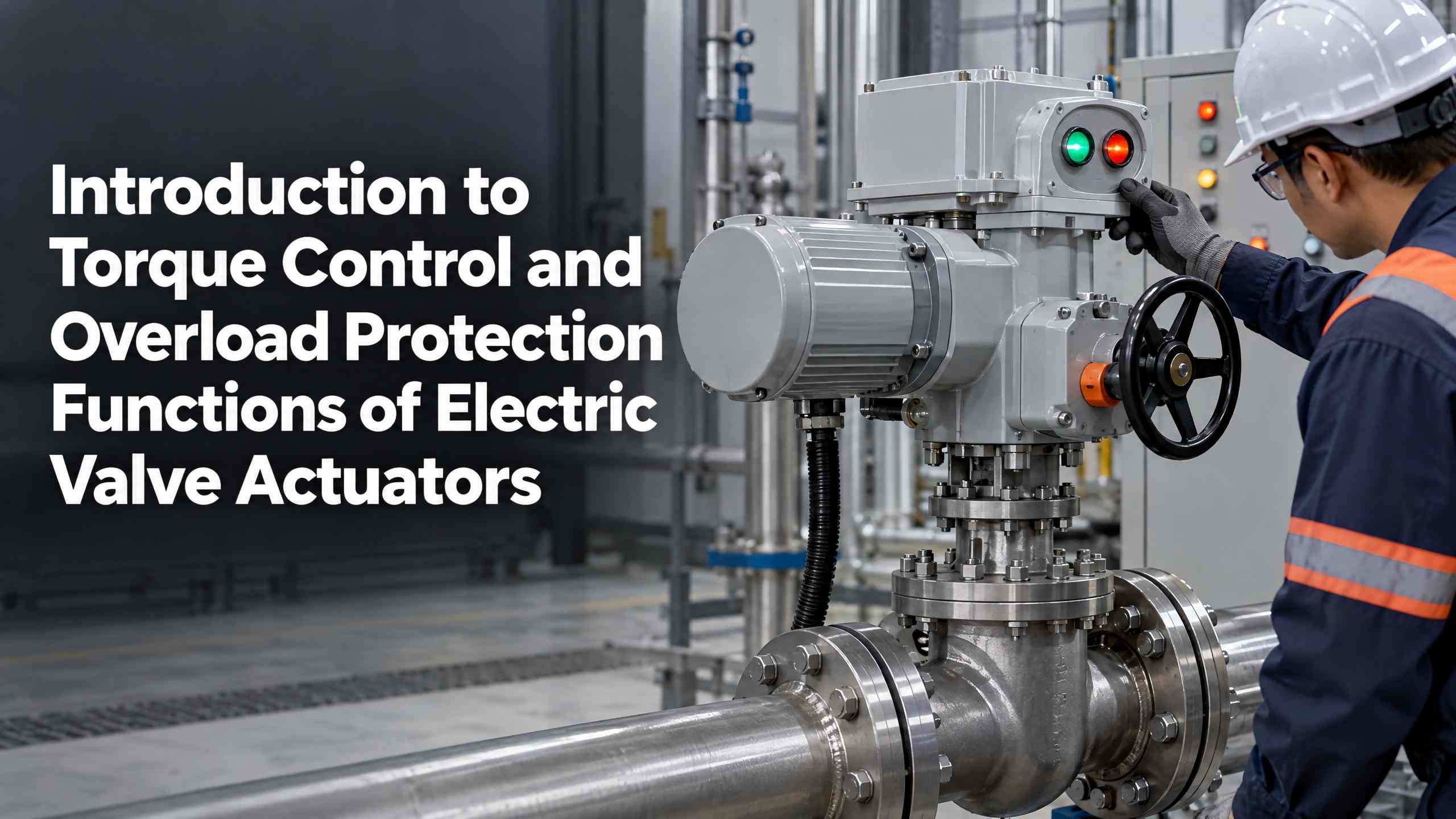
Valen Tech explains electric valve actuator torque control and overload protection functions. Learn how multi‑turn & part‑turn actuators prevent jamming and mechanical damage for petroleum, chemical, power and water pipeline systems.
Introduction to Torque Control and Overload Protection Functions of Electric Valve Actuators