
Advantages and Maintenance Points of Pneumatic Actuator Butterfly Valves
author: ATHENA GROUP
2025-10-09
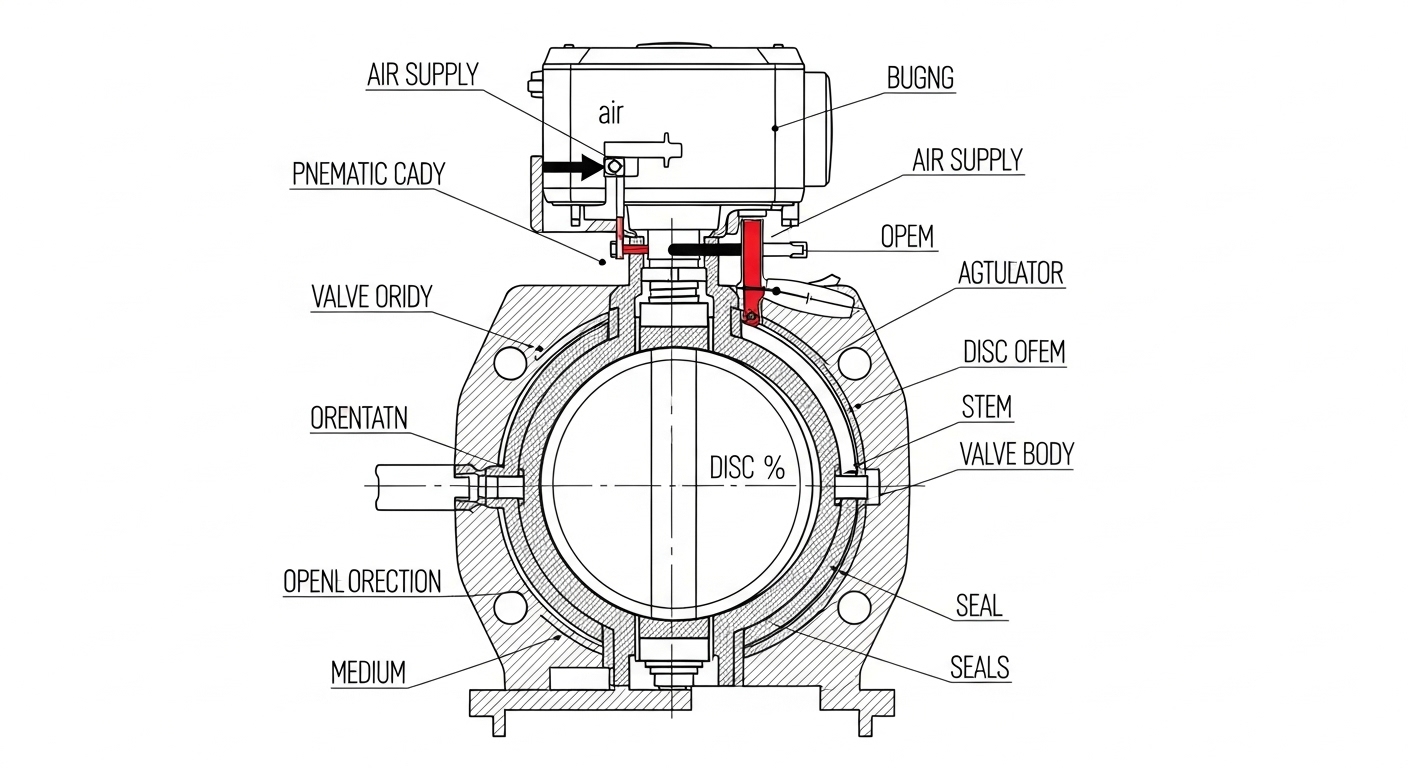
As a core equipment in the field of industrial fluid control, pneumatic actuator butterfly valves are widely used in industries such as petroleum, chemical engineering, and water treatment, thanks to their advantages of fast response speed, easy operation, and high cost-effectiveness. Rational selection and standardized application are directly related to the stability and efficiency of production processes. As an enterprise focusing on the R&D of fluid control equipment, Valen Tech has accumulated rich technical experience in this field.
I. What is a Pneumatic Butterfly Valve?
A pneumatic butterfly valve is a type of flow control valve. It uses a pneumatic actuator to drive the butterfly plate inside the valve body to rotate, thereby regulating or cutting off the flow of liquid or gas. The actuator enables fast and reliable operation, and can stably perform flow throttling control or on-off control. Such valves are widely used in industries with rigid demands for high-speed and efficient flow control, such as water treatment, heating, ventilation, and air conditioning (HVAC), chemical processing, and food and beverage production.
II. Working Principle of Pneumatic Butterfly Valves
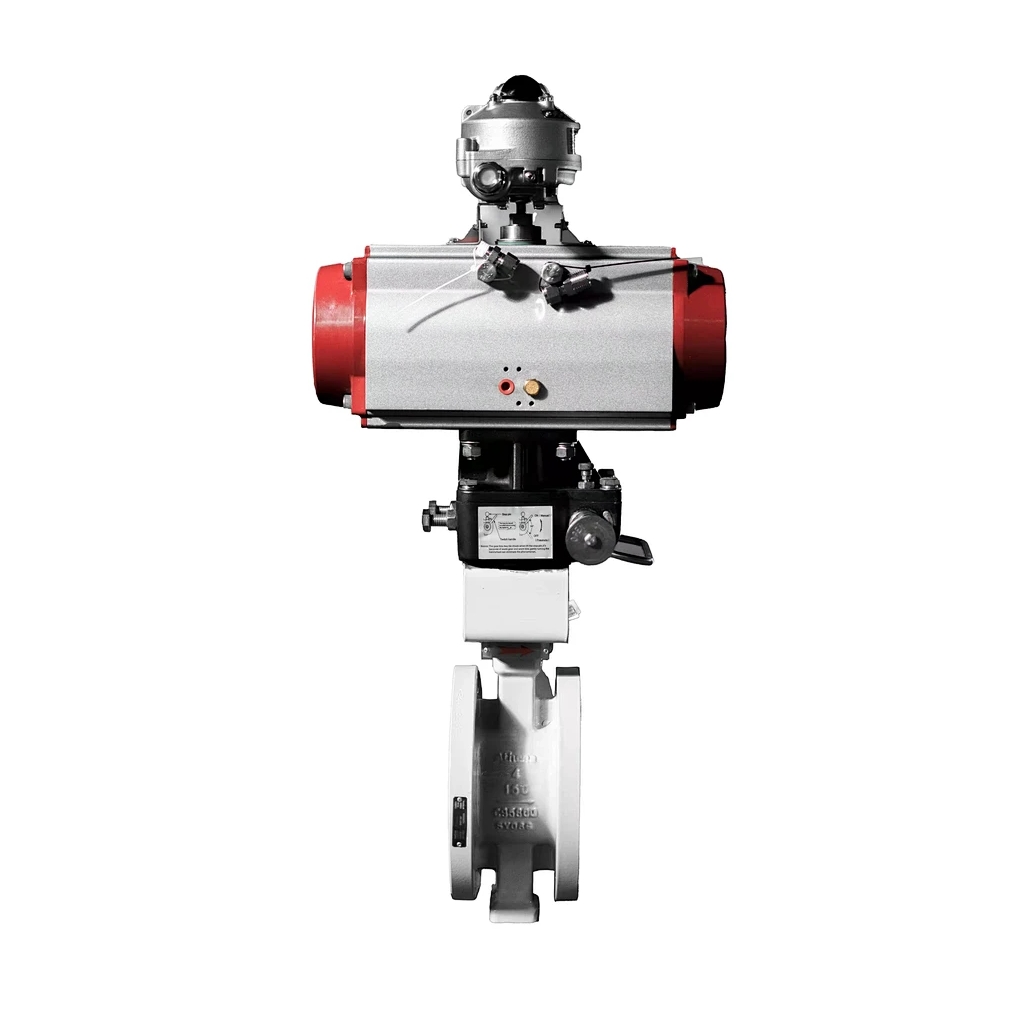
The core of the pneumatic actuator butterfly valve’s operation lies in the coordinated effect of "pneumatic drive - mechanical transmission - fluid control". The specific process is as follows:
- Air Supply Input: Compressed air, after filtration and pressure reduction (usually with a pressure range of 0.4-0.6MPa), enters the air chamber of the pneumatic actuator;
- Actuator Action:Double-acting type: Compressed air alternately enters the two air chambers of the actuator, pushing the piston/gear set to rotate, which in turn drives the valve stem and butterfly plate to rotate;Spring-return type: When one air chamber is ventilated, the butterfly plate is driven to rotate (for opening/closing); when the air supply is cut off, the spring force is used to achieve automatic reset, ensuring safe control under emergency working conditions;
- Fluid Control: The butterfly plate rotates with the valve stem. When the butterfly plate is parallel to the flow channel of the valve body (at 0°), the valve is fully open, and the fluid resistance is minimized; when the butterfly plate is perpendicular to the flow channel (at 90°), the valve is fully closed, and the medium is cut off through the sealing pair; when the rotation angle is between 0° and 90°, precise flow control can be achieved by adjusting the opening degree of the butterfly plate.
III. Core Advantages of Pneumatic Actuator Butterfly Valves
Pneumatic actuator butterfly valves exhibit multiple core advantages in industrial applications.
| Advantage Dimension | Technical Features | Valen Tech Product Support | Applicable Scenarios |
|---|---|---|---|
| High Response Efficiency | Pneumatic drive eliminates motor start-up delay; on-off action time can be controlled within 0.5-5 seconds (depending on valve size matching the actuator); no overheating risk during high-frequency operations | The actuator adopts a high-precision gear transmission structure, combined with low-friction seals, making the response speed 15% faster than the industry average | Chemical batch reactions, water treatment pipeline switching, emergency shut-off systems |
| Low Operation and Maintenance Cost | Simple structure (only wearing parts are seals and O-rings); no complex components such as motors or reducers; daily maintenance does not require professional technicians | The actuator has a design life of ≥1 million cycles; seals are made of aging-resistant rubber/PTFE materials, extending the maintenance cycle to 6-12 months | Large-scale pipe networks (e.g., municipal water supply), projects with low-cost budgets |
| Wide Working Condition Adaptability | Through customization of valve body materials (cast iron, cast steel, stainless steel 304/316L) and seals (NBR, EPDM, PTFE), it can adapt to temperatures of -40℃-400℃, pressures of 0-10MPa, and corrosive media | Customization for low-temperature (-40℃), high-temperature (400℃), and strong-corrosion (e.g., acid-base solutions) working conditions is supported, complying with API 609 and ISO 5211 standards | Petrochemical industry (corrosive media), high-temperature steam systems, projects in polar/cold regions |
| High Safety and Reliability | Spring-return actuators can achieve "automatic reset when air supply is cut off, " preventing medium leakage in emergency air cut-off situations; no electrical components, suitable for explosion-proof scenarios (Ex d IIB T4 Ga) | The actuator has an explosion-proof rating of Ex d IIB T4 Ga; springs are made of high-temperature-resistant alloy materials, with a reset reliability of 99.9% | Chemical explosion-proof workshops, gas transmission pipelines, emergency shut-off systems |
| Excellent Economic Cost-Effectiveness | The purchase cost is 30%-50% lower than that of electric butterfly valves, with no electricity consumption; maintenance only requires regular air pressure checks and lubrication, and the annual maintenance cost is less than 1/3 of that of electric valves | Standardized production reduces manufacturing costs; meanwhile, "lifetime maintenance consultation" services are provided to reduce subsequent maintenance expenses | Small and medium-sized enterprises, large-scale batch application projects (e.g., photovoltaic cleaning systems) |
IV. Maintenance Points
Regular maintenance is the key to ensuring the long-term stable operation of pneumatic actuator butterfly valves. Daily checks should include verifying whether the air pressure of the actuator is normal, whether there is leakage at the sealing parts, and whether the valve stem rotates flexibly. The lubricating oil inside the actuator should be replaced regularly according to the frequency of use and working conditions to ensure the smooth operation of transmission components. Valen Tech recommends that customers establish equipment maintenance files to record maintenance time, content, and fault handling, facilitating subsequent equipment management and problem tracing.
In addition, for butterfly valves used under harsh working conditions, the frequency of maintenance should be increased. Impurities in the butterfly plate and valve body should be cleaned in a timely manner to prevent medium crystallization or deposition from affecting the sealing performance. If problems such as seal wear or slow actuator response are found, professional personnel should be contacted promptly for maintenance or replacement of parts.
V. FAQs
Q: Can pneumatic actuator butterfly valves work normally in low-temperature environments?
A: Yes. Valen Tech can conduct special design on the pneumatic actuator according to the requirements of low-temperature working conditions, and select low-temperature-resistant sealing materials and lubricating greases to ensure stable operation in environments from -40℃ to room temperature, meeting the control needs of cold regions or low-temperature processes.
Q: How to determine whether the sealing performance of a pneumatic actuator butterfly valve meets the standard?
A: It can be judged through a pressure test. Apply the specified pressure to both sides of the valve body and observe whether there is leakage at the sealing parts. The pneumatic actuator butterfly valves of Valen Tech undergo strict sealing performance tests before leaving the factory, complying with international standards. Customers can also conduct daily checks in accordance with the test methods in the product manual.
Q: What should I do if the pneumatic actuator butterfly valve has movement jamming?
A: First, check whether the air pressure is stable to rule out the problem of insufficient air supply pressure; second, check whether there is foreign matter jamming at the connection between the valve stem and the actuator, or whether there is insufficient lubrication.
Q: Why choose Valen Tech?
A: As a sub-brand of ATHENA, Valen Tech has become a leading actuator brand in Italy through more than a decade of unremitting innovation and experience accumulation. Our actuator product range is comprehensive, including pneumatic actuators, electric actuators, electro-hydraulic actuators, and pneumatic-hydraulic actuators, aiming to meet the diverse needs of different industries. Adhering to the core concept of "Focus and Professionalism", we are always committed to providing excellent products and services.
VI. Conclusion
The advantages of pneumatic actuator butterfly valves can be fully exerted only with standardized maintenance, providing stable and reliable fluid control guarantees for industrial production. Valen Tech always takes technological innovation as the core, continuously optimizes product performance, and at the same time provides professional maintenance guidance and after-sales support to help enterprises improve equipment operation efficiency, reduce operation and maintenance risks, and achieve long-term stable development. Choosing Valen Tech means choosing a long-term partner.
For reliable actuator valves suitable for electric and pneumatic systems, you can visit Valen Tech (www.valen-tech.com) to obtain high-quality, precision-engineered solutions.
How Cycle Frequency Impacts Actuator Lifespan
What Affecting Actuator Performance
Related Article
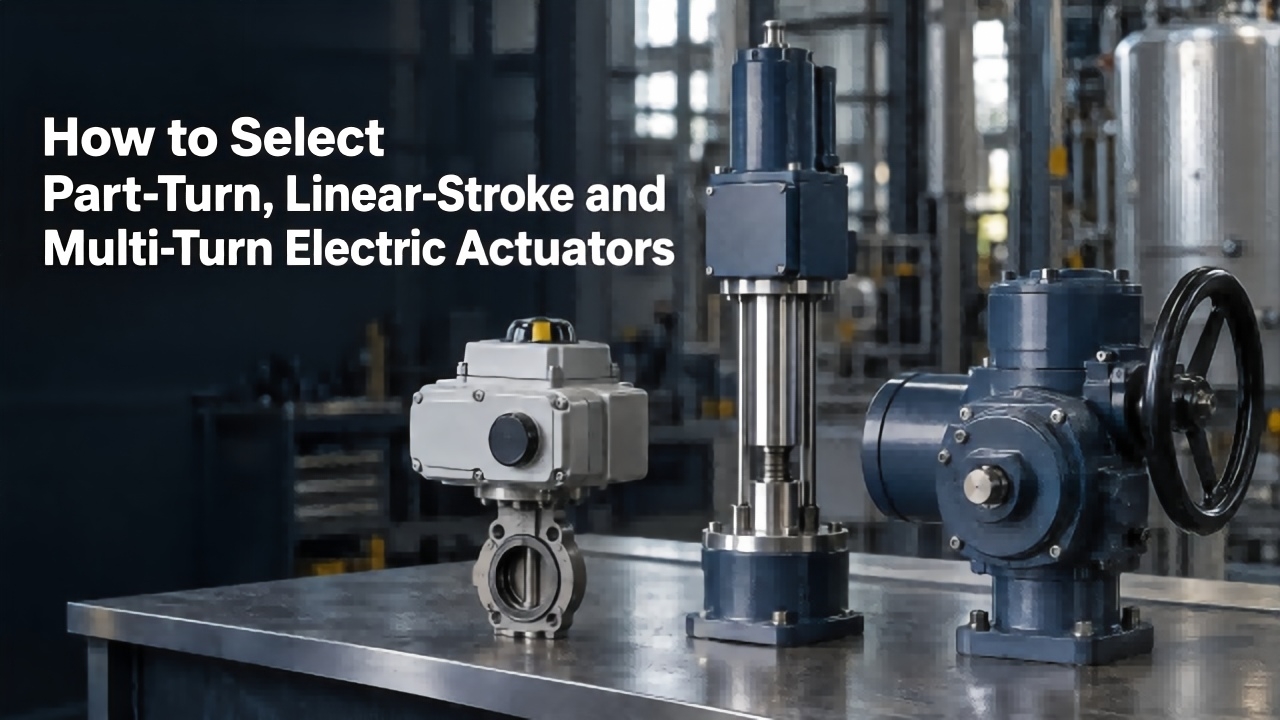
Learn differences among part‑turn, linear‑stroke and multi‑turn electric actuators. This guide covers matching valves, torque‑thrust calculation, 5‑step selection process and typical pitfalls for your industrial actuator applications.
How to Select Part‑Turn, Linear‑Stroke and Multi‑Turn Electric Actuators
Learn about electric actuator response speed, internal and external influencing factors and key selection points, to select suitable actuators for valve automation projects and ensure efficient and stable system operation.
Response Speed of Switch‑Type Electric Actuator
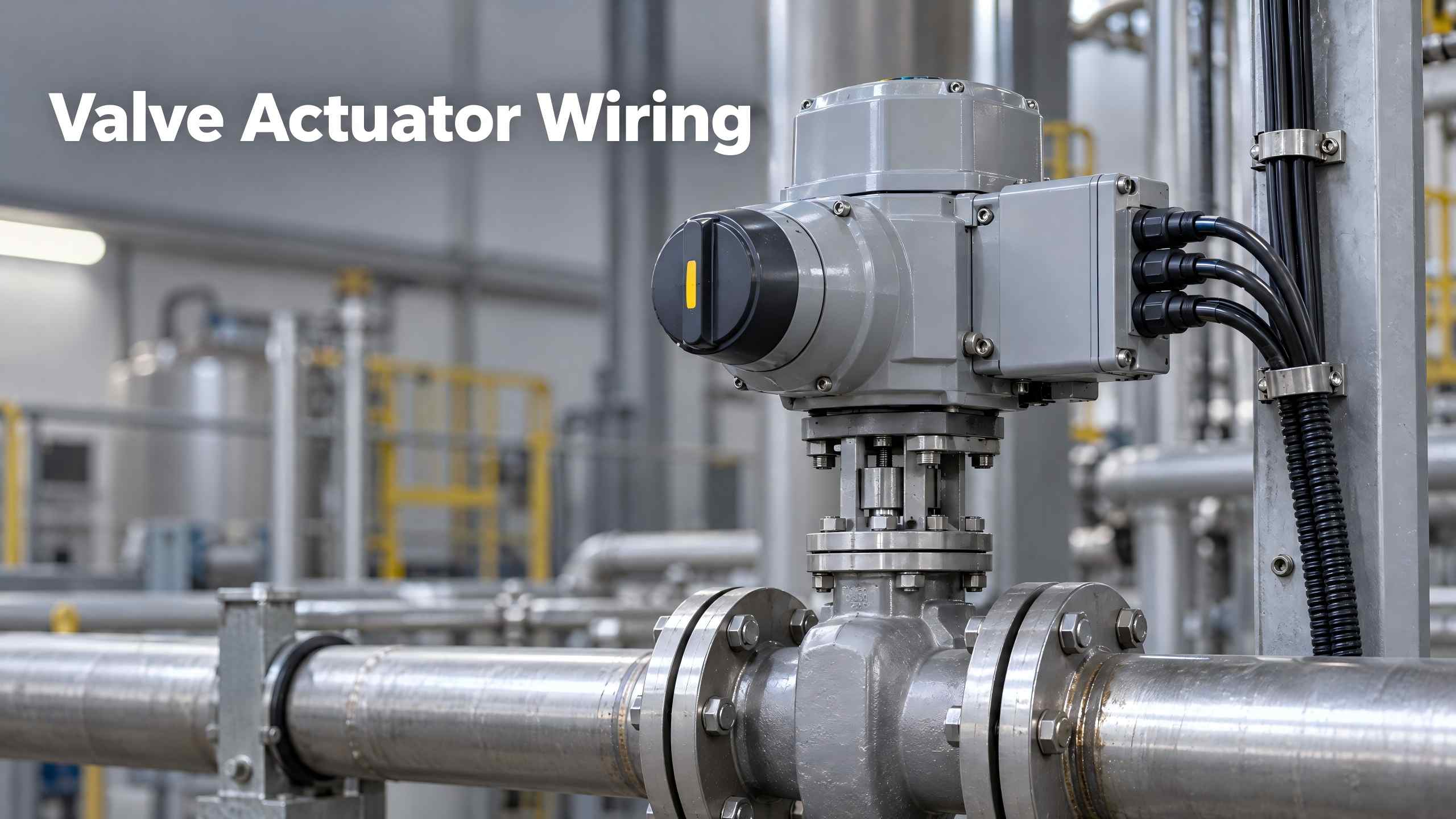
Valve Actuator Wiring describes wiring, commissioning and troubleshooting for electric valve actuators, guiding technicians to adopt standard wiring for stable industrial control.
Valve Actuator Wiring
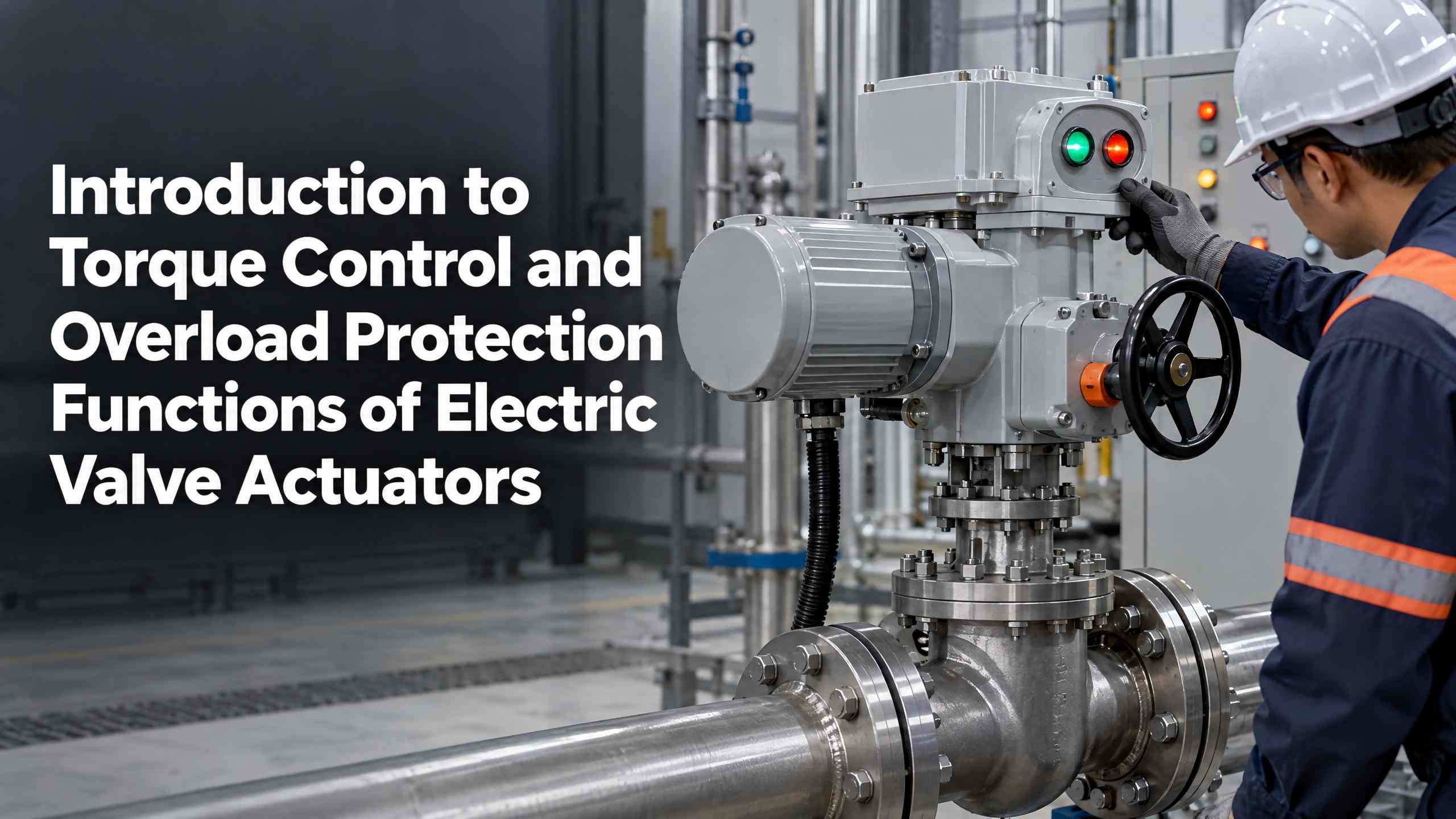
Valen Tech explains electric valve actuator torque control and overload protection functions. Learn how multi‑turn & part‑turn actuators prevent jamming and mechanical damage for petroleum, chemical, power and water pipeline systems.
Introduction to Torque Control and Overload Protection Functions of Electric Valve Actuators