
Comprehensive Analysis of IP Rating Markings
author: ATHENA GROUP
2026-05-25

The industrial general IP code consists of two digits, representing dust resistance and water resistance respectively. The higher the value, the stronger the protection performance.
- First digit (Dust/foreign object protection, Level 0-6): Level 0 offers no protection, while Level 6 is fully dust-tight, capable of completely blocking all types of solid particles from entering the equipment interior and protecting motors and transmission structures.
- Second digit (Water/moisture protection, Level 0-8): Level 0 offers no protection, while Level 8 supports continuous operation when submerged in water, providing all-round protection against water splashing, water immersion, and high-humidity water vapor erosion.
- Industry benchmark: IP65 represents full dust protection and resistance to high-pressure water spray from all directions, serving as the mainstream selection standard for general industrial working conditions.

Precise Selection Solutions for Different Working Environments
There is no need to blindly pursue the highest level for selection; the core is to match the corresponding level according to the installation environment.
1. Indoor Installation Environment
- Clean and dry workshop: For ordinary indoor or HVAC workshops without a large amount of dust and liquid splashing, IP44 can meet basic needs. It blocks solid foreign objects with a diameter of more than 1.0mm and protects against splashing water from all directions, featuring high cost performance.
- Humid or cleaning workshop: For indoor areas with regular water vapor or cleaning water spray, it is recommended to upgrade to IP54. It has stronger dust-proof sealing, effectively preventing the accumulation of fine dust and resisting water jetting to avoid equipment moisture failure.
2. Outdoor Open-air Environment
- Conventional outdoor pipelines: Faced with wind, sand and rainfall, prioritize IP55, which resists conventional pressure water spray and effectively blocks sand and dust.
- Harsh outdoor environment: For areas with frequent sand, dust and rainstorms, or coastal environments with high salt spray and strong corrosive air, IP65 or above must be selected. IP65 provides full dust protection and withstands high-intensity high-pressure spray, eliminating salt spray and rainwater erosion.
- Water-prone or underwater environment: For low-lying and water-prone points, IP67 is suitable, supporting short-term equipment immersion without damage; for areas with perennial high humidity or long-term water accumulation, IP68 is required for stable operation under long-term water immersion.
3. Special Industrial Scenarios
- Chemical industry: Working conditions often contain corrosive media such as acid, alkali, oil and gas. High protection levels of IP65/IP68 should be selected, combined with special anti-corrosion shell materials to provide dual resistance to physical intrusion and chemical erosion.
- Food processing industry: Core requirements are hygiene, cleanliness and easy disinfection. Actuators with high protection level, smooth and closed surface without dead corners should be selected, which are dust-proof and water-proof, and adaptable to high-frequency cleaning and disinfection operations.
Skills for Balancing Protection Level and Procurement Cost
Engineering selection should avoid two extremes: "blindly low configuration" and "excessively high configuration".
- Cost logic: Higher protection levels require precise sealing structures, high-quality materials and strict production processes, leading to a significant increase in procurement costs.
- Optimal strategy: Selecting IP68 in an ordinary dry indoor environment causes resource redundancy and cost waste; while selecting IP44/IP54 in harsh scenarios such as coastal and chemical industries will result in huge losses due to frequent maintenance and even production line downtime. The optimal selection logic is to match according to demand, select the appropriate level based on actual on-site risks, and achieve cost reduction and efficiency improvement between initial procurement and long-term operation and maintenance.
Additional Selection Notes
- Superimpose special configurations: IP protection is only the basis for environmental adaptation. In special working conditions such as corrosion, high temperature and explosion-proof, exclusive configurations such as anti-corrosion, explosion-proof and high temperature resistance should be added on the basis of meeting IP standards.
- Avoid environmental risks: For installation locations with low-lying terrain, poor ventilation and easy water accumulation, it is recommended to increase the protection level by one level to avoid potential risks.
- Comply with industry specifications: For special projects such as oil and gas, chemical industry and water treatment, selection must strictly comply with industry specifications to meet project acceptance standards.
Precise matching of protection levels can not only eliminate equipment failures and ensure precise regulation of control valves, but also reasonably control project costs, serving as an important guarantee for the long-term stable operation of industrial pipeline systems.
ValenTech Valve Actuators, rooted in the industrial automation field, focus on providing high-performance and high-reliability valve drive solutions for users worldwide. Choosing ValenTech means choosing professional protection and long-term peace of mind, empowering the efficient, safe and sustainable operation of industrial pipeline systems.
ValenTech Valve Actuators, rooted in the industrial automation field, focus on providing high-performance and high-reliability valve drive solutions for users worldwide. Choosing ValenTech means choosing professional protection and long-term peace of mind, empowering the efficient, safe and sustainable operation of industrial pipeline systems.
Wear Avoidance Scheme for High-Frequency Start-Stop Wear of Rack and Pinion Actuators
Hazards of Misusing Large-Stroke Actuators on Low-Torque Valves
Related Article
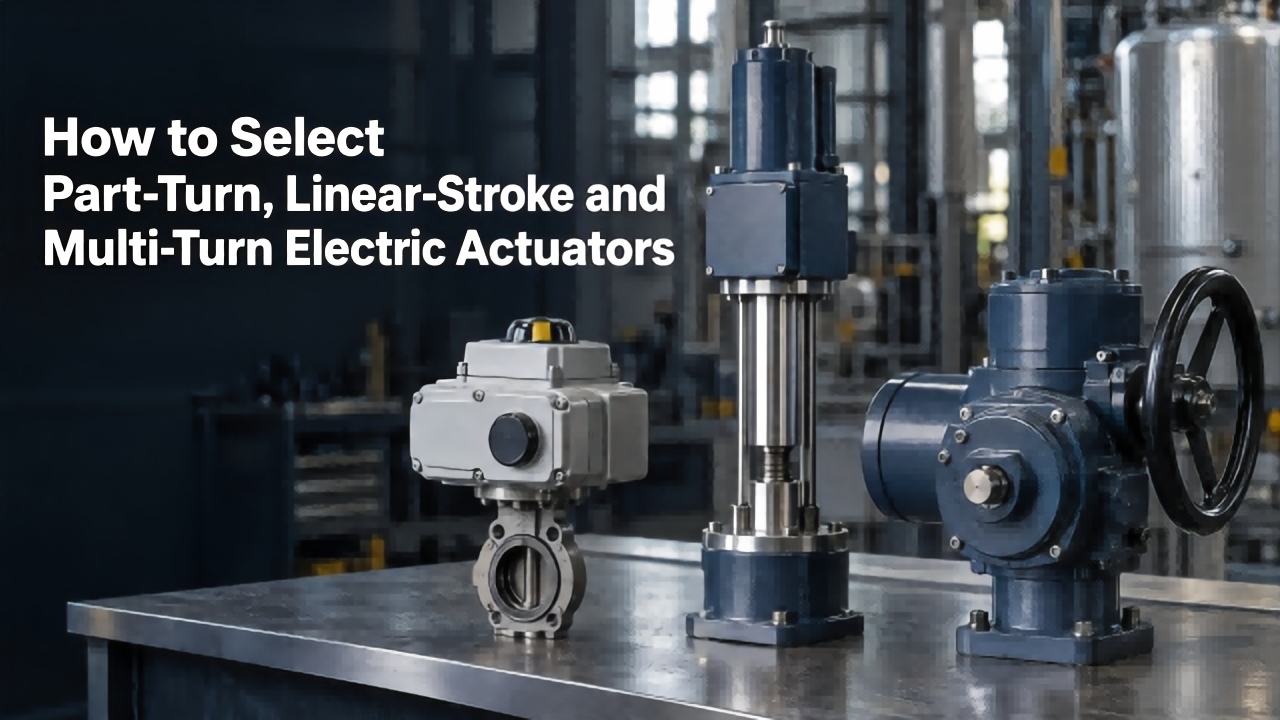
Learn differences among part‑turn, linear‑stroke and multi‑turn electric actuators. This guide covers matching valves, torque‑thrust calculation, 5‑step selection process and typical pitfalls for your industrial actuator applications.
How to Select Part‑Turn, Linear‑Stroke and Multi‑Turn Electric Actuators
Learn about electric actuator response speed, internal and external influencing factors and key selection points, to select suitable actuators for valve automation projects and ensure efficient and stable system operation.
Response Speed of Switch‑Type Electric Actuator
Valve Actuator Wiring describes wiring, commissioning and troubleshooting for electric valve actuators, guiding technicians to adopt standard wiring for stable industrial control.
Valve Actuator Wiring
Valen Tech explains electric valve actuator torque control and overload protection functions. Learn how multi‑turn & part‑turn actuators prevent jamming and mechanical damage for petroleum, chemical, power and water pipeline systems.
Introduction to Torque Control and Overload Protection Functions of Electric Valve Actuators