Pneumatic Actuated Valve vs Electric Valve: Which Is Better?
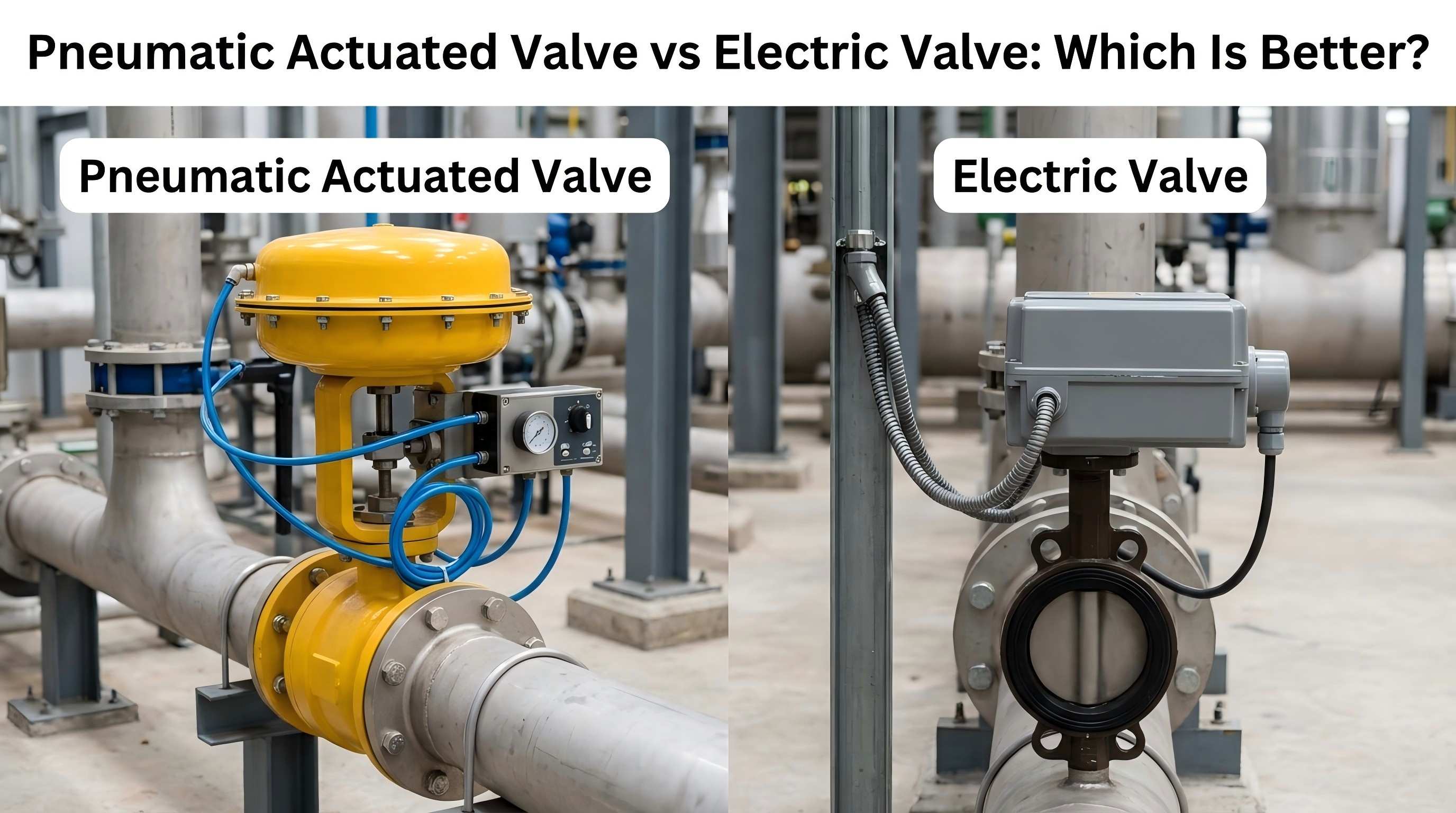
I. Core Operating Principles
Pneumatic actuated valves: Powered by compressed air, they rely on air compressors and solenoid valves to drive mechanical opening and closing of valve bodies. Featuring an all-mechanical structure without electronic components, they deliver strong anti-interference performance and high safety, fitting harsh industrial working conditions.
Electric valves: Driven by electric motors, they utilize gear transmission to move valve cores for regulation. No air supply pipelines are required, and they can be directly connected to PLC digital control systems with a higher level of intelligence.
II. Comprehensive Comparison of Core Performance
2.1 Speed and Power Output
Pneumatic valves operate at extremely high speeds, supporting high-frequency start-stop and emergency cut-off with powerful output force, making them suitable for large-caliber and high-pressure heavy-duty pipelines. Electric valves run at medium speed with slight delays during opening and closing and cannot sustain high-frequency operation, so they are more ideal for conventional small and medium-caliber pipelines.
2.2 Safety and Environmental Adaptability
Pneumatic valves contain no circuits and generate no electric sparks, delivering intrinsic explosion-proof performance. They withstand high temperatures, dust, vibration, corrosion and other harsh working conditions, serving as the top choice for flammable and explosive environments. Standard electric valves tend to produce sparks and require customized modification for explosion-proof functions. They also lack tolerance for harsh environments and are only applicable to clean, normal-temperature indoor conditions.
2.3 Cost and Energy Consumption
Pneumatic valves feature low procurement costs (50–500 US dollars) with low upfront investment, yet they require supporting air compressors and pipelines. Long-term operation involves air leakage and energy loss, alongside more frequent maintenance. Electric valves carry higher procurement costs (200–2000 US dollars) and support customized programming. No auxiliary equipment is needed; they consume electricity only during operation with no air leakage losses, boasting energy-saving performance and lower long-term operating costs.
2.4 Control Accuracy and Maintenance
Most pneumatic valves support basic full-open/full-close control. Even with positioners installed, they only achieve medium-level regulation accuracy affected by fluctuating air pressure. Electric valves enable stepless precise regulation from 0 to 100% with an accuracy of ±0.1%. Meanwhile, electric valves have fewer moving parts and a lower failure rate, requiring far less routine maintenance than pneumatic valves; professional maintenance is only needed under severe working conditions.
III. Quick Comparison Table of Core Parameters
| Comparison Factor | Pneumatic Actuated Valve | Electric Actuated Valve | Dominant Side |
|---|---|---|---|
| Procurement Cost | Low (50–500 US dollars) | High (200–2000 US dollars) | Pneumatic Valve |
| Operating Speed | Extremely fast, supports high-frequency start-stop | Medium speed, slight delay | Pneumatic Valve |
| Control Accuracy | Basic on-off control, mediocre precision | Ultra-high precision stepless regulation | Electric Valve |
| Maintenance Demand | Frequent maintenance, air leakage inspection required | Few components, low maintenance workload | Electric Valve |
| Operating Efficiency | High energy consumption with air leakage losses | Energy-saving with no losses | Electric Valve |
| Core Applications | Harsh working conditions, heavy-duty operation | Precision control, energy-saving intelligent scenarios | Subject to actual demand |
VelenTech Selection Tip
Choose pneumatic valves if low upfront cost, fast response and strong power are prioritized. Opt for electric valves when high-precision control, energy conservation, low maintenance and digital automatic control are required.
IV. Precise Classification of Applicable Scenarios
Prioritize Pneumatic Actuated Valves for:
Facilities with complete air supply systems, flammable and explosive explosion-proof environments, working conditions requiring high-frequency switching and emergency cut-off, large-caliber high-pressure pipelines, and harsh industrial environments with high temperature, dust and vibration. Widely used in oil & gas, chemical industry, sewage treatment and thermal power sectors.
Prioritize Electric Valves for:
Sites without air supply equipment, applications demanding high-precision flow and temperature regulation, stable low-frequency operation, clean indoor environments, and systems connected to digital automation platforms. Commonly adopted in building HVAC, water supply & drainage, precision food batching and laboratory automatic control equipment.
V. Conclusion
The core strengths of pneumatic actuated valves lie in low procurement cost, fast action, powerful driving force, explosion-proof performance and robust durability, suited for high-intensity, high-risk and harsh industrial working conditions. Electric actuated valves excel in high control accuracy, energy efficiency, low maintenance and compatibility with digital systems, catering to refined intelligent control scenarios. VelenTech recommends that valve selection should not be based solely on procurement prices. Comprehensive evaluation of upfront construction expenses, long-term energy consumption, maintenance costs and actual working conditions is essential to determine the optimal solution for stable long-term operation across various industrial automatic control scenarios.
What is an Explosion-Proof Electric Actuator? Principles, Features, Applications & Selection Guide
Multi-Turn Electric Actuators: Basic Knowledge
Related Article