
Power Plant Valve Control Actuator: Multi‑Turn Electric Actuator Applications & Benefits
author: ATHENA GROUP
2026-09-14
1. Why Power Plant Valve Actuators Matter
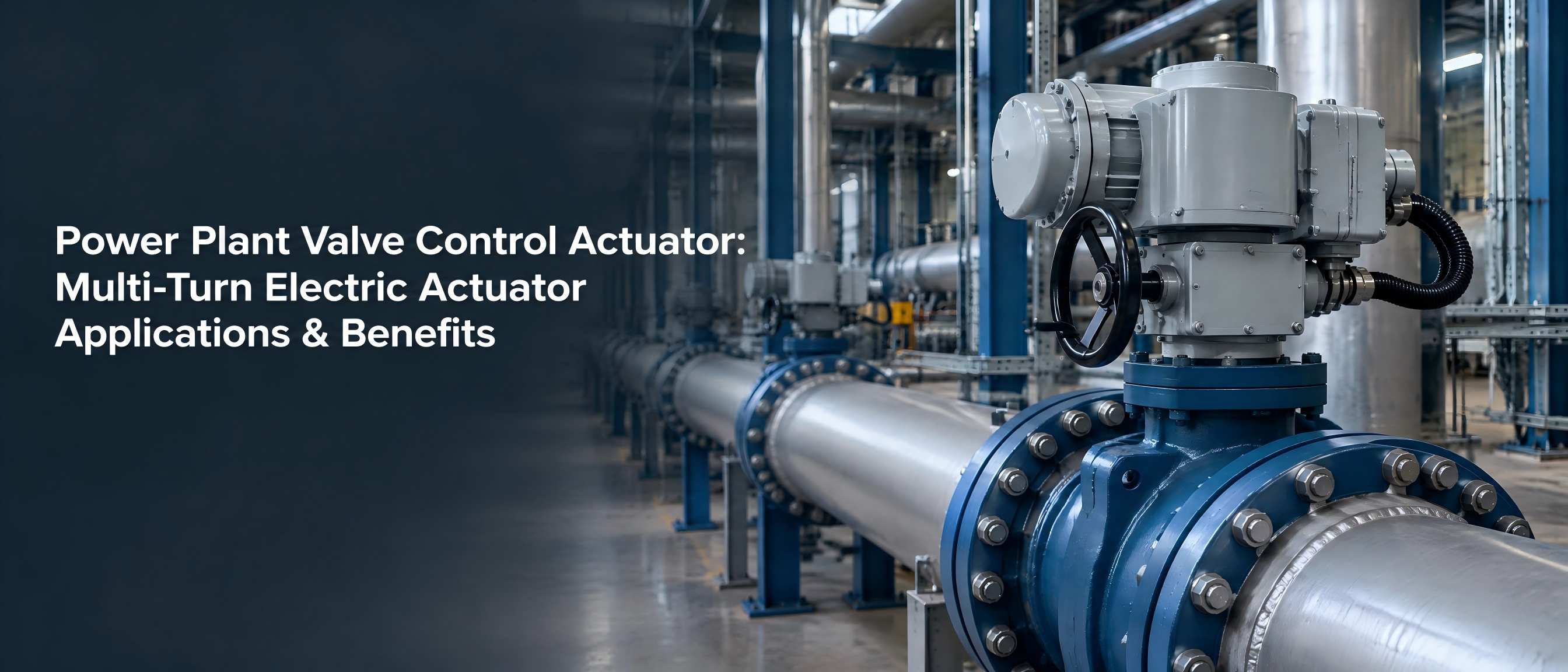
Valve control is the core of power plant fluid system operation. The stability, accuracy, and safety of valve regulation directly determine the continuous power generation capacity and operational safety of power stations. A power plant valve actuator, also commonly referred to as a power plant valve control actuator, serves as the key executive device that converts control system signals into physical valve opening and closing actions, managing the flow, pressure, and switch state of steam, cooling water, flue gas, and heat transfer media.
Among various actuator types, the multi‑turn electric actuator has become the most mainstream and reliable power plant valve actuator. Unlike quarter‑turn actuators suitable for simple 90‑degree switching valves, multi‑turn electric actuators complete valve operation through multi‑circle continuous rotation, perfectly matching heavy‑duty gate valves and globe valves widely used in power plants, meeting the strict high‑pressure, high‑load, and high‑precision control requirements of the power industry.
2. Why Multi‑Turn Electric Actuators Are Ideal Power Plant Valve Actuators
Power plant working conditions are extremely harsh, featuring high temperature, high pressure, heavy dust, strong vibration, and electromagnetic interference. Ordinary industrial actuators cannot adapt to long‑term stable operation in power stations. As a professional power plant valve actuator, multi‑turn electric actuators have unique technical advantages for power scenario adaptation.
2.1 High Torque Output for Heavy‑Duty Power Valves
Power plant main pipeline valves are mostly large‑diameter and high‑pressure heavy‑duty valves, requiring huge driving torque for opening and closing. Multi‑turn electric actuators adopt worm gear transmission structure, which efficiently amplifies motor power to output stable high torque. As a robust power plant valve actuator, it can easily drive various heavy power valves without jamming or incomplete closing, solving the core pain point of insufficient power of ordinary valve control actuators in power stations.
2.2 Self‑Locking & High‑Precision Closed‑Loop Control
Precision regulation is essential for power plant fluid control. This professional power plant valve actuator is equipped with high‑precision position sensors to form a closed‑loop control system. It can accurately respond to DCS and PLC control signals, realizing stepless adjustment of valve opening. Meanwhile, the built‑in self‑locking structure prevents valve displacement and pressure leakage caused by medium impact and equipment vibration, ensuring long‑term stable valve positioning.
2.3 Excellent Environmental Adaptability & Protection Performance
Customized for power plant harsh environments, this type of power plant valve actuator features optimized sealing and high‑grade IP protection. They are dustproof, waterproof, moisture‑proof, and high‑temperature resistant, fully adapting to boiler rooms, outdoor pipe corridors, desulfurization and denitrification workshops, and other complex scenarios. Explosion‑proof and anti‑corrosion customized models can meet the special valve control needs of special power plant areas.
2.4 Strong Anti‑Interference & Complete Safety Protection
Power stations have complex electromagnetic environments that easily interfere with signal transmission. This multi‑turn power plant valve actuator has excellent electromagnetic compatibility, which can resist strong on‑site electromagnetic interference and ensure stable and accurate signal transmission. In addition, it integrates overload torque protection, limit protection, over‑current and over‑temperature protection functions. When the valve is stuck or the working condition is abnormal, it will automatically stop to avoid equipment damage and pipeline failure. The manual emergency operation mechanism also guarantees safe valve control during power failures.
3. Main Application Scenarios of Multi‑Turn Power Plant Valve Actuators
3.1 Thermal Power Plant Valve Control
Thermal power plants are the most widely used scenario for the power plant valve actuator. Multi‑turn electric actuators are applied to boiler feed water valves, main steam isolation valves, turbine inlet and exhaust valves, and flue gas system regulating valves. They dynamically adjust valve opening according to unit load changes, stabilize boiler water level and steam pressure, optimize fuel combustion efficiency, and ensure the stable and efficient operation of thermal power units.
3.2 Hydropower Station Valve Control
In hydropower stations, the multi‑turn electric power plant valve actuator is responsible for the control of water intake valves, water delivery pipeline gate valves, and flood discharge valves. With high torque stable output, they drive large‑diameter hydraulic valves to accurately adjust water flow, control turbine speed and power output, and flexibly adapt to grid load changes. It can operate stably for a long time in humid outdoor and underwater working environments to ensure the safe scheduling of hydropower projects.
3.3 New Energy & Power Auxiliary System Control
For solar thermal power, biomass power, and other new energy power plants, multi‑turn electric actuators serve as the core power plant valve actuator for heat exchange pipelines, flue gas treatment, and sewage discharge valve regulation. In power plant auxiliary systems such as circulating water treatment, chemical dosing, and wastewater treatment, its durable and stable performance ensures the normal operation of the entire power station auxiliary system.
4. Professional Selection & Maintenance Guide for Power Plant Valve Actuators
4.1 Selection Standards
To select a suitable power plant valve actuator, users need to comprehensively consider valve caliber, medium pressure, and operating torque, and reserve a reasonable safety margin. Match actuator protection grade, explosion‑proof and anti‑corrosion configuration according to on‑site working conditions. Ensure the control signal is compatible with the power plant DCS and PLC system, and prioritize products that meet power industry certification standards to avoid operational risks.
4.2 Daily Maintenance Tips
Regular maintenance effectively extends the service life of a power plant valve actuator. It is necessary to calibrate valve position accuracy and torque protection regularly, check circuit insulation and wiring firmness, lubricate transmission parts, and detect shell sealing performance. Timely elimination of potential faults can reduce unplanned shutdowns of power plants and improve operational economy.
5. Conclusion
As the core equipment of power station fluid management, the power plant valve actuator determines the safety and efficiency of power plant operation. Among all types, multi‑turn electric actuators stand out with high torque, high precision, strong environmental adaptability, and complete safety mechanisms, becoming the preferred solution for thermal power, hydropower, and new energy power station valve control. Reasonable selection and standardized maintenance can maximize the performance of this power plant valve actuator and provide a solid guarantee for the stable and intelligent operation of modern power plants.
Analysis of Applicable Environments for Multi‑turn Electric Actuators
Exhibition Participation Valen Tech Successfully Completes OGA 2026
Related Article

This article analyses multi‑turn electric actuator operating environments. It covers temperature, protection, vibration and power‑supply factors, guiding Actuator Working Condition Selection and listing prohibited application scenarios.
Analysis of Applicable Environments for Multi‑turn Electric Actuators

Valen Tech wrapped up its presence at OGA 2026 in Kuala Lumpur. We exhibited premium valve actuators & custom fluid‑control solutions for onshore & offshore oil‑gas applications. Our team connected with SEA and Middle East clients, generating quality leads and strengthening regional brand footprint.
Exhibition Participation Valen Tech Successfully Completes OGA 2026

This paper introduces Valen Tech electric linear actuators, analyzing their advantages, valve applications, full‑scenario adaptability and selection points in the oil‑gas industry. It compares them with traditional actuators and offers troubleshooting solutions, illustrating their role in driving intelligent upgrades for the sector.
Application of Electric Linear Actuators in the Oil and Gas Industry
