
What Are the Common Types of Valve Actuators
author: ATHENA GROUP
2026-06-25
Valve actuators are core automatic control devices that drive valves to open, close and regulate. Industrial valves cover a wide range of varieties and control media by rotating valve plates or lifting valve plugs. Only when matched with corresponding actuators can pipeline systems operate stably with precise control and low failure rates. Many procurement and engineering personnel often wonder: what are the common types of valve actuators?
Drawing on years of experience in R&D and supporting of valve actuators at ValenTech, this paper briefly explains the features and applicable scenarios of various actuators to facilitate rapid model selection.
Drawing on years of experience in R&D and supporting of valve actuators at ValenTech, this paper briefly explains the features and applicable scenarios of various actuators to facilitate rapid model selection.
I. Classification by Output Motion Form
This classification serves as the primary basis for on-site matching, corresponding directly to structures of butterfly valves, ball valves, gate valves, regulating valves and other valves.
1. Part-Turn Actuators
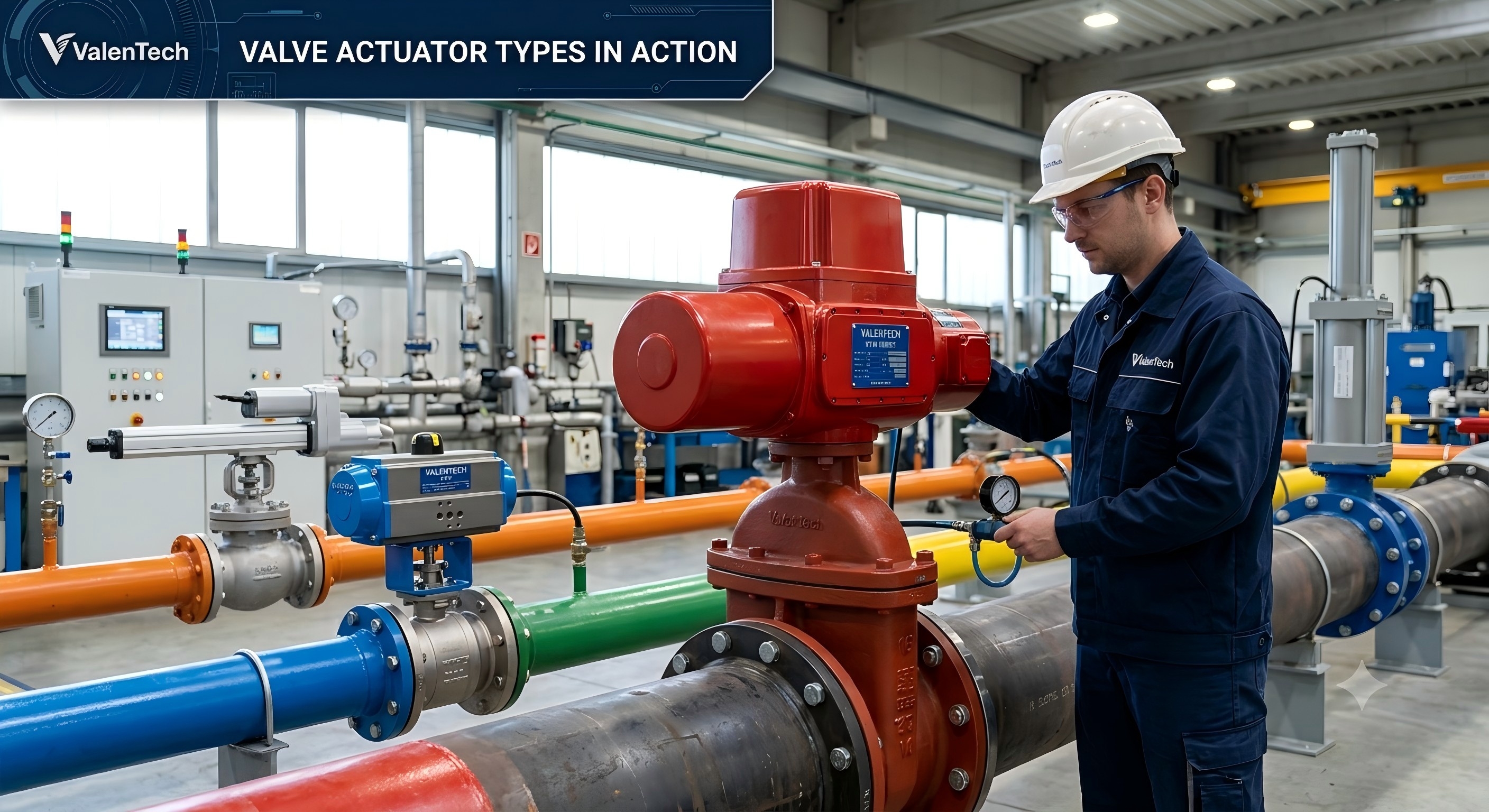
The output shaft rotates at an angle of no more than 90° to complete full opening and full closing without full-circle rotation. They are divided into direct-mount type and base crank type by installation method. The direct-mount type features easy installation, while the crank type delivers stronger compatibility for non-standard valve stems. ValenTech part-turn actuators boast wide adaptability and high stability, mainly supporting butterfly valves, ball valves and plug valves for general pipeline on-off control.
2. Multi-Turn Actuators
The output shaft rotates over 360°, requiring multiple revolutions to open and close valves. They feature high torque, strong load capacity and reliable locking. Compatible with gate valves and globe valves, they are widely applied in large-diameter, high-pressure and heavy-duty industrial pipelines.
3. Linear Actuators
No rotary movement occurs; the output shaft performs linear reciprocating motion with stable thrust and high regulation precision, specialized in precise fluid control. ValenTech linear actuators have minor control errors and strong anti-interference capacity, mainly paired with single-seat and double-seat regulating valves for precision control working conditions in the chemical industry.
II. Classification by Driving Power Source
1. Electric Valve Actuators
Powered by electric energy, they can be manufactured into full-range structures including part-turn, multi-turn and linear types. ValenTech electric valve actuators deliver precise control, support remote automatic regulation and require simple maintenance; their drawbacks include customized explosion-proof design requirements and no automatic reset upon power failure. They are applicable to general intelligent control systems in water supply, power stations and automated production lines.
2. Pneumatic Valve Actuators
Driven by compressed air, they are split into single-acting spring return type (safe reset upon air cut-off) and double-acting type (high speed and large torque). With intrinsic explosion-proof performance, low cost, fast response and low failure rate, they act as the mainstream option for frequent on-off scenarios in chemical, gas and explosion-proof workshops. Their downside lies in the need for supporting air supply equipment and mediocre fine-tuning precision.
3. Hydraulic Valve Actuators
Driven by hydraulic oil, they provide extremely high torque, stable operation and excellent pressure retention, suitable for ultra-high-pressure and extra-large-diameter valves. Their disadvantages include bulky supporting equipment, oil leakage risks and complicated maintenance, and they are mostly used in long-distance transmission pipelines, large water conservancy projects and heavy industry high-pressure working conditions.
4. Electro-Hydraulic Valve Actuators
Integrated with motors and hydraulic systems, they require no external pump stations, combining the intelligent advantages of electric actuators and the high torque merits of hydraulic actuators with convenient installation and stable operation. They are suitable for high-end pipe networks and large industrial fluid systems, with the only shortcoming being high manufacturing cost and maintenance threshold.
5. Manual Valve Actuators
Operated by manual handwheels for opening and closing, they need no external power supply with simple structures and zero maintenance. Often used as emergency backup equipment, ValenTech manual actuators are compatible with all types of conventional valves at cost-effective prices, meeting supporting demands for low-frequency opening/closing and equipment maintenance.
Practical Concise Guide for Converting Manual Gate Valves to Electric Operation
Pneumatic Valve Positioner Troubleshooting: Common Malfunctions, Diagnostic Procedures and Solutions
Related Article
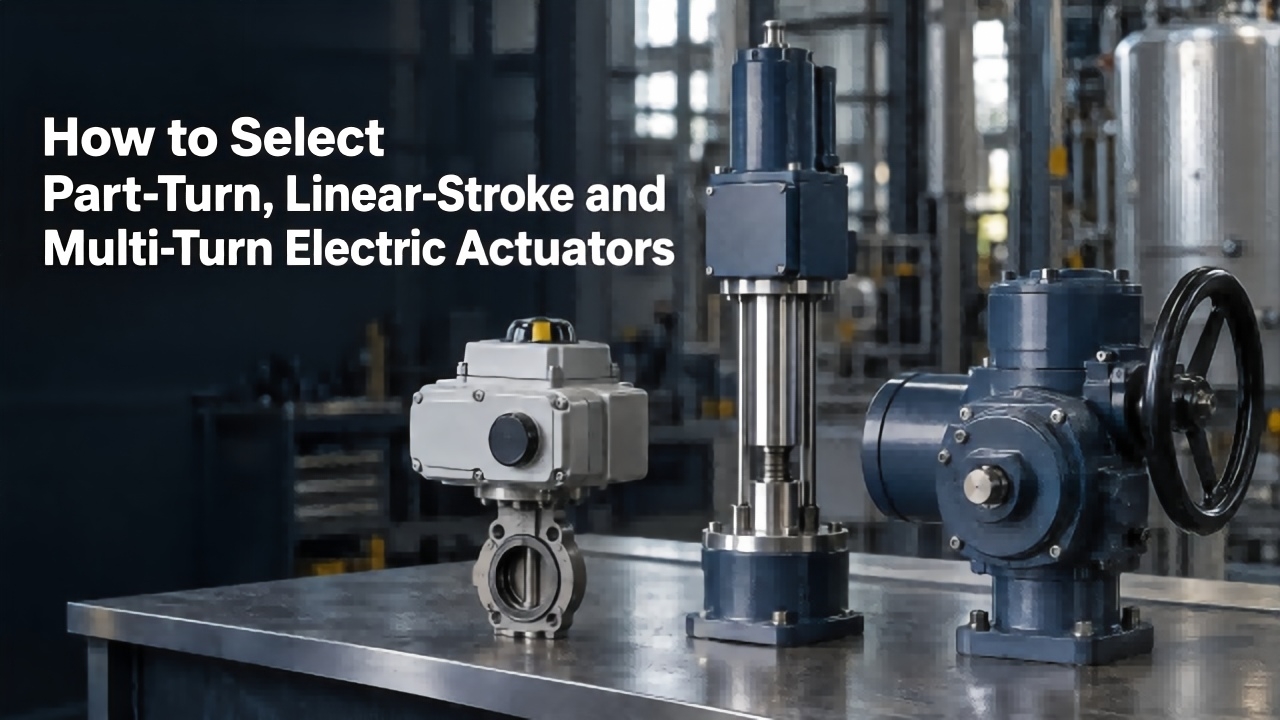
Learn differences among part‑turn, linear‑stroke and multi‑turn electric actuators. This guide covers matching valves, torque‑thrust calculation, 5‑step selection process and typical pitfalls for your industrial actuator applications.
How to Select Part‑Turn, Linear‑Stroke and Multi‑Turn Electric Actuators
Learn about electric actuator response speed, internal and external influencing factors and key selection points, to select suitable actuators for valve automation projects and ensure efficient and stable system operation.
Response Speed of Switch‑Type Electric Actuator
Valve Actuator Wiring describes wiring, commissioning and troubleshooting for electric valve actuators, guiding technicians to adopt standard wiring for stable industrial control.
Valve Actuator Wiring
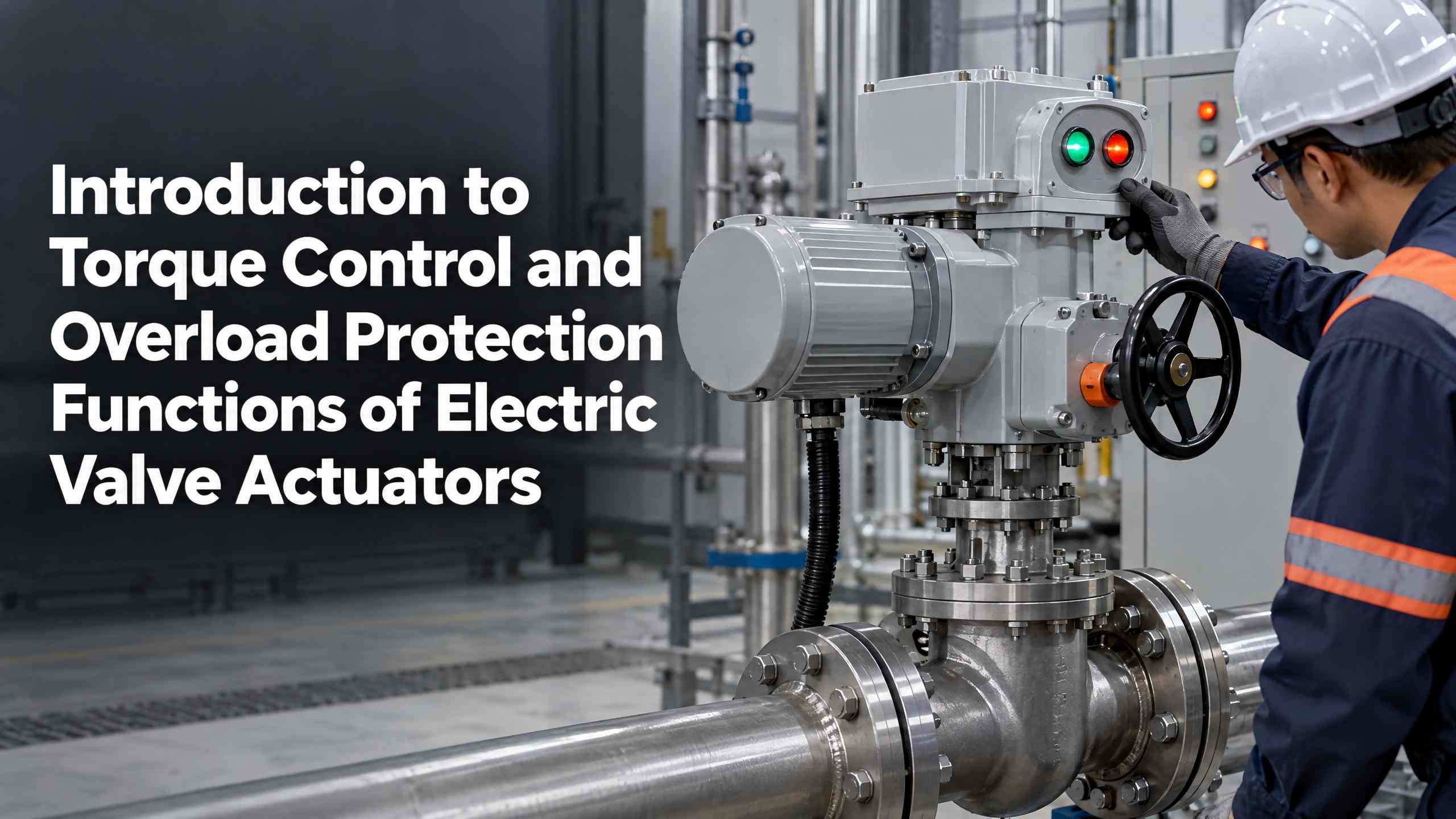
Valen Tech explains electric valve actuator torque control and overload protection functions. Learn how multi‑turn & part‑turn actuators prevent jamming and mechanical damage for petroleum, chemical, power and water pipeline systems.
Introduction to Torque Control and Overload Protection Functions of Electric Valve Actuators