Butterfly Valve vs Ball Valve Actuators: How to Choose the Right Drive Solution Based on Torque and Speed?
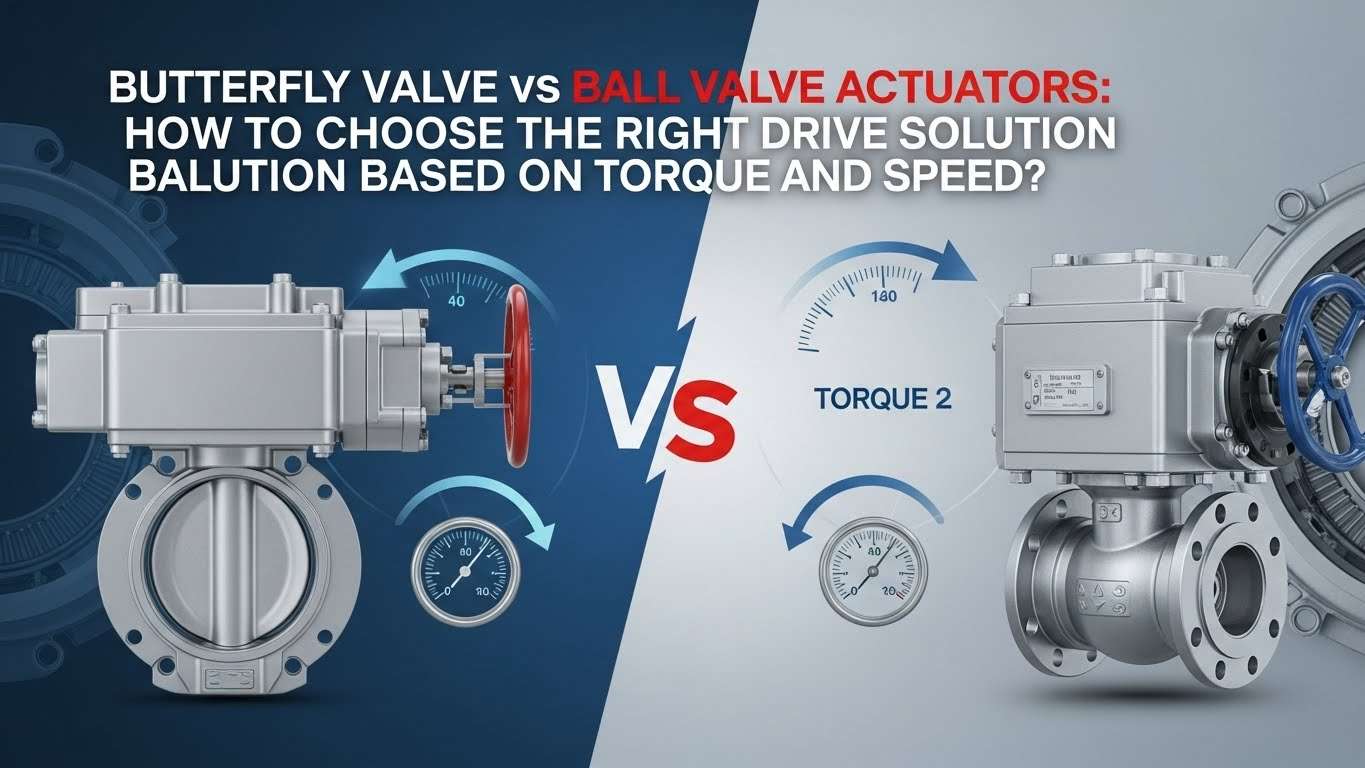
Torque Differences: Low Force & Fast Opening vs. High Force & Tight Sealing
Butterfly valves use a centrally mounted rotating disc structure. They only require a 90-degree rotation to open or close, and their flow path offers low resistance, resulting in low required driving torque. Even for large-diameter butterfly valves (e.g., 12 inches), the typical torque range is generally between 90–160 Nm. This allows smaller pneumatic or electric actuators to be used effectively, reducing overall energy consumption and equipment costs.
In contrast, ball valves rely on the tight fit of a bored spherical element to achieve zero-leakage sealing. This high level of sealing creates greater frictional resistance—especially under high-pressure or high-temperature conditions—requiring the actuator to deliver significantly higher torque to complete opening or closing actions. For example, a 12-inch ball valve typically requires a torque of 200–350 Nm—more than double that of a butterfly valve of the same size.
Selection Tip: If actuator torque is insufficient, the ball valve may fail to close completely, leading to internal leakage; excessive torque, on the other hand, may damage the valve seat or actuator mechanism. Always match the actuator’s output capability to the torque curve provided by the valve manufacturer.
Speed Performance: Response Speed Determines Emergency Capability
Butterfly valves feature a simple structure and low rotational inertia, enabling fast opening and closing (typically completed within 1–5 seconds) when paired with standard actuators. This makes them highly suitable for applications requiring frequent modulation or emergency shutoff, such as fire protection systems or cooling water circuits.
Although ball valves also operate via a 90-degree rotation, the tight contact between sealing surfaces requires overcoming static friction at startup, resulting in slightly slower overall movement. Moreover, closing a ball valve too quickly can cause water hammer—a pressure surge generated when fluid flow stops abruptly, which can damage piping systems and connected equipment. Therefore, in high-velocity liquid pipelines, actuators with cushioning functions or speed-limiting devices are often required.
Frequency and Performance: Don’t Overlook the Impact of the Power Source
In real-world applications, actuator performance is also affected by power supply conditions. For example, in electric actuators, when the power frequency drops from 4.5 Hz to 1.5 Hz, motor speed may plummet from 205 rpm to 99 rpm, with output torque and system pressure decreasing simultaneously. This means sufficient performance margin must be reserved in environments with variable-frequency drives or unstable grid conditions.
Professional engineers typically use empirical formulas, combined with working pressure, fluid properties, and switching frequency, to predict the dynamic performance of actuators under actual operating conditions—thus avoiding the embarrassment of “meeting specs on paper but failing in the field.”
Selection Reference Table (Typical Values)
| Valve Type | Nominal Size (inches) | Recommended Actuator Torque Range (Nm) |
|---|---|---|
| Butterfly | 2 | 15 – 25 |
| Butterfly | 6 | 40 – 70 |
| Butterfly | 12 | 90 – 160 |
| Ball | 2 | 25 – 40 |
| Ball | 6 | 80 – 150 |
| Ball | 12 | 200 – 350 |
Note: Actual values should always be confirmed with the valve manufacturer’s test data. Safety factors must be further increased for corrosive media, cryogenic, or vacuum service conditions.
Conclusion: There Is No “Best”—Only the “Most Suitable”
Whether you prioritize energy-efficient butterfly valve solutions or zero-leakage ball valve systems, the synergy between actuator and valve is the key to success. By comprehensively evaluating torque, speed, media, environment, and control logic at the project’s outset, you not only enhance system reliability but also significantly reduce total lifecycle costs.
If you are selecting components for a new project or experiencing issues such as actuator overload or sluggish response in an existing system, we recommend consulting a professional actuator supplier for a site-specific evaluation—the right drive ensures every drop of fluid is precisely controlled. At ValenTech, we specialize in intelligent actuation solutions tailored to your exact operational demands. Let us help you match performance with precision.
Top European Manufacturers of Quarter-Turn Pneumatic Actuators
What Happens If Air Leaks in a Double-Acting Actuator
Related Article