
Condensation Prevention for Outdoor Open-Air Actuator Electrical Control Boxes: A Complete Solution to Moisture and Condensation Failures
author: ATHENA GROUP
2026-06-02

Condensation in electrical control boxes of valve actuators is a frequent and easily overlooked cause of equipment failures in open-air applications such as chemical engineering, municipal water services, gas systems, and photovoltaic power stations. Diurnal temperature variations, rainwater scouring, and infiltration of humid air can lead to internal condensation in electrical control boxes, triggering short circuits, signal failures, circuit board corrosion, and actuator jamming. These issues result in equipment downtime and rising operation and maintenance costs. This paper concisely analyzes the causes, hazards, and complete permanent solutions for condensation in electrical control boxes, helping enterprises solve the condensation problem of outdoor equipment.
I. What is Condensation in Electrical Control Boxes?
Outdoor valve actuator electrical control boxes are designed to protect precision components such as internal circuit boards, wiring terminals, and drive modules. In open-air environments with high humidity and large diurnal temperature differences, water vapor in the closed air inside the control box cools down and condenses into liquid droplets on the inner wall of the box and the surface of electrical components—this is condensation.
Condensation is a hidden moisture hazard with no obvious water accumulation, making it difficult to detect during routine inspections. Long-term accumulation continuously erodes electrical components, making it the core cause of frequent failures in outdoor actuators. It should also be noted that equipment with IP65/IP67 protection ratings only blocks rainwater and dust, cannot isolate gaseous water vapor infiltration, and cannot eliminate condensation.
II. Core Hazards of Condensation in Electrical Control Boxes
Long-term condensation buildup causes multiple equipment failures, affecting system stability and increasing safety and operation and maintenance risks:
- Frequent electrical failures: Condensation attached to circuit boards and wiring terminals easily causes micro-short circuits, leading to signal disturbances, failed remote control, and valve malfunctions, interfering with the normal operation of pipeline systems.
- Accelerated component aging: Moisture corrodes circuits, metal contacts, and wiring terminals, resulting in oxidation, rust, and poor contact, significantly shortening the service life of electrical control equipment.
- Potential safety hazards: Condensation reduces the internal insulation performance of equipment, easily causing electric leakage in high-humidity environments and posing electrical safety risks.
- Surge in operation and maintenance costs: Failures caused by condensation require frequent downtime for maintenance and parts replacement, greatly increasing labor and equipment loss costs.
III. Three Core Causes of Condensation
Accurately identifying the root causes is the key to permanently solving condensation. Condensation in open-air applications mainly stems from three factors:
- Temperature difference alternation and condensation (main cause): Large diurnal temperature differences outdoors cause the air inside the box to heat up and expand during daytime exposure, then contract and cool down at night. Saturated water vapor precipitates and condenses into droplets attached to the surface of equipment components.
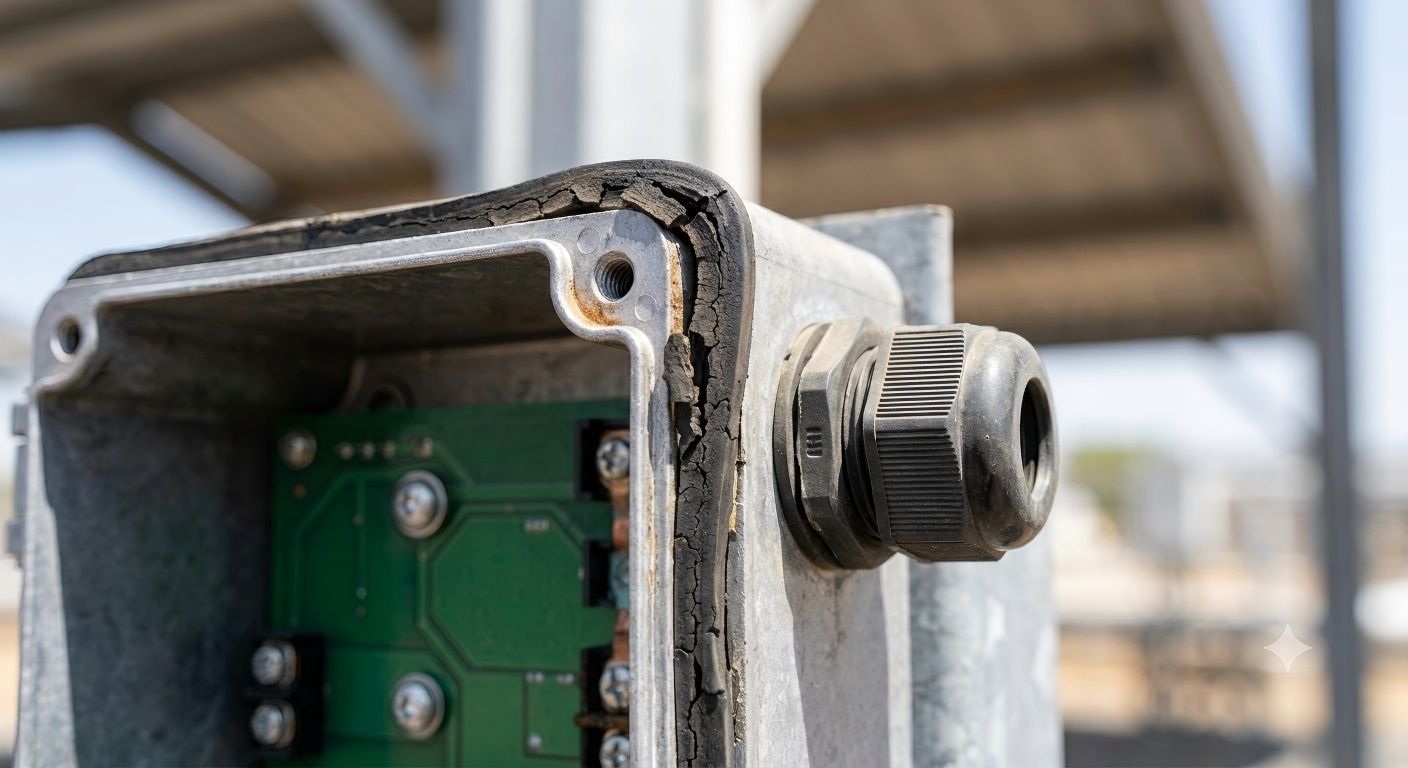
- Seal failure and water vapor infiltration: Long-term ultraviolet exposure and alternating high and low temperatures cause aging, hardening, and cracking of sealing strips; loose screws after equipment maintenance and poor fitting of the box body create gaps, allowing continuous infiltration of external humid air and moisture buildup inside the box.
- Lack of ventilation and drainage structure: Most conventional electrical control boxes are fully enclosed with no dehumidification, ventilation, or drainage structures. Moisture inside the box cannot be discharged, forming a closed-loop persistent condensation problem.

IV. Complete Permanent Condensation Prevention and Control Solution
Based on the core principles of moisture blocking via sealing, dehumidification via ventilation, internal and external temperature balancing, and long-term stable maintenance, a full-set solution is formulated to adapt to all open-air working conditions and eliminate condensation from the source:
1. Upgrade Sealing Protection to Block Water Vapor Intrusion
Regularly replace aged, deformed and failed sealing strips and waterproof connectors; fasten loose fixing screws after equipment maintenance to ensure tight fitting of the box body. Adopt high-low temperature resistant and ultraviolet-resistant special sealing gaskets to upgrade the overall outdoor sealing performance of the control box and cut off the infiltration path of humid air.
2. Equip Ventilation Accessories to Balance Temperature, Humidity and Air Pressure
Install waterproof breathable valves and miniature dehumidifying respirators on fully enclosed electrical control boxes. These accessories can block external rainwater and dust while realizing internal and external air circulation, balance the temperature difference and air pressure inside and outside the box, and actively discharge internal moisture. This is a low-cost, high-efficiency universal anti-condensation measure suitable for most conventional outdoor scenarios.
3. Deploy Special Dehumidification Devices for Harsh Working Conditions
For harsh environments with high humidity and extreme temperature differences, such as coastal areas, mountainous regions, and open-air pumping stations, adopt a combined dehumidification solution of built-in miniature heating and dehumidification modules and moisture-proof desiccants. The heating module reduces internal and external temperature differences to prevent water vapor condensation, while the desiccant continuously absorbs residual moisture inside the box, realizing dual moisture-proof and dehumidification protection.
4. Optimize Installation Environment to Reduce Environmental Interference
Install sunshade and rainproof shelters for equipment when conditions permit, to avoid direct solar exposure and rainwater scouring, and reduce the impact of diurnal temperature differences. Arrange equipment away from low-lying waterlogged areas and poorly ventilated zones to minimize local moisture accumulation.
5. Establish Standardized Regular Inspection and Maintenance Mechanisms
Regularly clean accumulated dust and residual moisture inside the control box, and inspect the integrity of sealing structures and the working status of dehumidification accessories. Increase inspection frequency during rainy seasons and periods of drastic seasonal temperature changes to eliminate potential condensation hazards in advance.
V. Common Prevention Misconceptions to Avoid Ineffective Treatment
Misconception 1: High protection ratings can eliminate condensation
IP waterproof ratings only protect against liquid water and dust, cannot block gaseous water vapor, and cannot solve condensation caused by temperature differences.
Misconception 2: Desiccants alone can permanently solve condensation
Desiccants only absorb moisture temporarily with limited adaptability; they cannot achieve long-term dehumidification when used alone and need to cooperate with ventilation structures.
Misconception 3: Tighter sealing means better effect
Complete sealing without ventilation channels prevents internal moisture from being discharged, and continuous accumulation will instead worsen condensation.
Summary
Condensation in outdoor electrical control boxes is not an intractable failure. The core is to abandon the single waterproof mindset and adopt a comprehensive solution of sealing to block moisture + ventilation to dehumidify + temperature balance. Scientific condensation prevention can effectively avoid equipment failures such as short circuits, corrosion, and signal abnormalities, improve equipment operation stability, extend service life, and significantly reduce long-term operation and maintenance costs for enterprises—making it a key measure for efficient operation and maintenance of open-air industrial control equipment.
Key Points for Replacement of Fatigued Torque Springs on Aged Actuators
Wear Avoidance Scheme for High-Frequency Start-Stop Wear of Rack and Pinion Actuators
Related Article

Valen Tech wrapped up its presence at OGA 2026 in Kuala Lumpur. We exhibited premium valve actuators & custom fluid‑control solutions for onshore & offshore oil‑gas applications. Our team connected with SEA and Middle East clients, generating quality leads and strengthening regional brand footprint.
Exhibition Participation Valen Tech Successfully Completes OGA 2026
This paper introduces Valen Tech electric linear actuators, analyzing their advantages, valve applications, full‑scenario adaptability and selection points in the oil‑gas industry. It compares them with traditional actuators and offers troubleshooting solutions, illustrating their role in driving intelligent upgrades for the sector.
Application of Electric Linear Actuators in the Oil and Gas Industry

This document describes the full‑site commissioning workflow for intelligent electric valve actuators, including preparation, calibration, safety tests, acceptance and common‑fault troubleshooting.
How to Commission Intelligent Electric Valve Actuators?
This guide outlines electric actuator selection for valves. Large valves (DN>200) usually need electric actuators, medium ones rely on working conditions, and small valves are mostly manual. Pressure, media and precision affect selection, requiring proper torque margin.
What Size Valve Requires an Electric Actuator?