
Electric Actuator Butterfly Valves in the Petroleum Industry
author: ATHENA GROUP
2025-12-12
I. What is an Electric Actuator Butterfly Valve?
A butterfly valve is a quarter-turn valve equipped with a disc-shaped "butterfly plate" inside. Rotating 90 degrees can realize full opening or closing, featuring a compact structure and simple operation. The electric actuator drives the butterfly plate through a motor, replacing traditional manual operation to achieve remote or automatic control.
II. Core Advantages: Why Become the Preferred Choice for Industrial Automation?
1. Automated Operation with Significant Cost Reduction and Efficiency Improvement
Electric actuator butterfly valves can realize centralized management of multiple valves through a central control system, eliminating the need for operators to conduct on-site inspections and manual adjustments one by one. This feature is particularly crucial for industrial scenarios such as large-scale factories and scattered pipelines. It not only greatly reduces labor configuration, lowers labor costs and inspection time, but also avoids the delay caused by manual operation, making valve adjustment more timely and effectively improving the operational efficiency of the overall production process.
2. Precise Flow Control to Ensure Process Stability
High-quality electric actuators have high-precision opening adjustment capabilities. Combined with the built-in feedback sensing system, they can transmit real-time valve operating status and opening data to the control center, realizing closed-loop control of parameters such as flow rate and pressure. This precise regulation capability is vital in industries such as petroleum and chemical engineering. Whether it is oil product proportioning in crude oil extraction, flow stability in oil and gas gathering and transportation, or pressure control in oilfield water injection systems, it can ensure the stability of key process parameters through this valve, reducing product quality fluctuations or production failures.
3. Compact and Lightweight Structure, Saving Installation Space
Compared with the complex valve body structures of traditional gate valves and globe valves, butterfly valves themselves have inherent advantages of small size and light weight. When paired with a size-adapted electric actuator, the installation space occupied by the entire set of equipment is further reduced. This advantage makes it highly applicable in special scenarios such as large-diameter pipelines, overhead pipe galleries, and narrow spaces with dense equipment. It not only reduces installation difficulty but also alleviates the space pressure of pipeline layout.
4. Strong Durability and Lower Maintenance Costs
To adapt to complex industrial environments, the core components of electric actuator butterfly valves are mostly made of high-quality materials: the valve body is made of corrosion-resistant stainless steel, and the seals are matched with wear-resistant and corrosion-resistant materials such as PTFE (polytetrafluoroethylene) or EPDM (ethylene propylene diene monomer) according to working conditions, which can effectively resist corrosion from acids, alkalis, sulfur-containing media, high-temperature fluids, etc. At the same time, butterfly valves themselves have a small number of moving parts and low mechanical failure rates. Coupled with the sealing and protection design of electric actuators, the daily maintenance requirements are further reduced, minimizing equipment downtime for maintenance and maintenance costs.
5. Energy Saving and High Efficiency, Controllable Operating Costs
The operating characteristics of electric actuators determine that they only consume electrical energy during the process of opening, closing, or adjusting the opening of the valve. When the valve reaches the target position, the motor stops working without continuous energy consumption. This energy-saving advantage is significantly superior to pneumatic actuators that require continuous supply of compressed air or hydraulic actuators that rely on hydraulic oil circulation. In the long run, it can save enterprises considerable energy costs, especially suitable for industrial scenarios with frequent valve operations.

III. Application Case in the Petroleum Industry: An Efficient Upgrade Solution for Offshore Platforms
An offshore oil platform originally used manual butterfly valves to control the crude oil transportation and water injection system, facing two major pain points: first, high risk of frequent manual operations in harsh environments; second, lagging valve response leading to fluctuations in water injection pressure, affecting recovery efficiency.
After the platform introduced ValenTech electric actuator butterfly valves, significant improvements were achieved:
- Improved safety: Remote control reduces personnel's high-altitude and coastal operations;
- More stable process: The regulating actuator achieves a pressure control accuracy of ±0.5%, increasing water injection efficiency by 12%;
- Reduced operation and maintenance costs: Labor demand is reduced by 60%, and the IP68 protection level ensures long-term reliable operation of the equipment in high-humidity and high-salt environments;
- Quick return on investment: Comprehensive savings in labor, energy consumption and increased production benefits.
IV. Selection Guide: Five Key Factors That Cannot Be Ignored
1. Clarify the Fluid Type
Different fluid media have significantly different requirements for valve materials: if transporting corrosive media such as crude oil and sulfur-containing natural gas, a 316L ultra-low carbon stainless steel valve body should be selected, paired with PTFE corrosion-resistant seals; if controlling non-corrosive fluids such as clean water and ordinary industrial water, a cast iron valve body paired with EPDM seals can meet the needs, balancing practicality and economy.
2. Match Pressure and Temperature Working Conditions
Before selection, the actual operating pressure and temperature of the system should be clarified, and valve products that meet the corresponding standards should be selected. For example, for the common medium and high-pressure working conditions in oil and gas gathering and transportation systems, valves with corresponding pressure ratings such as ANSI 150# and 300# should be selected; at the same time, the temperature resistance range of the valve should be confirmed to ensure that it can adapt to the maximum and minimum temperatures of the fluid in the system, avoiding material aging or seal failure.
3. Adapt to Pipeline Size
The diameter specification of the butterfly valve must be accurately matched with the on-site pipeline diameter. Currently, the butterfly valve diameters on the market range from 2 inches to 48 inches, which can meet the needs of different pipelines. If the valve diameter does not match the pipeline, it will not only cause fluid leakage but also may generate excessive pressure loss, affecting transportation efficiency. Therefore, the pipeline size must be accurately measured during selection.
4. Select the Appropriate Actuator Type
Select the actuator type according to actual control needs: On-off type actuators can only realize full opening or closing of the valve, suitable for scenarios such as pipeline isolation and emergency shutdown that do not require flow adjustment; Regulating type actuators support continuous and precise adjustment of 0–90° angle, which can realize dynamic control of flow rate and pressure, suitable for scenarios that require precise regulation such as oilfield water injection and crude oil export metering.
5. Consider Additional Function Requirements
Combine the special requirements of the application scenario to select necessary additional functions: In hazardous areas such as offshore platforms and oilfields, actuators with ATEX or IECEx explosion-proof certification should be selected; In outdoor or humid environments, equipment with IP67 or higher protection level should be selected to prevent dust and moisture intrusion; In addition, functions such as limit switches (used to feedback valve opening and closing status) and manual emergency handwheels (used for manual operation in emergencies such as power outages) can also be configured according to actual needs.
V. Clarification of Common Misconceptions
Misconception 1: "Butterfly valves cannot be used in high-pressure scenarios"
This is a one-sided understanding of traditional low-pressure butterfly valves. With the upgrading of manufacturing technology, high-quality butterfly valve products can now adapt to high-pressure working conditions. For example, ValenTech's high-pressure series butterfly valves have a rated pressure of up to 600 PSI, which can fully meet the usage needs of medium and high-pressure scenarios such as oil and gas gathering and transportation and chemical reactors.
Misconception 2: "Electric actuator installation is complex and requires a professional team"
Modern electric actuators all adopt standardized interface design, paired with clear wiring diagrams and installation manuals, resulting in a low operating threshold. After simple training, the on-site maintenance team of most enterprises can independently complete installation and commissioning. In most cases, the installation time of a single device only takes a few hours, without relying on a professional installation team.
Misconception 3: "Electric actuator butterfly valves have high initial investment and are not cost-effective"
Although the initial purchase cost of electric actuator butterfly valves is higher than that of traditional manual butterfly valves, in the long run, the benefits brought by labor cost savings, energy conservation, and production capacity improvement are considerable. According to actual data from most industrial scenarios, the comprehensive benefits brought by energy saving, staff reduction, and efficiency improvement can usually recover the initial investment within 6–12 months, and the economic advantage of long-term use is significant.
VI. Why Choose ValenTech?
As a professional brand deeply engaged in the field of fluid control for many years, ValenTech has always focused on the actual needs of core industrial fields such as petroleum, chemical engineering, and energy, with profound technical accumulation and rich project experience. We adhere to the concept of customized services, and can accurately match valve body materials, actuator types, and additional functions according to customers' specific working conditions to create exclusive solutions; the entire product line has undergone strict quality inspections and obtained multiple international authoritative certifications such as API, ISO, and ATEX, ensuring reliable operation in harsh environments. In addition, we provide full-process technical support from pre-selection consulting and on-site installation guidance to later maintenance and overhaul. The 7×24-hour rapid response mechanism can timely solve various operational problems of customers, making equipment operation more secure.
VII. Conclusion
Electric actuator butterfly valves are a key part of industrial automation. In high-demand scenarios such as petroleum, they not only improve safety and efficiency but also bring considerable economic returns. Choosing ValenTech means choosing reliability, precision, and long-term value.
Common Issues of Double-Acting Actuators During Operation
Water-Resistant Actuator IP68 What It Means and Why It Matters
Related Article
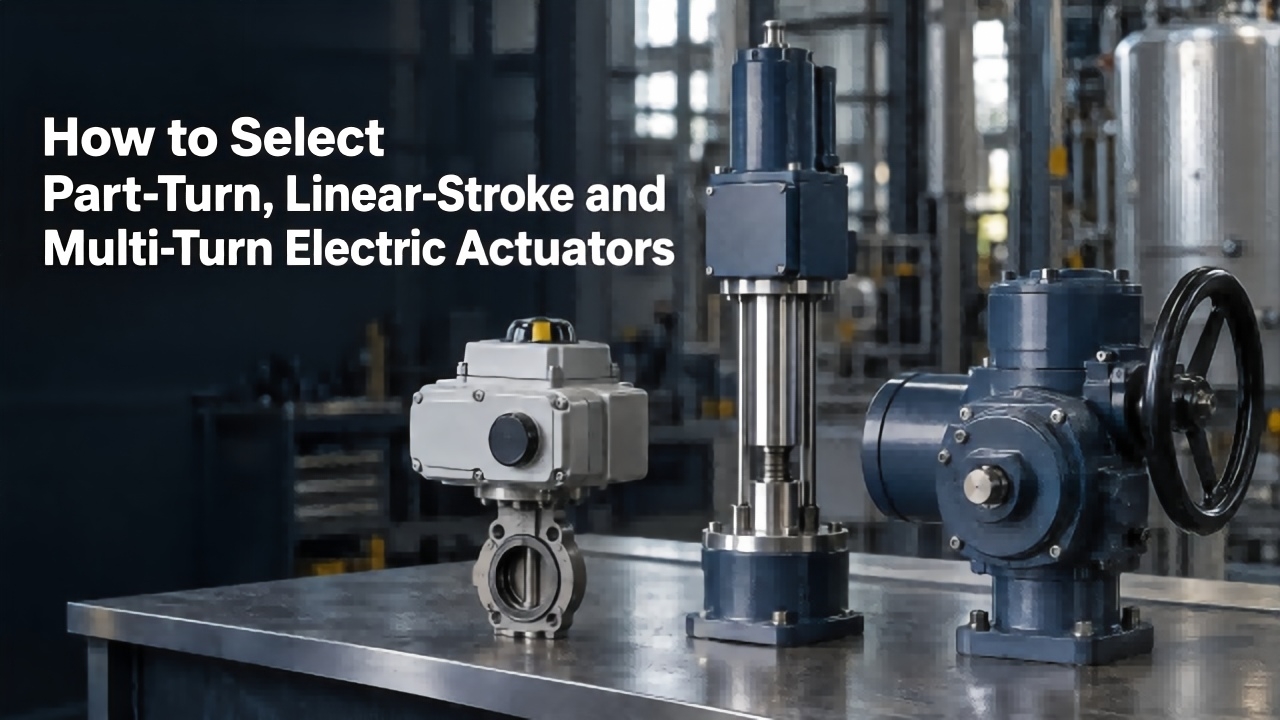
Learn differences among part‑turn, linear‑stroke and multi‑turn electric actuators. This guide covers matching valves, torque‑thrust calculation, 5‑step selection process and typical pitfalls for your industrial actuator applications.
How to Select Part‑Turn, Linear‑Stroke and Multi‑Turn Electric Actuators
Learn about electric actuator response speed, internal and external influencing factors and key selection points, to select suitable actuators for valve automation projects and ensure efficient and stable system operation.
Response Speed of Switch‑Type Electric Actuator
Valve Actuator Wiring describes wiring, commissioning and troubleshooting for electric valve actuators, guiding technicians to adopt standard wiring for stable industrial control.
Valve Actuator Wiring
Valen Tech explains electric valve actuator torque control and overload protection functions. Learn how multi‑turn & part‑turn actuators prevent jamming and mechanical damage for petroleum, chemical, power and water pipeline systems.
Introduction to Torque Control and Overload Protection Functions of Electric Valve Actuators