
Rack and Pinion Pneumatic Actuators: Single-Acting and Double-Acting
author: ATHENA GROUP
2025-10-27
Rack and pinion pneumatic actuators are core equipment for industrial valve automation. They are widely favored for their compact design, fast response, and adaptability to harsh environments. ValenTech, a leader in industrial automation solutions, offers a series of high-quality rack and pinion pneumatic actuators (including single-acting and double-acting models). The following will detail their working principles, torque characteristics, and core selection factors to help you choose the right ValenTech actuator for your application scenario.
1. Selection and Torque Characteristics
1.1 Core Torque Concepts of ValenTech Actuators
- Breakaway Torque: The initial force required to overcome valve stem friction and sealing pressure. ValenTech's rack and pinion design minimizes breakaway torque through precision-machined gears and low-friction seals, making it suitable for tightly sealed valves in chemical processes.
- Running Torque: The continuous torque required to maintain valve movement. ValenTech actuators maintain stable running torque at operating pressures of 0.5–100 bar, suitable for continuous cycle applications such as oil and gas pipeline flow control.
- End-of-Stroke Torque: The torque when the valve is fully open/closed. ValenTech double-acting actuators provide equal torque in both directions, while single-acting models deliver higher torque in the spring return direction (critical for fail-safe scenarios).
1.2 ValenTech Actuator Selection Guide
To select the appropriate ValenTech actuator, follow these steps:
- Determine valve torque requirements: Refer to the valve manufacturer's data sheet to obtain breakaway torque and running torque values.
- Reserve a safety margin: ValenTech recommends reserving a 25–50% safety margin based on calculated torque to accommodate pressure fluctuations and long-term wear. Match the actuator with operating pressure: ValenTech rack and pinion actuators are suitable for 4–8 bar compressed air. Higher supply pressure results in greater torque output — use ValenTech's torque chart to cross-reference pressure, actuator size, and torque output.
- Consider environmental conditions: For extreme temperatures (-40°C to 80°C) or explosive environments (ATEX/IECEx certified), select ValenTech's reinforced models equipped with stainless steel components and explosion-proof enclosures.
- Note: When selecting a pneumatic actuator, an additional safety margin must be added to the determined valve torque:
- Add 20% safety margin for clean, low-friction lubricating media;
- Add 25% safety margin for steam or non-lubricating liquid media;
- Add 30% safety margin for non-lubricating slurry liquid media;
- Add 40% safety margin for non-lubricating dry gas media;
- Add 60% safety margin for non-lubricating granular powder media conveyed by gas;
(The above safety margins are theoretical recommendations of our company for reference only)
2. Working Principle of Double-Acting Rack and Pinion Actuators
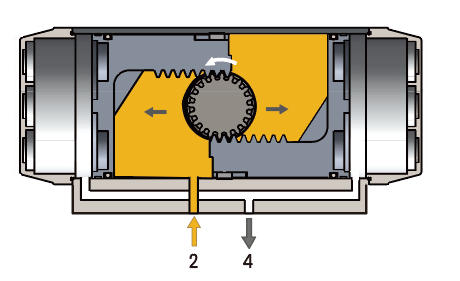
When air supply pressure enters the middle chamber between the two pistons of the cylinder through air port (2), the two pistons separate and move toward the two ends of the cylinder. The air in the air chambers at both ends is discharged through air port (4), and at the same time, the rack on both pistons synchronously drives the output shaft (gear) to rotate counterclockwise.
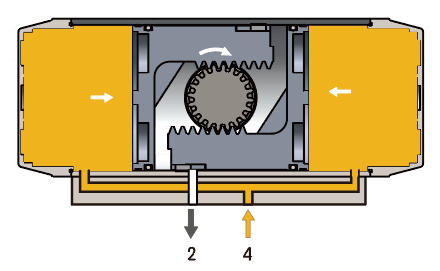
Conversely, when air supply pressure enters the air chambers at both ends of the cylinder through air port (4), the two pistons move toward the middle of the cylinder. The air in the middle chamber is discharged through air port (2), and at the same time, the rack on both pistons synchronously drives the output shaft (gear) to rotate clockwise. If the pistons are installed in the opposite direction, the output shaft will rotate in the reverse direction.
Double-Acting Actuator - Selection Example
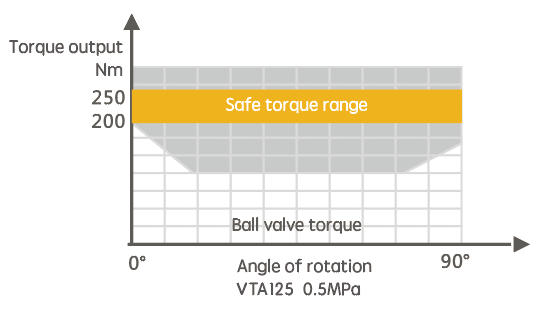
When controlling a ball valve requiring 200Nm torque with an air supply pressure of only 0.5MPa and non-lubricating steam as the medium, a 25% safety margin (required for safety) results in 250Nm. Check the double-acting output torque table for an air supply pressure of 0.5MPa, then vertically search the column for the equal or closest torque value (254.9Nm). Finally, search left along the row to find the model: select VTA125.
3. Working Principle of Single-Acting Rack and Pinion Actuators
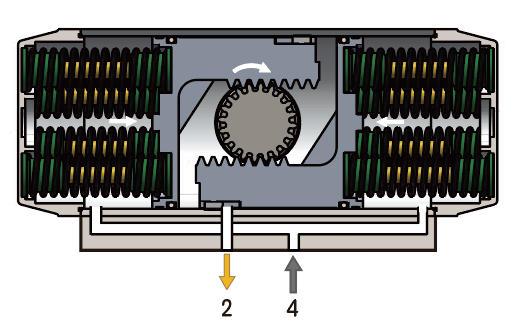
When air supply pressure enters the middle chamber between the two pistons of the cylinder through air port (2), the two pistons separate and move toward the two ends of the cylinder, forcing the springs at both ends to compress. The air in the air chambers at both ends is discharged through air port (4), and at the same time, the rack on both pistons synchronously drives the output shaft (gear) to rotate counterclockwise.
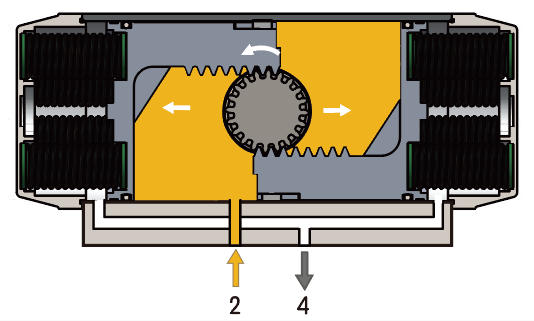
After the air supply pressure is reversed through the solenoid valve, the two pistons of the cylinder move toward the middle under the elastic force of the springs. The air in the middle chamber is discharged from air port (2), and at the same time, the rack on both pistons synchronously drives the output shaft (gear) to rotate clockwise. (If the pistons are installed in the opposite direction, the output shaft will rotate in the reverse direction)
Single-Acting Actuator - Selection Example
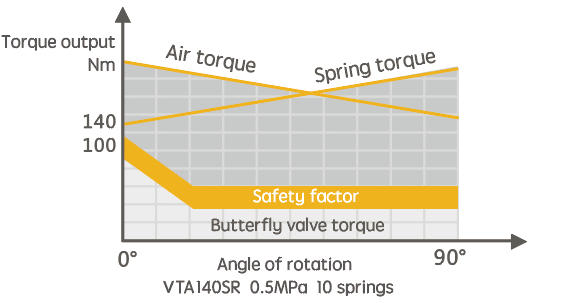
When controlling a butterfly valve requiring 100Nm torque with an air supply pressure of 0.5MPa and non-lubricating dry gas as the medium, a 40% safety margin (required for safety) results in 140Nm. Check the single-acting output torque table to find the closest torque (172Nm) at the end of spring return. Then search left along the row to find the end torque (168Nm) at an air supply pressure of 0.5MPa. It is necessary to consider the relative force balance between the air supply pressure torque and the spring return torque. Finally, search left along the row to find the model and number of springs: select VTA140SR with 10 springs
Why Choose ValenTech Rack and Pinion Pneumatic Actuators?
ValenTech single-acting and double-acting rack and pinion pneumatic actuators offer the following advantages:
- Industrial-grade durability: Constructed with aluminum alloy valve bodies (anodized for corrosion resistance) and stainless steel internal components, suitable for a temperature range of -40°C to 80°C.
- Precision engineering: Complies with ISO 5211 mounting standards for easy integration with global valve brands.
- Safety certifications: Certified by ATEX, IECEx, and SIL 3, suitable for explosive environments and safety-critical scenarios.
- Global support: Provides a 2-year warranty, 24/7 technical support, and a global distributor network to serve customers in the petrochemical, chemical, and industrial sectors.
Contact ValenTech today for free torque calculation and customized actuator recommendations. Visit [ValenTech Official Website] or send an email to k.pan@athenavalve.com for a quote!
Why Choose a Double-Acting Actuator Over a Single-Acting One
What Actuators Are Used in Boats and Marine Applications
Related Article
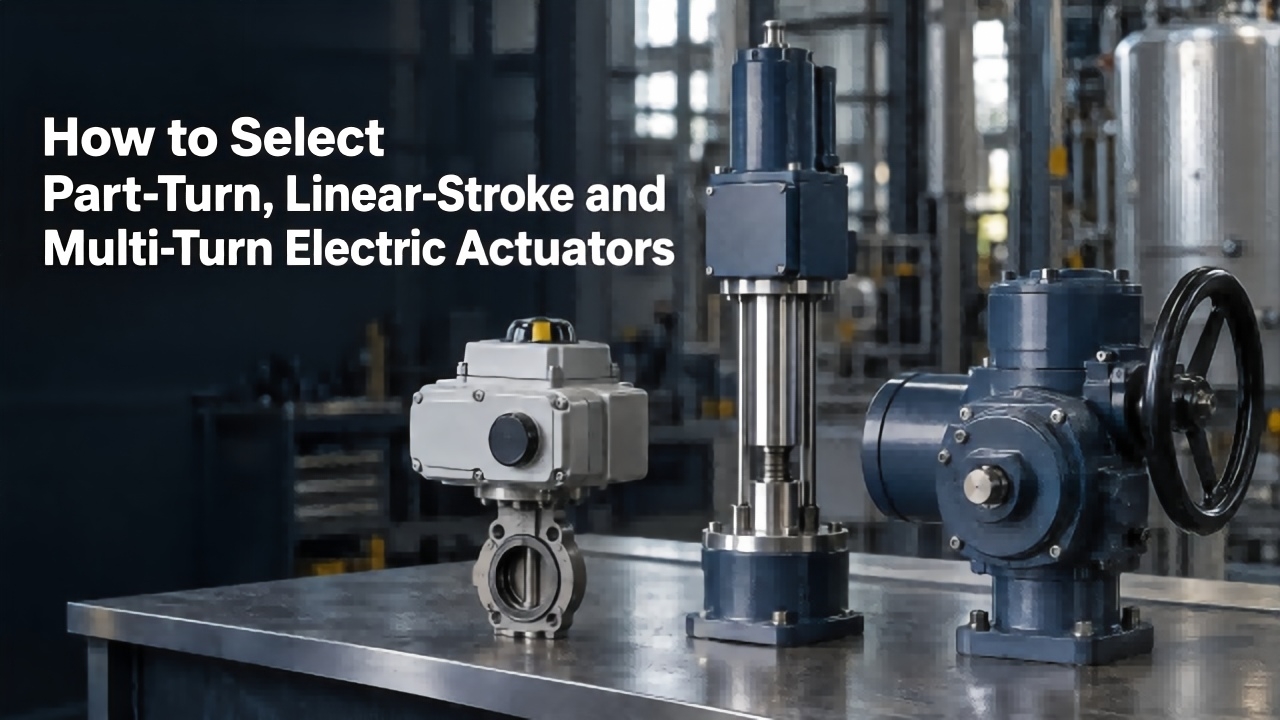
Learn differences among part‑turn, linear‑stroke and multi‑turn electric actuators. This guide covers matching valves, torque‑thrust calculation, 5‑step selection process and typical pitfalls for your industrial actuator applications.
How to Select Part‑Turn, Linear‑Stroke and Multi‑Turn Electric Actuators
Learn about electric actuator response speed, internal and external influencing factors and key selection points, to select suitable actuators for valve automation projects and ensure efficient and stable system operation.
Response Speed of Switch‑Type Electric Actuator
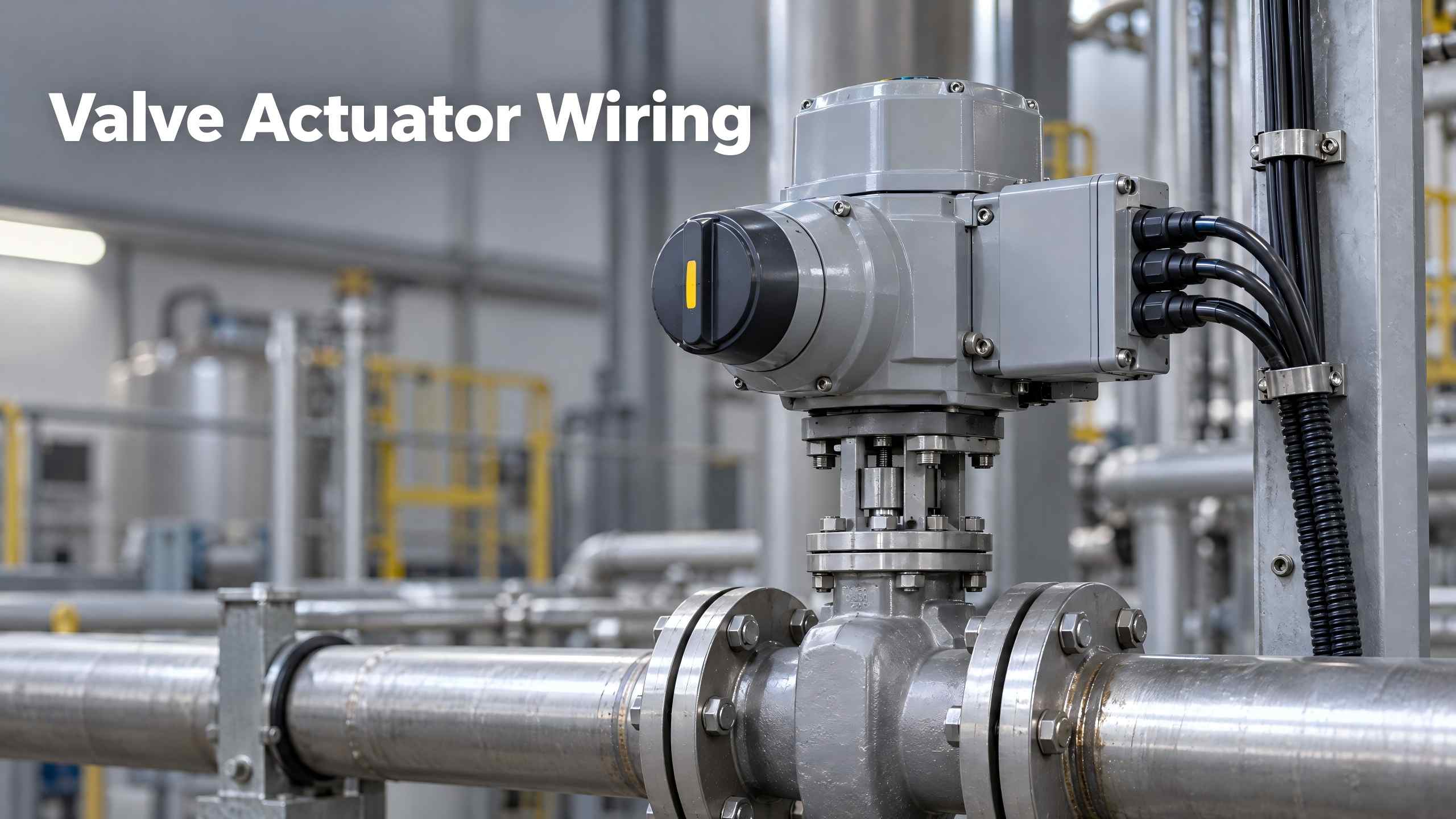
Valve Actuator Wiring describes wiring, commissioning and troubleshooting for electric valve actuators, guiding technicians to adopt standard wiring for stable industrial control.
Valve Actuator Wiring
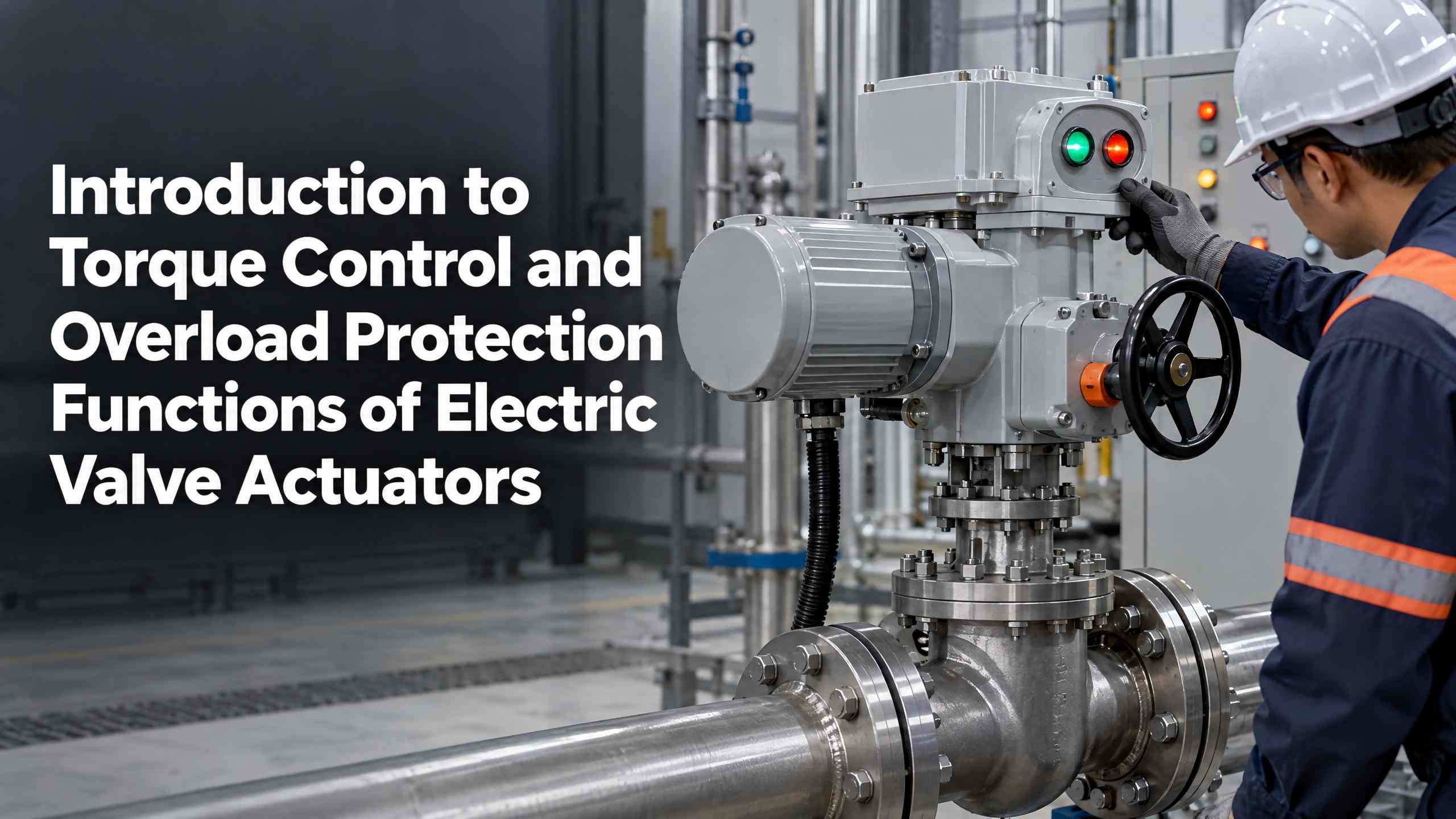
Valen Tech explains electric valve actuator torque control and overload protection functions. Learn how multi‑turn & part‑turn actuators prevent jamming and mechanical damage for petroleum, chemical, power and water pipeline systems.
Introduction to Torque Control and Overload Protection Functions of Electric Valve Actuators