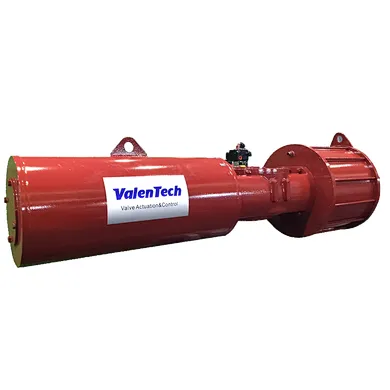
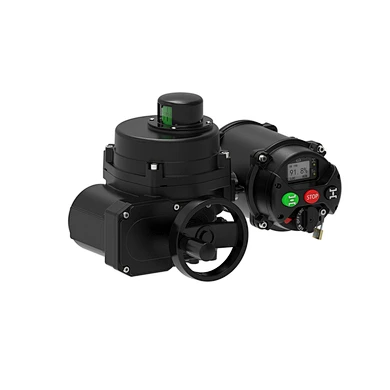
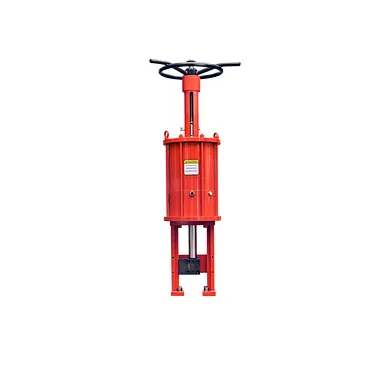
Single-Acting and Double-Acting Pneumatic Actuators Comparsion
Single-Acting vs. Double-Acting Pneumatic Actuators
Let’s cut through the datasheets and brochures.
If you’re specifying or maintaining pneumatic actuators, you’ve probably stood at this crossroads: “Do I go with single-acting or double-acting?”
It’s not just a technical checkbox. It’s a decision that impacts safety, efficiency, maintenance burden, energy costs — and whether your system keeps humming… or grinds to a halt at the worst possible moment.
This isn’t about which one is “better.” It’s about which one is right for your application.
Let’s dive in — no jargon without explanation, no marketing fluff. Just real engineering trade-offs, told like a seasoned pro walking you through it over a whiteboard.
Single-Acting Actuators — The “Spring-Return” Workhorse
What Exactly Is a Single-Acting Actuator?
Think of it as the minimalist’s actuator.
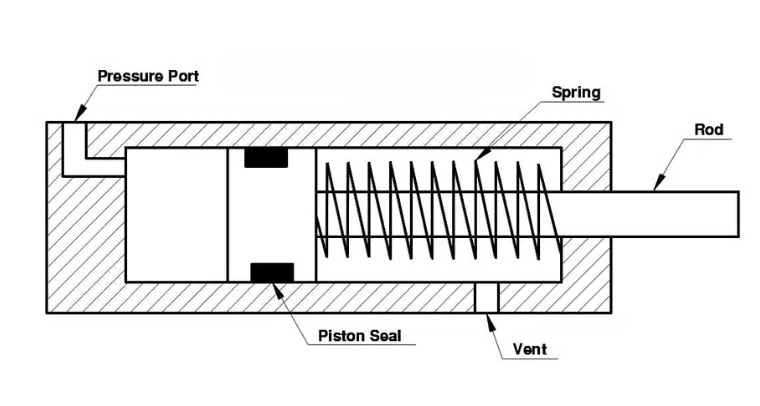
It’s powered by compressed air in one direction only — typically to open a valve or extend a piston. To return? It doesn’t ask for more air. Instead, it leans on a mechanical spring to snap back to its default position.
That’s why you’ll often hear it called a “spring-return” actuator.
It’s elegantly simple: air pushes, spring pulls. One input, one output, one fail-safe mechanism baked right in.
How It Actually Works (Without the Textbook Talk)
Imagine you’ve got a valve that needs to stay closed unless you actively tell it to open.
You send a puff of compressed air → piston moves → valve opens.
You cut the air → spring takes over → valve slams shut.
The spring isn’t just a convenience — it’s your insurance policy. If your air supply fails, leaks, or gets cut off during a power outage? The spring ensures your valve defaults to a known, safe state.
That’s not a feature — it’s a safety philosophy.
Where Single-Acting Shines (And Where It Stumbles)
The Advantages — Why You Might Fall in Love
-
Fail-Safe by Design
In critical systems — think chemical processing, emergency shutoffs, or boiler controls — you need your valve to return to a safe position when things go sideways. Single-acting delivers that, no extra logic or backup systems required. -
Lower Air Consumption = Lower Operating Costs
Since you’re only using air for half the cycle, your compressor works less. Over thousands of cycles, that adds up — in energy savings, reduced wear on air dryers, and smaller compressor sizing. -
Simpler = Cheaper (Usually)
Fewer ports, no dual air circuits, less complex valve manifolds. That means lower upfront cost, easier installation, and often simpler troubleshooting. -
Predictable Behavior in Failure Modes
You know where it’s going to end up if air is lost. That predictability is gold in safety instrumented systems (SIS) or SIL-rated applications.
The Limitations — Where It Might Let You Down
-
Spring Force Isn’t Perfect (Or Permanent)
Springs degrade. They fatigue. Temperature changes affect their tension. Over time, your “fail-safe” position might drift — or worse, the spring breaks and your actuator just… stays put. That’s a silent failure mode many forget to plan for. -
Asymmetrical Performance
Opening (air-powered) is strong and fast. Closing (spring-powered) is slower and weaker — and that force diminishes as the spring compresses. If your application needs equal speed or force in both directions? This ain’t it. -
Limited Precision & Control
You’re fighting spring hysteresis and nonlinear force curves. Don’t expect micron-level repeatability or smooth modulating control. This is on/off, open/close territory. -
Not Built for High Cycles
Every cycle is a hammer blow to that spring. At 10 cycles/hour? Fine. At 10 cycles/minute? You’re on borrowed time.
Real-World Use Cases — Where You’ll Find Them Doing Their Thing
- Clamping Fixtures — Holding a workpiece during machining. Air clamps it down, spring releases it. Simple. Reliable.
- Ejector Pins in Plastic Molding — Air pushes the part out of the mold, spring resets the pin. No fuss.
- Lifting Tables or Jacks — Air lifts the load, spring lowers it. Great for intermittent use.
- Emergency Vent or Relief Valves — Must default to open or closed during failure? Spring-return is your guardian angel.
Double-Acting Actuators — The Precision Powerhouse
What Sets Double-Acting Apart?
Forget springs. Forget asymmetry.
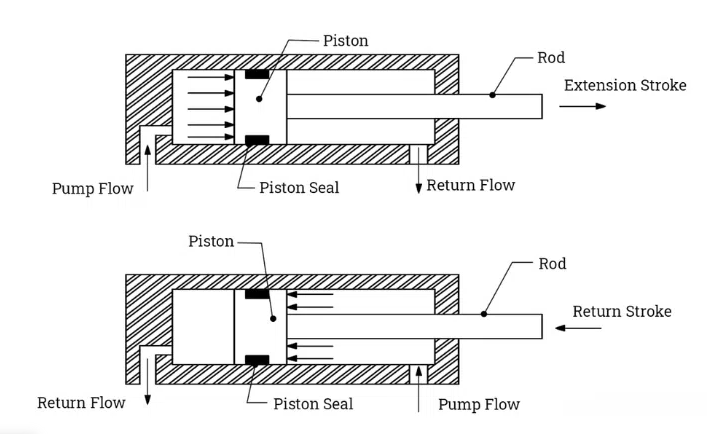
Double-acting actuators are fully powered in both directions — extend and retract — using compressed air on both sides of the piston.
Two air ports. Two control signals. Total command over motion. No compromises.
This is the actuator you choose when you need balanced force, high speed, precision positioning, or high-cycle durability.
How It Works (The Elegant Physics of It)
Picture a piston inside a cylinder. Air enters Port A → pushes piston right → valve opens.
Air enters Port B → pushes piston left → valve closes.
No springs. No gravity assists. Just pure, controlled pneumatic force — equally strong and fast in both directions.
Because both strokes are air-powered, you get:
- Consistent force output from start to finish
- Symmetrical speed profiles
- Precise stopping points (with the right valve and controls)
- No mechanical wear points like springs
It’s not just “more powerful” — it’s more controllable.
Why Engineers Reach for Double-Acting (And When They Regret It)
The Strengths — Where It Dominates
-
Symmetrical, High-Performance Motion
Need to open AND close with the same speed and force? Double-acting delivers. Perfect for synchronized movements or load balancing. -
Built for Endurance
No springs to fatigue. No asymmetrical wear. These actuators laugh at 100,000+ cycles. If your machine runs 24/7, this is your marathon runner. -
Precision Positioning (With the Right Controls)
Paired with a proportional valve or positioner, you can stop that piston anywhere in its stroke. Need 30% open? 75% extended? Done. -
Faster Response Times
Air-powered return means no waiting for a spring to decompress. Critical in high-speed automation, pick-and-place, or rapid sequencing. -
More Compact for the Same Force
Because you’re using air on both sides, you can often use a smaller bore to achieve the same force as a single-acting unit. Saves space. Saves weight.
The Trade-Offs — The Price of Power
-
Air Hungry
You’re consuming air on every single stroke — open AND close. Your compressor will work harder. Your energy bill will notice. Plan for it. -
Higher Initial Cost
More complex valving (5/2 or 5/3 valves), dual air lines, potentially more sensors. The BOM adds up. -
No Built-In Fail-Safe
Lose air pressure? The actuator stops. Right where it is. That might mean a valve stuck half-open during a shutdown. Dangerous? Maybe. You’ll need external solutions (air reservoirs, mechanical brakes, or logic controls) to handle failure modes. -
More Complex Control & Maintenance
Two air circuits to plumb. Two signals to manage. More potential leak points. More to go wrong — and more skill required to fix it.
Where You’ll See Double-Acting in Action
- Robotic Arms & Automation Cells — Precise, repeatable, high-speed motion in both directions? Mandatory.
- Conveyor Diverters & Gates — Fast, reliable switching under constant cycling? Double-acting thrives here.
- Machine Tools (Lathes, Mills, Presses) — Where controlled feed, clamping force, and repeatability are non-negotiable.
- Process Valves in Non-Safety-Critical Loops — Where modulating control or tight shut-off is needed, and a mid-stroke failure won’t cause a catastrophe
Single-Acting vs. Double-Acting Pneumatic Actuators Head-to-Head Comparsion
| Criteria | Single-Acting | Double-Acting |
|---|---|---|
| Power Source | Air (one way) + Spring (return) | Air (both ways) |
| Fail-Safe Behavior | ✅ Returns to defined safe position | ❌ Stops in place (requires add-ons) |
| Force Symmetry | ❌ Asymmetrical (spring weaker) | ✅ Symmetrical, consistent force |
| Precision & Control | ❌ Limited (on/off) | ✅ High (with proper valving & control) |
| Cycle Life | ⚠️ Limited by spring fatigue | ✅ Excellent (no springs to wear) |
| Air Consumption | ✅ Low (half-cycle powered) | ❌ High (full-cycle powered) |
| Upfront Cost | ✅ Lower | ❌ Higher |
| Maintenance Complexity | ✅ Simple | ❌ More complex |
| Best For | Safety-critical, low-cycle, budget apps | High-cycle, precision, speed, control |
How to Choose — The Engineer’s Decision Framework
Don’t guess. Don’t default. Ask these questions:
1. “What happens if I lose air pressure?”
→ If “catastrophe,” choose single-acting (spring-return = automatic safety).
→ If “inconvenience,” double-acting is fine — but plan your failure mode strategy.
2. “How many cycles per day/hour?”
→ < 100 cycles/day? Single-acting can handle it.
→ > 1,000 cycles/day? Double-acting — your springs will thank you.
3. “Do I need precision positioning or modulating control?”
→ Simple open/close? Single-acting.
→ Need to stop at 40% stroke? Hold intermediate positions? Double-acting + positioner.
4. “What’s my energy budget?”
→ Tight on kWh? Single-acting saves air.
→ Got compressor capacity to spare? Double-acting won’t hold back.
5. “What’s my maintenance team’s skill level?”
→ Limited resources? Single-acting = fewer failure points.
→ Skilled technicians on staff? Double-acting = more capability, more complexity.
6. “Is space or weight at a premium?”
→ Need max force in minimal space? Double-acting often wins.
There’s no universal “best.”
- Single-acting is your loyal, simple, safety-first companion. It won’t wow you with speed or precision, but it’ll save your bacon when the power fails.
- Double-acting is your high-performance athlete. Fast, strong, precise — but it demands more fuel, more care, and more planning.
Your job isn’t to pick the “better” actuator. It’s to match the tool to the task.
Know your priorities:
→ Safety? → Single.
→ Speed & cycles? → Double.
→ Precision? → Double.
→ Budget & simplicity? → Single.
Design with intention. Specify with confidence.
And if you’re ever in doubt?
Default to safety. Then optimize.
Got a specific application you’re wrestling with? Describe it — valve type, cycle rate, failure mode tolerance, space constraints — and I’ll tell you which actuator to spec. No charge. Just good engineering.