How Does a Spring-Return Scotch Yoke Actuator Work
How Does a Spring-Return Scotch Yoke Actuator Work
When it comes to automating quarter-turn valves in critical industrial processes, not all pneumatic actuators are created equal. Among the various designs available, the spring-return scotch yoke actuator stands out for its distinctive mechanical behavior and performance characteristics.
But what exactly makes it different? How does it convert air pressure into motion — and why is that important?
Let’s dive deep into the mechanics of this specialized actuator, exploring each aspect with precision, while keeping things practical for engineers, technicians, and system designers who need reliable automation solutions.
What Is the Core Principle Behind the Scotch Yoke Design?
At its heart, the scotch yoke mechanism converts linear motion into rotary output using a simple yet powerful mechanical principle: a sliding pin moving within a slotted lever (the yoke) that is fixed to a rotating shaft.
Unlike gear-based systems like rack-and-pinion actuators, which rely on meshing teeth to transfer force, the scotch yoke uses direct mechanical leverage — more akin to how a piston drives a crankshaft in an engine.
Here’s how it works:
- Compressed air (typically supplied at 60–100 psi, as outlined in Valen Tech Co., Ltd.'s guide) enters one side of a double-acting cylinder.
- This forces a piston to move linearly along its bore.
- Attached to the piston is a crosshead pin that engages with a slot machined into the yoke.
- As the piston moves, the pin slides through the slot, forcing the yoke — and thus the connected output shaft — to rotate by 90°.
In a spring-return version, only one stroke is powered by air. The return stroke relies on a pre-compressed spring pack located on the opposite side of the piston. When air exhausts from the powered chamber, the stored energy in the springs pushes the piston back, reversing the rotation.
This creates a single-acting actuator with inherent fail-safe functionality — a key advantage in safety-critical applications.
Why Does the Torque Profile Matter — And How Is It Different?
Most people assume that a good actuator delivers smooth, uniform torque throughout its stroke. But in reality, the best actuators match their force output to the actual demands of the load.
The scotch yoke excels here because of its unique torque profile — one that naturally aligns with the physics of valve operation.
So, what does this torque curve look like?
✅ Maximum Torque at Start and End of Stroke
Due to the geometric relationship between the angle of the yoke and the position of the pin, the mechanical advantage varies across the rotation:
- At 0° (fully closed) and 90° (fully open), the effective moment arm is longest — meaning maximum torque is produced.
- In the middle third of the stroke (around 45°), the moment arm shortens, resulting in lower torque output.
While this may seem counterintuitive, it’s actually ideal for most quarter-turn valves.
Consider the real-world forces acting on a ball or butterfly valve:
- Breakaway torque: The highest resistance occurs when trying to unseat the valve after being sealed under pressure. Static friction and seal compression require peak force right at the start.
- Seating torque: Just before full closure, the valve must reseat tightly against its seat to achieve bubble-tight shutoff — again requiring high force at the end of travel.
A scotch yoke actuator delivers exactly that: peak torque where it's needed most, rather than wasting energy with excess force in the middle of the stroke.
Compare this to a rack-and-pinion actuator, which produces nearly constant torque due to fixed gear ratios. While predictable, it doesn’t optimize efficiency for typical valve dynamics.
How Does the Spring-Return Function Enhance System Safety?
Safety isn't just a feature — it's a design imperative in industries like oil & gas, chemical processing, and power generation.
The spring-return function transforms the scotch yoke actuator from a mere motion device into a passive safety component.
But how does it work in practice?
When control air is applied, the piston moves forward, compressing the internal spring pack. That stored mechanical energy remains ready until the signal stops.
Upon loss of air pressure — whether due to emergency shutdown, compressor failure, or control system fault — the springs expand instantly, driving the piston back and returning the valve to its safe position.
This means:
- No reliance on backup power sources
- No need for solenoid logic or complex fail-safe circuits
- Immediate response without software delays
It’s inherently safe engineering: simple, mechanical, and always ready.
And unlike electric or electro-hydraulic systems, there's no risk of spark ignition — making it ideal for hazardous areas classified under NEC/CEC or ATEX standards.
Can It Deliver Consistent Performance Under Real-World Conditions?
Absolutely — but only if the entire pneumatic circuit supports it.
Even the best-designed actuator will underperform if fed poor-quality air.
As noted in Valen Tech Co., Ltd.’s article:
“The vast majority of standard industrial compressed air systems operate within a range that's ideal for pneumatic actuators:
- 60 to 100 psi (4 to 7 bar)”
This pressure band ensures sufficient force production without over-stressing components. If your actuator receives less than 60 psi, especially during dynamic operation, it may struggle to overcome breakaway torque.
But pressure isn’t the only factor.
Other real-world conditions affect performance:
- Air contamination: Moisture, dust, or pipe scale can clog regulator orifices or damage seals.
- Temperature extremes: Cold environments increase fluid viscosity; heat accelerates seal degradation.
- Vibration and misalignment: Can lead to binding in the yoke mechanism or uneven wear.
To ensure consistent performance: ✅ Use properly sized FRL units (Filter-Regulator-Lubricator)
✅ Install automatic drain traps on filter bowls
✅ Protect external linkages from physical damage
✅ Perform regular functional testing and preventive maintenance
With proper support, a scotch yoke actuator can deliver millions of reliable cycles — even in harsh environments.
How Does It Integrate With Control Systems Using Pneumatic Signals?
You might think that a purely mechanical actuator has no place in modern control systems — but nothing could be further from the truth.
Even though the scotch yoke operates on air, it can be fully integrated into sophisticated process loops using the long-standing 3–15 psi pneumatic signal standard.
But wait — isn’t that low compared to the 60–100 psi used for power?
Yes — and that’s the point.
There’s a crucial distinction between:
- Signal air (3–15 psi): The "command" that tells the system what to do
- Power air (60–100+ psi): The "muscle" that performs the work
For modulating control — such as adjusting a valve to 50% open — the 3–15 psi signal acts as a proportional input.
Here’s how it integrates:
- A controller sends a 3–15 psi command signal based on process variables (e.g., temperature, flow).
- This signal goes to a pneumatic positioner mounted on the actuator.
- The positioner interprets the signal and regulates high-pressure power air to the actuator’s cylinder.
- For example:
- 3 psi signal = Fully closed
- 9 psi signal = 50% open
- 15 psi signal = Fully open
Even in a spring-return model, this allows precise positioning — while still retaining the ability to automatically return to safety upon signal or air loss.
And for plants transitioning to digital systems, an I/P transducer (current-to-pneumatic converter) can accept a 4–20 mA electronic signal and convert it into the standard 3–15 psi pneumatic output.
This hybrid approach combines the reliability of pneumatic actuation with the flexibility of modern control networks.
Why Choose This Mechanism Over Alternatives Like Rack-and-Pinion?
It comes down to application-specific optimization.
Rack-and-pinion actuators are excellent generalists — robust, widely available, and suitable for many on/off and modulating tasks. But they’re not optimized for every scenario.
The scotch yoke shines when you need:
- ✅ High starting torque for tight-sealing valves
- ✅ Fail-safe operation without auxiliary systems
- ✅ Compact size for high torque output
- ✅ Mechanical simplicity with fewer wearing parts
- ✅ Integration with legacy or hazardous-area control systems
In contrast, rack-and-pinion:
- Offers smoother mid-stroke torque
- Better suited for high-cycle automation
- More common in non-safety-critical roles
So the choice isn’t about which is “better” overall — it’s about matching the tool to the job.
If your priority is process safety, sealing integrity, and mechanical efficiency, then the spring-return scotch yoke isn’t just a viable option — it’s often the superior engineering decision.
Masterclass in Purpose-Driven Design
The spring-return scotch yoke pneumatic actuator is more than a mechanical curiosity — it’s a purpose-built solution for some of the most demanding challenges in industrial automation.
Its brilliance lies not in complexity, but in precision alignment between form and function:
- The torque curve matches valve dynamics
- The spring return ensures safety
- The pneumatic interface enables both analog and digital integration
At Valen Tech Co., Ltd., we believe that true innovation respects the fundamentals. Whether you're specifying actuators for a new plant or upgrading an aging system, understanding how and why a technology works leads to smarter, safer, and more efficient outcomes.
👉 Explore our range of pneumatic actuation solutions
👉 Contact us for technical consultation or custom configurations
Because in critical operations, the right actuator doesn’t just perform — it protects.


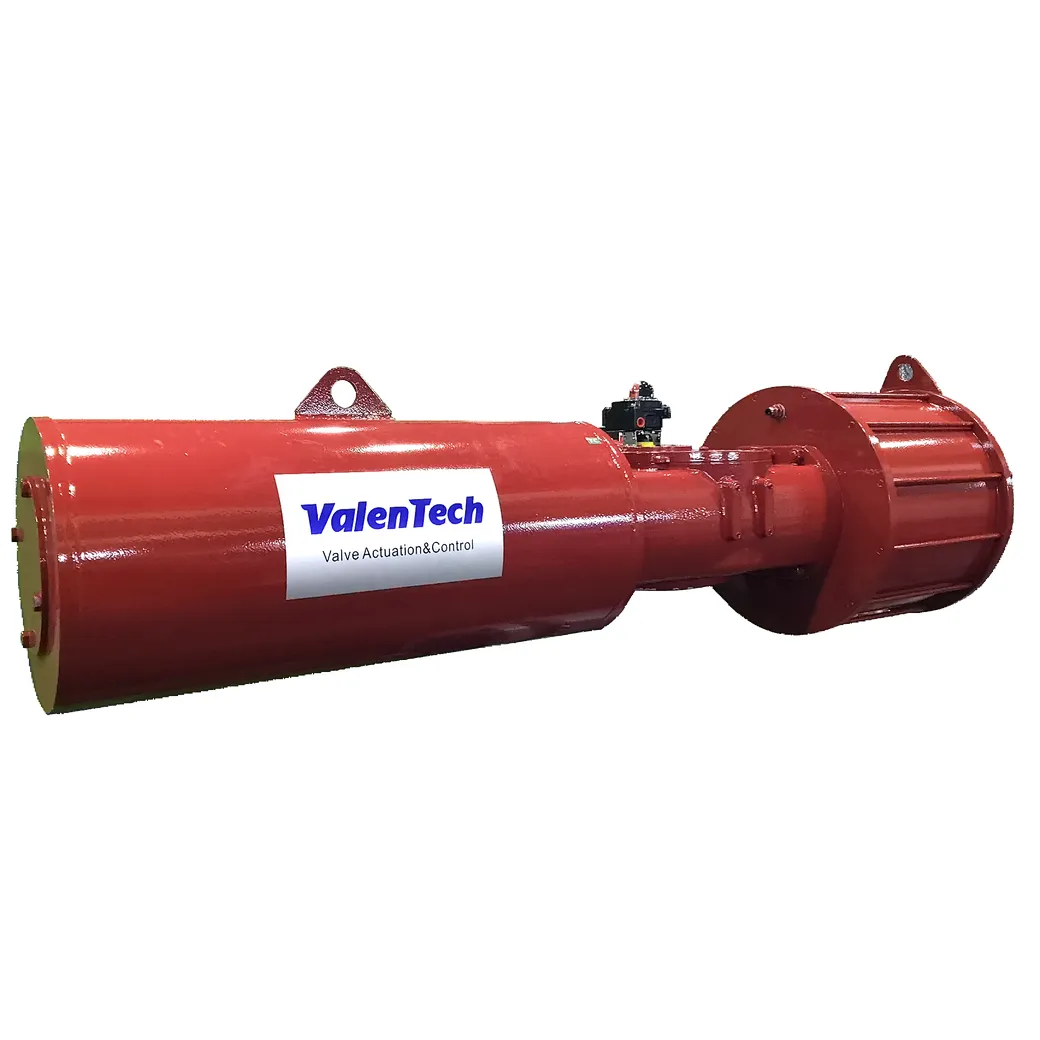


How Does the Spring-Return Function Enhance System Safety
Function of Actuator Valve
Related Article