The Applications of a Spring-Return Scotch Yoke Pneumatic Actuator
The Applications of a Spring-Return Scotch Yoke Pneumatic Actuator
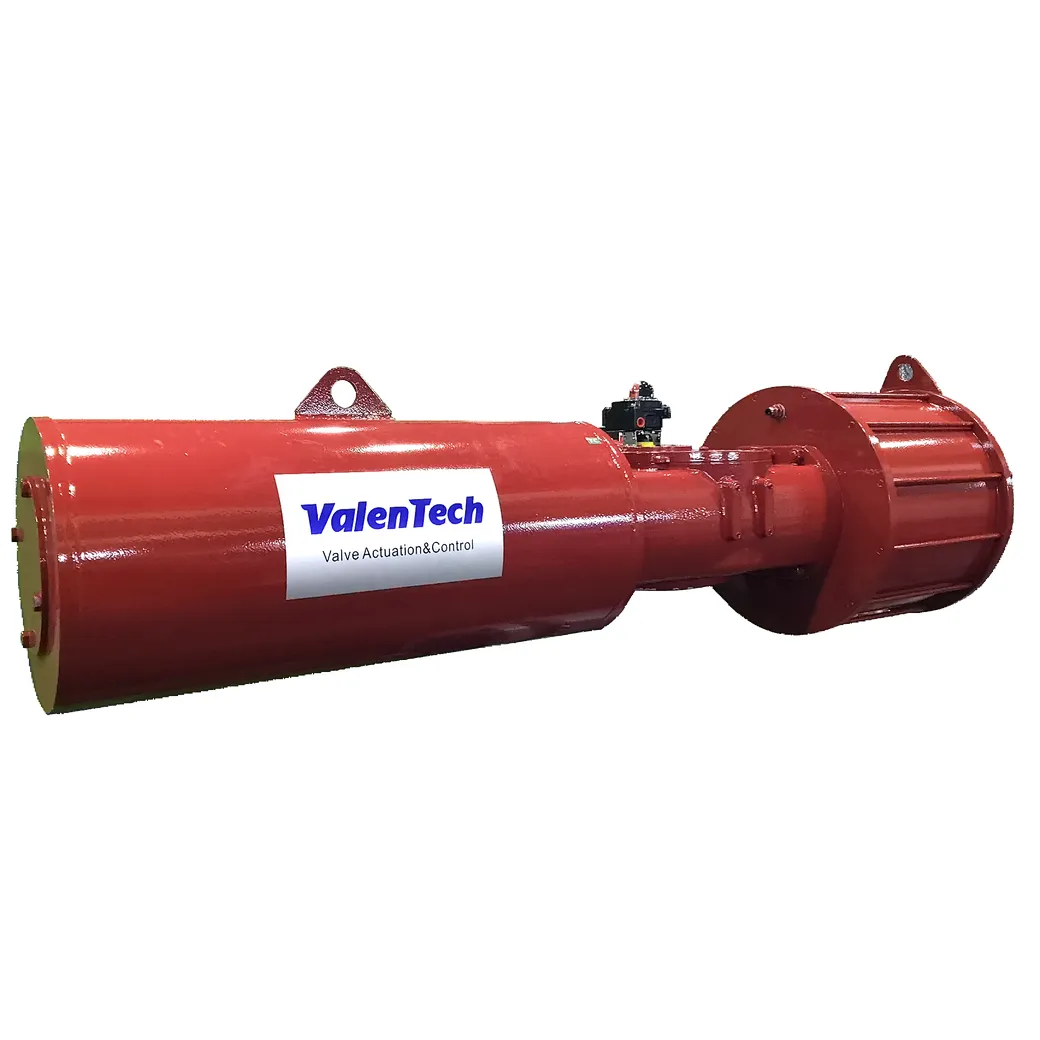
The spring-return scotch yoke pneumatic actuator is more than just a mechanical device; it’s a purpose-built solution for some of the most demanding and safety-critical applications in industrial automation. Its unique combination of high starting torque, inherent fail-safe operation, and robust design makes it the preferred choice when process integrity, personnel safety, and system reliability are non-negotiable.
But where exactly is this specific type of actuator used? Why choose it over a rack-and-pinion or electric alternative?
Let’s explore its real-world applications in depth — not as a simple list, but as an engineering narrative that reveals why this technology dominates in certain high-stakes environments.
What Makes This Actuator Suitable for Critical Processes?
To understand its applications, we must first understand its strengths.
A spring-return scotch yoke actuator uses compressed air (typically within the standard industrial range of 60–100 psi / 4–7 bar, as noted on Valen Tech Co., Ltd.'s website) to drive one stroke — usually opening a valve — while relying on powerful internal springs to return it to a safe position when air pressure is released.
This creates a single-acting actuator with two defining features:
- Fail-safe functionality: If control air fails, the valve automatically moves to a pre-determined safe state.
- Optimized torque profile: Maximum force at the start and end of the stroke — ideal for overcoming breakaway friction and achieving bubble-tight shutoff.
These characteristics make it uniquely suited for applications where automatic response to failure is more important than continuous cycling or bidirectional power.
Why Is It Commonly Found in Oil & Gas Facilities?
Because in oil & gas, a single uncontrolled release can lead to catastrophic consequences.
In upstream, midstream, and downstream operations — from offshore platforms to refineries — the spring-return scotch yoke actuator plays a vital role in emergency shutdown (ESD) systems.
How It Works in Practice:
- A sensor detects overpressure, fire, or gas leak.
- The control system cuts the air signal to the actuator.
- Internal springs instantly close the isolation valve, stopping hydrocarbon flow.
Its ability to operate without electricity, coupled with intrinsic safety (no sparks), makes it perfect for hazardous areas governed by ATEX, IECEx, or NEC standards.
It’s commonly used on:
- Wellhead isolation valves
- Pipeline block valves
- Flare line controls
- Blowdown valves
- Tank farm emergency vents
In these scenarios, reliability isn’t just desirable — it’s legally mandated.
Can It Handle High-Pressure or Corrosive Chemical Processes?
Absolutely — and often better than alternatives.
Chemical processing plants deal with aggressive media, high pressures, and extreme temperatures. Valves here must seal tightly and respond reliably during emergencies.
The scotch yoke excels because:
- Its peak torque matches the high breakaway forces required to open seated valves under pressure.
- The compact housing minimizes external connections, reducing leak paths.
- Materials like anodized aluminum, stainless steel shafts, and fluoropolymer seals resist corrosion.
Typical Uses Include:
- Reactor feed and discharge control
- Acid transfer lines
- Solvent recovery systems
- Neutralization circuits
When paired with a pneumatic positioner receiving a 3–15 psi signal, it can also perform modulating duties — adjusting flow rates based on process variables while still retaining its fail-closed or fail-open capability upon signal loss.
This dual function — precise control plus automatic safety response — is invaluable in batch processes where both accuracy and protection matter.
How Does It Contribute to Water and Wastewater Treatment?
While less dramatic than oil rig blowdowns, water treatment systems rely heavily on fail-safe logic to protect infrastructure and public health.
Here, the spring-return scotch yoke ensures that critical flows are maintained or stopped when needed — even during power outages.
Key Applications:
- Pump station bypass valves: Fail-open to prevent flooding if controls fail.
- Chlorine injection lines: Fail-closed to avoid over-chlorination or toxic releases.
- Sludge dewatering systems: Used to control slurry flow into centrifuges or filter presses.
- Odor control scrubbers: Regulates airflow in volatile organic compound (VOC) handling.
Many municipal facilities run on older pneumatic control systems using 3–15 psi signals, making integration seamless. Even modern upgrades often retain pneumatic actuators via I/P transducers that convert electronic commands into low-pressure air signals.
And since water plants often lack redundant power sources, the independence of pneumatic systems becomes a major advantage.
Is It Used in Power Generation Plants?
Yes — particularly in steam and turbine-based systems where rapid isolation is essential.
In power generation, whether fossil fuel, nuclear, or combined cycle, thermal expansion and high-energy fluids demand fast-acting, reliable shut-off mechanisms.
Where You’ll Find Them:
- Turbine bypass systems: Divert steam safely during startup or shutdown.
- Boiler feedwater lines: Close automatically on low drum level detection.
- Condenser vacuum breakers: Open quickly to stop turbines in emergencies.
- Cooling water isolation: Prevent overheating by closing off failed circuits.
The inherent speed of spring return (faster than motor-driven actuators) and immunity to electromagnetic interference (EMI) make it ideal for use near large generators and switchgear.
Additionally, in nuclear facilities, their passive safety aligns with defense-in-depth principles — no need for batteries or software to initiate a safe state.
Why Choose It Over Electric or Double-Acting Alternatives?
Every technology has trade-offs. Understanding why engineers specify this actuator requires comparing it to other options.
❌ Electric Actuators
While electric actuators offer precision and digital feedback, they require:
- Continuous power for operation
- Complex circuitry vulnerable to EMI
- Explosion-proof enclosures in hazardous zones
If power fails, many electric actuators remain in place unless backed up by UPS or motors designed for spring return — which adds cost and complexity.
The spring-return scotch yoke needs no backup power — just the stored energy in its springs.
❌ Double-Acting Pneumatic Actuators
Double-acting models use air for both strokes, offering balanced force and high cycle rates. But they hold their last position ("fail-last") when air is lost.
That means:
No automatic closure.
Risk of uncontrolled flow.
Potential environmental or safety hazards.
For critical safety functions, this behavior is unacceptable. Only a true fail-safe mechanism — like the spring return — provides assurance.
How Does It Integrate With Legacy and Modern Control Systems?
One of the greatest advantages of this actuator is its compatibility across generations of control technology.
In Legacy Plants:
- Operates directly with 3–15 psi pneumatic controllers
- Integrates with mechanical recorders, relays, and transmitters
- Requires no electrical interface
In Modern Digital Plants:
- Connects via I/P transducers that convert 4–20 mA signals into 3–15 psi command air
- Interfaces seamlessly with DCS, SCADA, or PLC systems
- Retains all benefits of pneumatic safety while accepting digital input
This hybrid capability allows plant operators to upgrade control logic without replacing field devices — extending asset life and reducing capital expenditure.
As Valen Tech notes:
“While newer industrial systems often utilize electronic signals… the 3–15 PSI pneumatic signal remains a fundamental standard and is still widely encountered.”
This continuity makes the spring-return scotch yoke not only relevant today but likely to remain so for decades.
When Should You Specify This Actuator?
You should consider a spring-return scotch yoke pneumatic actuator when your application involves any of the following:
| Requirement | Why It Fits |
|---|---|
| Emergency shutdown (ESD) | Automatically closes/isolates on air loss |
| Hazardous area classification | Spark-free, intrinsically safe operation |
| High breakaway torque | Peak force at stroke ends matches valve dynamics |
| Need for modulating + safety | Compatible with positioners while retaining fail-safe |
| Legacy system compatibility | Works with existing 3–15 psi infrastructure |
| Power-independent operation | Functions even during total electrical blackout |
From offshore rigs to chemical reactors, from water towers to power stations, this actuator serves where failure is not an option.
At Valen Tech Co., Ltd., we understand that true engineering excellence lies in matching the right tool to the task. Whether you're designing a new facility or maintaining a legacy system, our team supports the selection and integration of high-performance pneumatic solutions built for real-world demands.
👉 Explore our actuator product line
👉 Contact us for technical consultation or custom configurations
Because in critical operations, the right actuator doesn’t just move — it protects.




Actuator Valve Working Principle
Can a Spring-Return Actuator Be Used for Modulating Control
Related Article