What Makes a Water-Resistant Actuator IP68

What Makes a Water-Resistant Actuator IP68—And Why Does True Submersion Resistance Matter?
In environments where water isn’t just a nuisance but a constant threat—offshore platforms, agricultural sprayers, underwater robotics, or even urban flood-response systems—standard actuators simply won’t survive. Enter the IP68-rated water-resistant actuator: a sealed, robust electromechanical device engineered not just to withstand moisture, but to operate reliably while fully submerged for extended periods.
But what exactly earns an actuator the coveted “IP68” label? Is it just a rubber gasket and a marketing claim—or is there real engineering beneath the rating? Let’s dive in (pun intended) to uncover what truly separates a genuinely IP68 actuator from one that merely says it is.
What Does “IP68” Actually Mean—Beyond the Two Digits?
The “IP” stands for Ingress Protection, defined by the international standard IEC 60529. The two digits specify protection levels:
- First digit (6): Complete protection against dust ingress—no harmful deposits allowed, even under vacuum testing.
- Second digit (8): Protection against continuous immersion in water beyond 1 meter, under conditions specified by the manufacturer (e.g., depth, duration, temperature).
Critically, IP68 is not a universal standard for “any submersion.” Unlike IP67 (which mandates 30 minutes at 1 meter), IP68 allows the manufacturer to define the test parameters—so one actuator might be rated for 3 meters for 24 hours, while another handles 10 meters for weeks. Always check the test conditions in the datasheet—this is where true performance is revealed.
How Do Engineers Keep Water Out—Especially Under Pressure?
Keeping water out during submersion isn’t about a single seal—it’s about a multi-layered, system-level sealing strategy that addresses every potential entry point:
1. Dynamic Shaft Sealing
The actuator rod moves in and out, creating the toughest sealing challenge. IP68 actuators use:
- Multi-lip elastomeric seals (often made of FKM/Viton® or EPDM) that wipe the rod clean on every stroke.
- Spring-energized radial seals (e.g., PTFE lip seals with stainless steel springs) to maintain contact pressure even as the rod wears or under thermal cycling.
- Double-seal arrangements with a drain or breather port between them to detect or vent minor leakage before it reaches internals.
2. Static Housing Seals
Where the motor meets the gearbox, or end caps meet the tube:
- Precision-machined flange faces with surface roughness <1.6 µm Ra.
- Compressed O-rings in grooves with calculated squeeze (typically 15–30%) for reliable sealing.
- Thread sealants or anaerobic adhesives on fasteners to prevent wicking.
3. Electrical Penetration Protection
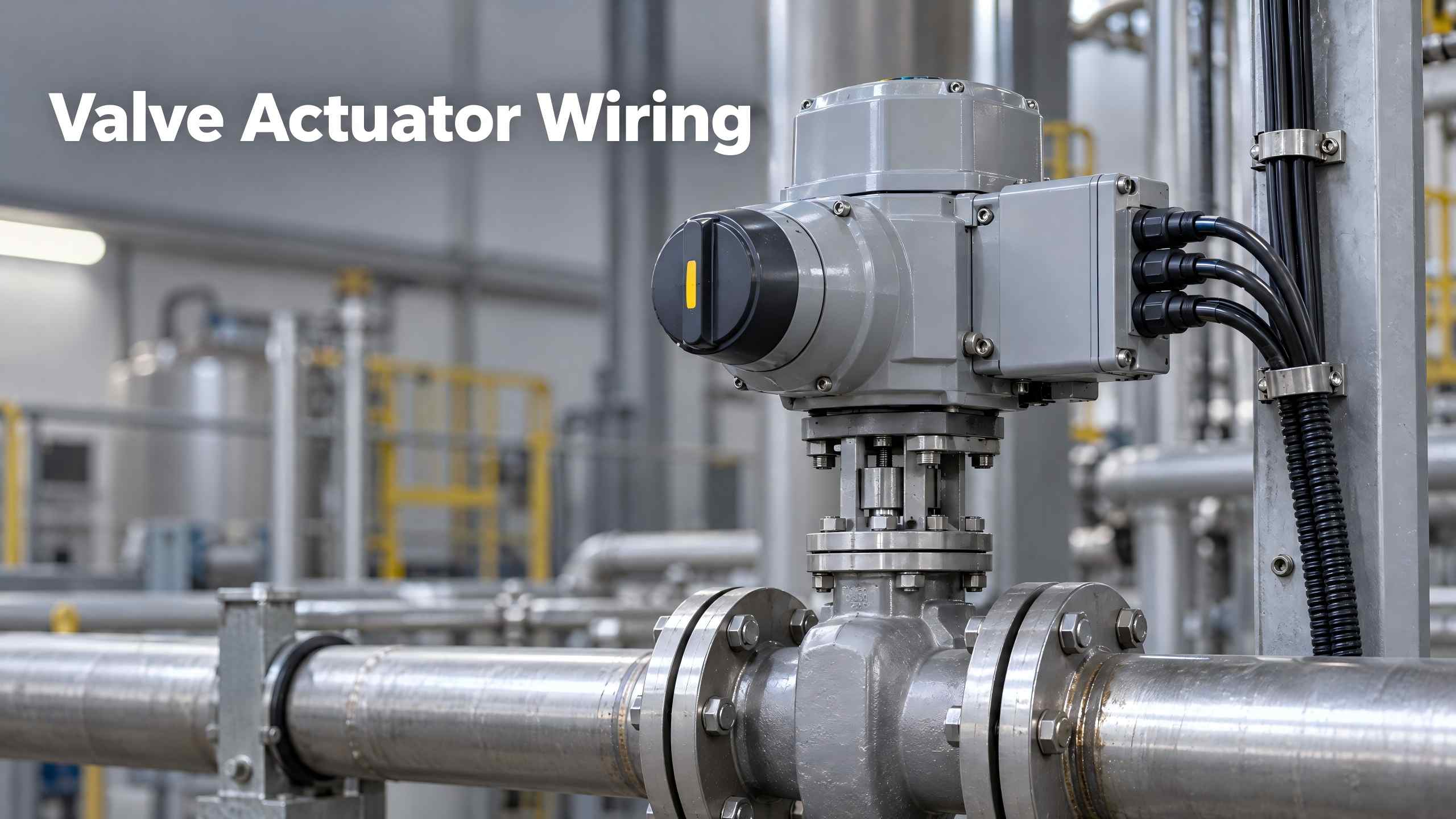
Cable glands are critical failure points. True IP68 units feature:
- Molded or overmolded cable entries (no separate glands) using thermoplastic elastomers (TPE) bonded directly to the conductor insulation.
- Double-wall strain relief to prevent cable pull from compromising the seal.
- Water-blocking tapes or gels inside the cable jacket as a secondary barrier.
Why Material Selection Is Just as Important as Sealing Geometry
Even the best seal fails if the housing corrodes or the elastomer degrades. IP68 actuators demand environmentally intelligent materials:
- Housing: Anodized aluminum (Type III hard coat) or marine-grade stainless steel (e.g., 316L) to resist saltwater pitting.
- Seal Elastomers:
- FKM (Viton®): Excellent for oils, fuels, and temperatures up to 200°C—but poor in brake fluids or ketones.
- EPDM: Superior for hot water, steam, and polar solvents—but swells in oils.
- FFKM (Kalrez®): Extreme chemical/temperature resistance (up to 300°C), but very high cost—used only in critical applications.
- Fasteners: Stainless steel (A4/316) with anti-galling coatings to prevent seizing in wet environments.
A mismatch here—like using NBR (nitrile) seals in hot seawater—leads to rapid hardening, cracking, and seal failure within months.
What Happens During IP68 Certification Testing—And Why Some “Rated” Actuators Still Fail?
Reputable manufacturers don’t just declare IP68—they validate it through rigorous, repeatable testing:
- Pre-conditioning: Thermal shock cycling (e.g., -25°C to +70°C) to simulate real-world expansion/contraction.
- Immersion Test: Submersion at the declared depth (e.g., 3 m) for the stated duration (e.g., 72 hours), often with the actuator cycling continuously to stress dynamic seals.
- Post-Test Inspection: Internal components must show zero water ingress—verified by moisture indicators, optical inspection, or functional testing.
Yet many “IP68” actuators fail in the field because:
- Testing was done statically (no motion during submersion), ignoring dynamic wear.
- Seals were rated for freshwater only, not saltwater or chemicals.
- Pressure differentials from internal heating (during operation) created suction that pulled water past compromised seals.
True IP68 performance requires testing under worst-case operational conditions—not just lab pass/fail.
How Does Internal Pressure Management Prevent “Breathing” and Seal Blowout?
A subtle but critical issue: when an actuator operates underwater, internal heat generation causes air inside to expand. If unvented, this can:
- Force lubricant past seals (“weeping”)
- Distort O-rings, creating micro-channels for water
Conversely, when power shuts off and the unit cools, it can suck in water like a straw—especially if seals are slightly worn.
High-integrity IP68 actuators solve this with:
- Closed-loop, oil-filled housings (no air = no expansion/contraction).
- Hydrophobic membrane vents (e.g., Gore® vents) that allow air exchange but block liquid water via surface tension—though these typically limit the rating to IP66/IP67, not true IP68.
- Hermetic sealing with no internal air volume—the gold standard for continuous submersion.
For true IP68, hermeticity is often non-negotiable.
Can an IP68 Actuator Handle Saltwater, Chemicals, or High-Pressure Jets?
IP68 ≠ universal environmental resistance. The rating only addresses clean, fresh water under specified conditions. Real-world challenges require additional considerations:
- Saltwater: Demands 316L stainless hardware, FKM seals, and crevice corrosion-resistant design.
- Chemical Exposure: Requires elastomer compatibility analysis (e.g., using Parker O-Ring Handbook charts).
- High-Pressure Cleaning: IP68 doesn’t cover high-velocity water jets—that’s IP69K, which tests resistance to 80°C water at 100 bar from 10–15 cm distance.
Always cross-reference IP68 with NEMA, ISO, or MIL-STD standards if your application involves harsh chemicals, abrasives, or cleaning protocols.
What Are the Common Failure Modes—And How Are They Designed Out?
Field data shows most “IP68” actuator failures stem from:
- Rod seal wear due to abrasive particles in water → mitigated by wiper seals and hardened rods (≥50 HRC).
- Galvanic corrosion between aluminum housing and stainless rod → prevented by insulating sleeves or all-stainless construction.
- Cable jacket degradation under UV or ozone → addressed with polyurethane or TPE jackets rated for outdoor use.
- Lubricant washout → solved by water-resistant greases (e.g., lithium complex with corrosion inhibitors).
Reliable IP68 design anticipates these failure paths and builds redundancy—not just a single point of sealing.
Why Does True IP68 Matter for Applications Like ROVs, Agricultural Sprayers, or Flood Barriers?
Because in these scenarios, failure isn’t inconvenient—it’s catastrophic:
- ROVs (Remotely Operated Vehicles): A leaking actuator can sink a $500k vehicle or abort a deep-sea mission.
- Agricultural Sprayers: Constant exposure to water, fertilizers, and pesticides demands chemical-resistant IP68—not just splash protection.
- Flood Control Gates: Must operate after weeks of submersion during emergencies; no maintenance access during events.
Here, IP68 isn’t a feature—it’s a non-negotiable reliability requirement. And that’s why leading manufacturers publish full test reports, not just a rating label.
What’s Next? The Push Toward IP69K, Corrosion Intelligence, and Self-Healing Seals
The frontier of water resistance is advancing:
- IP69K integration: Combining submersion resistance with high-pressure, high-temperature washdown capability for food processing or mining.
- Corrosion-monitoring sensors: Embedded electrodes detecting early-stage galvanic activity.
- Self-lubricating or self-healing polymer seals: Materials that recover from micro-abrasions.
- Digital twins for seal life prediction: Using operating hours, stroke count, and temperature to forecast maintenance.
The goal? Actuators that don’t just survive water—but thrive in it, for decades.
So—What Truly Makes an Actuator IP68?
It’s not a sticker. It’s not a single O-ring. It’s a holistic engineering discipline—spanning materials science, precision machining, dynamic sealing physics, and real-world validation.
A genuine IP68 actuator is designed, tested, and proven to operate where others drown. It reflects a commitment to long-term reliability over short-term cost savings, and to performance under pressure—literally.
In a world where machines must work in rain, rivers, oceans, and chemical baths, IP68 isn’t just a rating. It’s a promise—sealed in steel, rubber, and engineering integrity.




How to Test Actuated Valves
What Happens During IP68 Certification Testing
Related Article