What Makes Rack and Pinion Actuators So Popular in Industry
Where Are Rack and Pinion Actuators Commonly Applied? Real-World Answers for Engineers and Operators
If you’ve ever walked through a processing plant, water treatment facility, or industrial factory, chances are you’ve seen — and probably relied on — a rack and pinion pneumatic actuator, even if you didn’t realize it.
These compact, reliable devices quietly turn valves, control flow, and automate critical processes every day. They’re not flashy. You won’t find them in headlines. But in the world of industrial automation, they’re the unsung heroes that keep things moving — safely, efficiently, and predictably.
So where exactly do these actuators show up? And why do engineers keep coming back to them?
Let’s dive into the real-world applications — not with dry lists, but with the kind of practical insight that makes sense on the shop floor.
And yes — we’ll frame it all as questions, because that’s how decisions really happen:
“Which actuator should I use here?” “Will this handle the pressure?” “Can it survive outdoors?”
What Makes Rack and Pinion Actuators So Popular in Industry?
Before we talk about where they’re used, let’s answer why they’re trusted so widely.
A rack and pinion actuator uses compressed air (typically 60–100 psi, as covered in Valen Tech Co., Ltd.’s guide) to drive a linear piston — the "rack" — which turns a gear — the "pinion" — connected to a shaft. This simple mechanical design delivers precise 90° rotation, making it ideal for quarter-turn valves like ball or butterfly valves.
But its popularity goes beyond mechanics. It's about reliability under pressure, ease of maintenance, and compatibility with existing systems.
Engineers choose them because:
- They deliver consistent torque across the full stroke
- They’re compact and easy to mount
- They work flawlessly in both basic on/off and advanced modulating control
- They don’t spark — making them safe for hazardous environments
In short: when you need something that works — without surprises — rack and pinion is often the go-to choice.
Are They Used in Oil & Gas Operations?
Absolutely — and in some of the most demanding conditions imaginable.
On offshore platforms, pipeline stations, and refining units, fluid isolation is non-negotiable. A single failed valve can lead to downtime, environmental risk, or worse.
Rack and pinion actuators are commonly found operating:
- Mainline block valves on crude oil pipelines
- Blowdown and vent valves during emergency shutdowns
- Process isolation valves in fractionation columns
- Pig launcher/receiver controls
Why here? Because they respond quickly to control signals, operate reliably at high line pressures (thanks to robust cylinder design), and function safely in explosive atmospheres — no electricity needed.
They also integrate easily with safety instrumented systems (SIS), especially when paired with solenoid valves and position feedback.
In an industry where failure isn't an option, their mechanical simplicity becomes a strategic advantage.
Do Water and Wastewater Plants Rely on Them?
More than you might think — and for good reason.
Water treatment facilities run 24/7, dealing with dirty water, fluctuating flows, and constant cycling. Valves open and close hundreds of times a day to manage influent, filter beds, disinfection stages, and effluent discharge.
Rack and pinion actuators are ideal for:
- Large butterfly valves controlling flow between basins
- Sludge recirculation lines
- Backwash sequencing systems
- Chemical dosing control
Conditions are tough:
- Humid air
- Splashing water
- Corrosive gases like hydrogen sulfide
Yet these actuators hold up — thanks to:
- Epoxy-coated housings
- Stainless steel fasteners
- IP67-rated enclosures
- Sealed shafts that resist moisture ingress
Plus, since many plants still use pneumatic control systems (with 3–15 psi signals), integrating rack and pinion actuators is straightforward — no complex conversions required.
For operations managers, that means fewer breakdowns, less maintenance, and more uptime.
Can They Handle Chemical Processing Demands?
Yes — especially when precision matters.
Chemical plants deal with aggressive media, high temperatures, and strict process control requirements. A mispositioned valve can mean off-spec product, wasted batch, or unsafe reactions.
Here, rack and pinion actuators are used to:
- Control feedstock entry into reactors
- Regulate cooling jacket flows
- Automate transfer lines between storage tanks
- Operate containment isolation valves
Their ability to provide constant torque throughout the stroke ensures tight shutoff — crucial when handling volatile or toxic chemicals.
When combined with a pneumatic positioner, they transition from simple on/off duty to modulating control, allowing fine adjustments based on process feedback.
And because they run on clean, dry air rather than electricity near the valve, they reduce ignition risks — essential in areas classified as hazardous zones.
Maintenance teams appreciate their accessibility too: worn seals or gears can often be replaced without removing the entire actuator from service.
Are They Found in Power Generation Facilities?
You’ll find them everywhere — from coal-fired boilers to modern natural gas turbines.
In power plants, timing and reliability are everything. Cooling systems, fuel supply lines, steam bypasses — all depend on fast, accurate valve operation.
Common applications include:
- Cooling water intake and discharge valves
- Fuel gas shutoff systems
- Boiler blowdown controls
- Turbine bypass dampers
One standout feature: their fast response time. When a turbine trips or a boiler needs rapid cooldown, every second counts. Rack and pinion actuators deliver quick, positive action — fully opening or closing within seconds.
They also perform well in extreme environments:
- High ambient heat near turbines
- Vibration from rotating equipment
- Outdoor exposure on pipe racks
With proper selection — like high-temp seals and anti-vibration mounts — they remain dependable over years of continuous cycling.
How About Food, Beverage, and Pharmaceutical Lines?
Surprisingly, yes — and in highly regulated, sanitary settings.
At first glance, you might assume electric actuators dominate here due to digital integration. But in washdown zones and hygienic environments, pneumatic rack and pinion actuators are actually preferred in many cases.
Why? Because they can be built with:
- Full stainless steel construction
- Smooth surfaces with no crevices
- FDA-compliant lubricants
- CIP/SIP compatibility (Clean-in-Place / Sterilize-in-Place)
They automate:
- Product diversion valves on bottling lines
- Mixing tank inlet/outlet controls
- Pasteurization system sequencing
- Waste drain isolation
And because they’re sealed against moisture, they survive daily high-pressure washdowns that would damage electronics.
Operators value their simplicity: no software updates, no firmware issues — just reliable motion driven by plant air.
Can They Be Used in HVAC and Industrial Air Systems?
Definitely — especially for damper control.
Large industrial buildings, data centers, hospitals, and manufacturing plants rely on massive HVAC systems to manage airflow, temperature, and indoor air quality.
Rack and pinion actuators are frequently used to rotate large dampers in ductwork:
- Outside air intakes
- Exhaust stacks
- Recirculation flaps
- Fire/smoke dampers
They offer advantages over alternatives:
- Higher torque output for stiff, oversized dampers
- Resistance to dust buildup and seasonal stagnation
- Compatibility with building management systems (BMS) via I/P transducers
Even in cold climates, properly selected models continue functioning down to -20°C (-4°F) with cold-rated seals and trace heating if needed.
Facility managers love them because once installed and calibrated, they require minimal attention — year after year.
Why These Questions Matter
We asked a lot of questions in this article — because real engineering starts with curiosity.
Where are rack and pinion actuators applied? Everywhere. From remote oil fields to sterile pharmaceutical labs. From roaring power stations to quiet water treatment basins.
But more importantly:
Are they reliable? Yes.
Can they handle tough conditions? Absolutely.
Will they integrate with your control system? Without issue.
The answers are clear. And if you're designing, maintaining, or upgrading a system that depends on precise, repeatable rotary motion, the rack and pinion pneumatic actuator deserves serious consideration.
At Valen Tech Co., Ltd., we build actuators not just to meet specs — but to exceed expectations in real-world operations.
👉 Explore our range of industrial-grade rack and pinion actuators
👉 Contact us for application support or custom designs
Because when your process runs on turning a valve, make sure it’s turned by something you can trust.


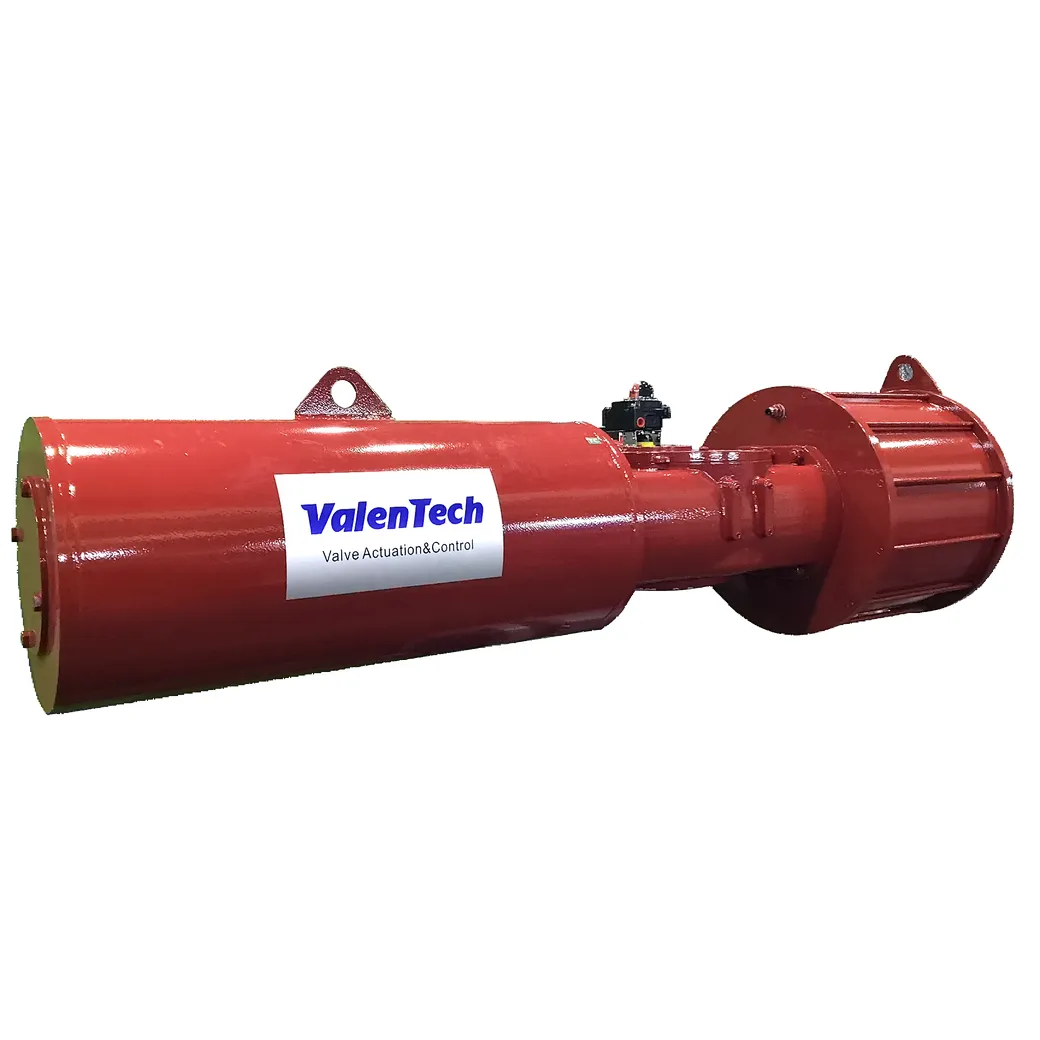


Middle East project supply
Why Are Rack and Pinion Actuators So Widely Used
Related Article