What Makes the Scotch Yoke Unique
How Does Spring-Return Scotch Yoke Actuator Work?
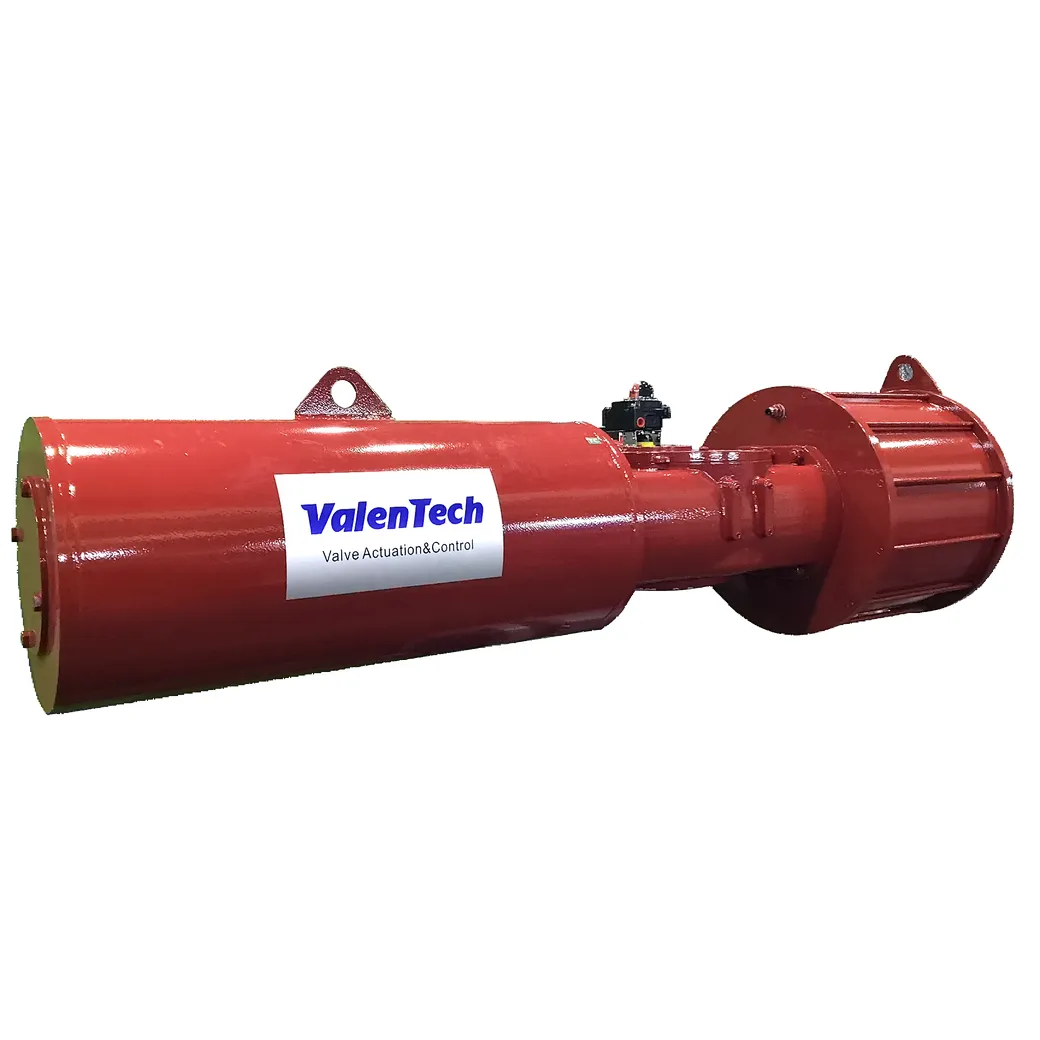
When it comes to automating quarter-turn valves in industrial processes, engineers and system integrators have several actuator options. Among them, the spring-return scotch yoke pneumatic actuator stands out for its unique combination of high torque output, fail-safe operation, and compact efficiency.
For B2B buyers evaluating automation solutions — especially in oil & gas, water treatment, chemical processing, or power generation — understanding why this specific type of actuator is chosen over alternatives can mean the difference between a reliable system and one that fails under pressure.
Let’s explore the real-world advantages of spring-return scotch yoke actuators, how they work, and when they’re the best choice for your application.
What Is a Spring-Return Scotch Yoke Actuator?
A scotch yoke actuator converts linear piston motion into rotary output using a slotted yoke mechanism connected to a rotating shaft. Unlike rack-and-pinion designs, which use gears, the scotch yoke uses a pin attached to a piston that slides within a yoke slot, translating straight-line movement into smooth 90° rotation.
In a spring-return version:
- Compressed air (typically 60–100 psi, as noted in Valen Tech Co., Ltd.'s guide) powers the actuator in one direction.
- A set of powerful internal springs automatically returns it to its original position when air pressure is released.
This makes it a single-acting actuator, where only one stroke is powered by air.
How Does It Work?
Here’s how it operates step-by-step:
1. Powered Stroke (e.g., Open the Valve)
- Air enters the cylinder, pushing the piston forward.
- The piston's pin engages with the yoke, forcing the output shaft to rotate (usually 90°).
- The valve opens.
During this phase, the return springs are compressed, storing mechanical energy.
2. Spring Return Stroke (e.g., Close the Valve)
- When the control signal stops and air exhausts from the cylinder…
- The stored energy in the springs pushes the piston back.
- The yoke rotates the shaft in reverse, closing the valve.
No external power required — just physics doing its job.
This design delivers maximum torque at the start of each stroke, which is ideal because most valves require the highest force to unseat or seal.
Why Choose a Spring-Return Design?
Because safety and reliability matter.
In many industrial applications, you don’t just want a valve to close — you need it to close when something goes wrong: a power failure, control system crash, or emergency shutdown.
That’s where fail-safe functionality becomes non-negotiable.
A spring-return actuator ensures that if the air supply fails, the valve will automatically move to a safe position — typically closed (fail-closed) or open (fail-open), depending on configuration.
This is critical in:
- Emergency isolation systems
- Fire protection lines
- Toxic chemical handling
- Overpressure relief circuits
Without this feature, a loss of air could leave a hazardous process running unchecked.
Compare that to double-acting actuators, which hold their last position (“fail-last”) — potentially dangerous unless backed up by complex auxiliary systems.
The spring-return model provides inherent safety, built right into the hardware.
What Makes the Scotch Yoke Unique?
While both rack-and-pinion and scotch yoke actuators perform quarter-turn motion, the scotch yoke has distinct performance characteristics that make it ideal for certain applications.
✅ 1. High Torque Output at Starts and Ends of Stroke
One of the biggest advantages of the scotch yoke is its torque profile.
Due to the geometry of the yoke mechanism:
- Torque is highest at the beginning and end of the stroke
- It tapers slightly in the middle
Why does this matter?
Because most valves — especially ball and butterfly valves — require the greatest force to:
- Break away from a seated position (initial opening)
- Achieve tight shutoff (final closing)
The scotch yoke delivers peak torque exactly when it’s needed most.
Rack-and-pinion actuators, by contrast, offer more uniform torque throughout the stroke — great for some uses, but less optimized for typical valve dynamics.
✅ 2. Compact Size for High-Torque Applications
Scotch yoke actuators pack a lot of force into a relatively small housing.
Since torque multiplication comes from mechanical leverage rather than gear ratios, these actuators can generate high output without requiring large motors or bulky components.
This makes them ideal for space-constrained installations or retrofit projects where existing mounting dimensions must be maintained.
✅ 3. Fewer Moving Parts = Greater Reliability
With no gears to mesh, wear, or misalign, the scotch yoke design reduces friction points and maintenance needs.
Fewer wearing surfaces mean:
- Longer service life
- Less need for lubrication
- Lower risk of internal binding
And since the entire mechanism is sealed within an aluminum or stainless steel housing, it resists dust, moisture, and corrosion — perfect for harsh environments.
When Should You Use a Spring-Return Scotch Yoke Actuator?
You should consider this actuator type if your application involves any of the following:
| Requirement | Why It Fits |
|---|---|
| Fail-safe operation | Springs ensure automatic return on air loss — essential for safety systems |
| High starting torque | Ideal for tight-sealing or high-pressure valves |
| Harsh or explosive environments | No sparks; compatible with Class I Div 1 areas |
| Limited installation space | High torque in compact footprint |
| Process simplification | Eliminates need for backup power or solenoid logic |
Common industries include:
- Oil refineries and pipelines
- Water and wastewater plants
- Chemical reactors
- Steam boiler controls
- LNG terminals
If your priority is reliability during emergencies, not just everyday operation, then a spring-return scotch yoke actuator isn’t just smart engineering — it’s responsible engineering.
Are There Any Drawbacks?
Every technology has trade-offs.
❌ Not Ideal for Frequent Cycling
Because the springs cycle every time the actuator moves, repeated operation leads to mechanical fatigue over time. For high-cycle automation (e.g., packaging lines), a double-acting actuator is usually preferred.
❌ Limited Modulation Without Positioner
Like all pneumatic actuators, basic models are on/off devices. To achieve modulating control (e.g., 50% open), you’ll need to add a pneumatic positioner that uses a 3–15 psi control signal (another key concept from Valen Tech’s article).
Once equipped, however, even a spring-return actuator can provide precise positioning — while still retaining its fail-safe capability.
Safety, Simplicity, and Strength
The spring-return scotch yoke pneumatic actuator combines three vital qualities for industrial automation:
- Safety: Automatic return on failure
- Strength: Maximum torque where valves need it most
- Simplicity: Robust mechanical design with minimal complexity
It’s not always the right choice — but when safety, sealing force, and reliability are paramount, few actuators match its effectiveness.
At Valen Tech Co., Ltd., we understand that choosing the right actuator isn’t just about specs — it’s about matching technology to real-world risks and requirements.
Whether you're designing a new process line or upgrading an aging system, our team is here to help you select the optimal solution.
👉 Explore our range of scotch yoke and other pneumatic actuators
👉 Contact us for technical consultation or custom configurations
Because in critical operations, peace of mind starts with the right actuator.




Iraq Oil Gas Petrochemicals Exhibition 2026
Why Use a Spring-Return Scotch Yoke Pneumatic Actuator
Related Article