What is the Key Limitations of a Scotch Yoke Actuator
Table of Contents
What Is a Scotch Yoke Actuator—and Why Does This 400-Year-Old Mechanism Still Power Critical Modern Systems?
At first glance, it seems almost paradoxical: in an age of smart servos, AI-driven motion control, and electrified everything, one of the most reliable actuators in heavy industry traces its roots not to Silicon Valley, but to 17th-century mechanical ingenuity. The Scotch Yoke—named not for its origin, but for its historical association with Scottish engineering—has quietly powered everything from oilfield valves to aerospace test rigs for centuries.
But what exactly is a Scotch Yoke actuator? Why do engineers still choose this seemingly simple mechanism over high-tech alternatives? And where does it truly shine in today’s demanding applications? Let’s unpack this elegant, forceful, and enduring motion solution—one question at a time.
What Exactly Is a Scotch Yoke Actuator—Beyond the Textbook Sketch?
At its core, a Scotch Yoke actuator is a mechanical motion converter that transforms rotary input (typically from a motor or pneumatic vane) into high-force, linear output—but with a distinctive kinematic signature: pure sinusoidal motion with constant torque-to-force efficiency.
Unlike screw-driven linear actuators that trade speed for force via mechanical advantage, the Scotch Yoke achieves force multiplication through direct mechanical leverage. It consists of three key elements:
- A rotating input shaft with an offset pin or crank
- A slotted yoke (a rectangular or cylindrical block with a transverse slot)
- A linear output rod rigidly attached to the yoke
As the input shaft rotates, the pin slides within the slot, forcing the yoke—and thus the output rod—to move in a straight line. The stroke length is precisely twice the crank radius, making the geometry inherently deterministic and repeatable.
While often associated with pneumatic or hydraulic power, modern Scotch Yoke actuators increasingly integrate electric servomotors, blending classical mechanics with digital control.
How Does Scotch Yoke Actuator Generate High Torque-to-Force Conversion—And Why Is That Unique?
The Scotch Yoke’s brilliance lies in its constant mechanical advantage throughout the stroke—unlike linkages or cams, which suffer from dead centers or variable leverage.
The linear force (F) produced is given by:
F = T / (r × cos(theta))
Where:
- T = input torque
- r = crank radius (half the stroke length)
- theta = crank angle measured from the mid-stroke position
Critically, at mid-stroke (theta = 0 degrees), cos(theta) = 1, so F = T / r—this is the point of maximum mechanical advantage. At end-of-stroke (theta = ±90 degrees), the theoretical force would approach infinity, but in practice, torque demand drops to zero because the pin’s motion becomes perpendicular to the force direction.
This creates a natural torque profile: high force where it’s needed most (mid-stroke for valve sealing), and low torque at travel extremes—perfect for quarter-turn valves like ball or butterfly valves that require high seating torque but minimal running torque.
Compared to rack-and-pinion or worm-gear actuators, the Scotch Yoke delivers 20–30% higher output torque for the same input, with fewer moving parts and no backlash.
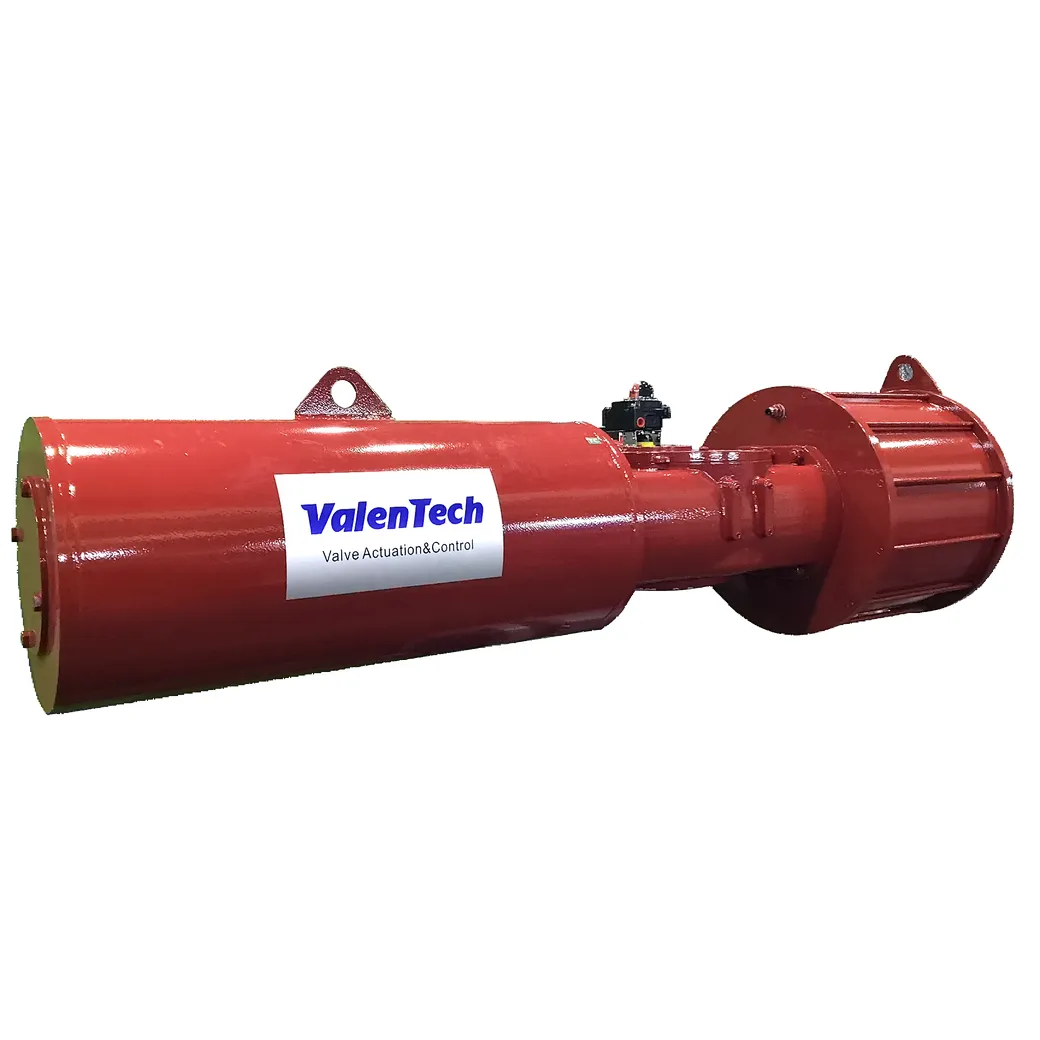
What’s Inside a Modern Scotch Yoke Actuator—and How Is It Built for Extreme Duty?
While the concept is ancient, today’s industrial Scotch Yoke actuators are feats of precision engineering:
-
Housing: Massive ductile iron or stainless steel casings, often rated for ASME B16.10 or API 607/6FA fire-safe standards. Pressure-containing cavities are hydrostatically tested to 1.5× working pressure.
-
Yoke & Slot: Ground and hardened (50–55 HRC) to resist galling. The slot features low-friction liners (e.g., PTFE-bronze composites) or roller bearings in high-cycle versions to minimize wear.
-
Sealing System: Multi-stage labyrinth seals, O-rings, and API 622-compliant stem packing prevent fugitive emissions—even in sour service (H₂S environments).
-
Power Options:
- Pneumatic: Double-acting cylinders or spring-return for fail-safe operation.
- Hydraulic: For ultra-high torque in subsea or high-pressure gas applications.
- Electric: Integrated servomotors with planetary gear reducers, enabling precise torque control and position feedback.
-
Accessories: Limit switches, position transmitters (4–20 mA or HART), partial stroke testing (PST) modules, and solenoid pilot valves for ESD (Emergency Shutdown) integration.
This rugged construction allows Scotch Yoke actuators to operate reliably in -50°C Arctic fields or +200°C refinery environments—often for decades without overhaul.
Why Is It the Gold Standard for Quarter-Turn Valves in Oil, Gas, and Power?
Because valve torque requirements are not uniform—and the Scotch Yoke matches them perfectly.
- Ball and butterfly valves need high break-to-open and seal-to-close torque (to overcome seat friction and ensure bubble-tight shutoff) but very low running torque during mid-stroke travel.
- The Scotch Yoke’s sinusoidal torque profile aligns naturally with this demand: peak torque at 0° and 90° (valve closed/open), minimal torque at 45° (mid-travel).
In contrast:
- Rack-and-pinion actuators deliver constant torque—wasting energy and requiring oversized motors.
- Electric multi-turn actuators with gearboxes introduce backlash, reducing shutoff reliability.
Moreover, the Scotch Yoke’s inherently balanced design minimizes side loading on the valve stem—a critical factor in preventing stem seal leakage, the leading cause of fugitive emissions in process plants.
No wonder it dominates API 6D pipeline valves, FPSO turret moorings, and nuclear plant isolation systems.
How Does It Compare to Rack-and-Pinion or Worm-Gear Actuators?
It’s not just about torque—it’s about efficiency, reliability, and lifecycle cost.
| Feature | Scotch Yoke | Rack-and-Pinion | Worm Gear |
|---|---|---|---|
| Torque Density | Highest (direct leverage) | Moderate | Low (high friction) |
| Backlash | None (rigid yoke) | Present (gear mesh tolerance) | High (worm slip) |
| Efficiency | 85–95% (low sliding friction) | 70–85% | 40–60% |
| Wear Points | 1–2 (pin/slot) | Multiple (gear teeth, bearings) | High (worm/thread wear) |
| Fail-Safe Simplicity | Easy spring integration | Complex | Very complex |
| Stroke Consistency | Perfectly linear | Slight nonlinearity | Nonlinear |
For safety-critical, high-cycle, or high-torque applications, the Scotch Yoke’s mechanical simplicity becomes a reliability advantage—fewer parts mean fewer failure modes.
Can It Be Used with Electric Motors—Or Is It Stuck in the Pneumatic Age?
Far from obsolete, the Scotch Yoke is experiencing a renaissance in electrification.
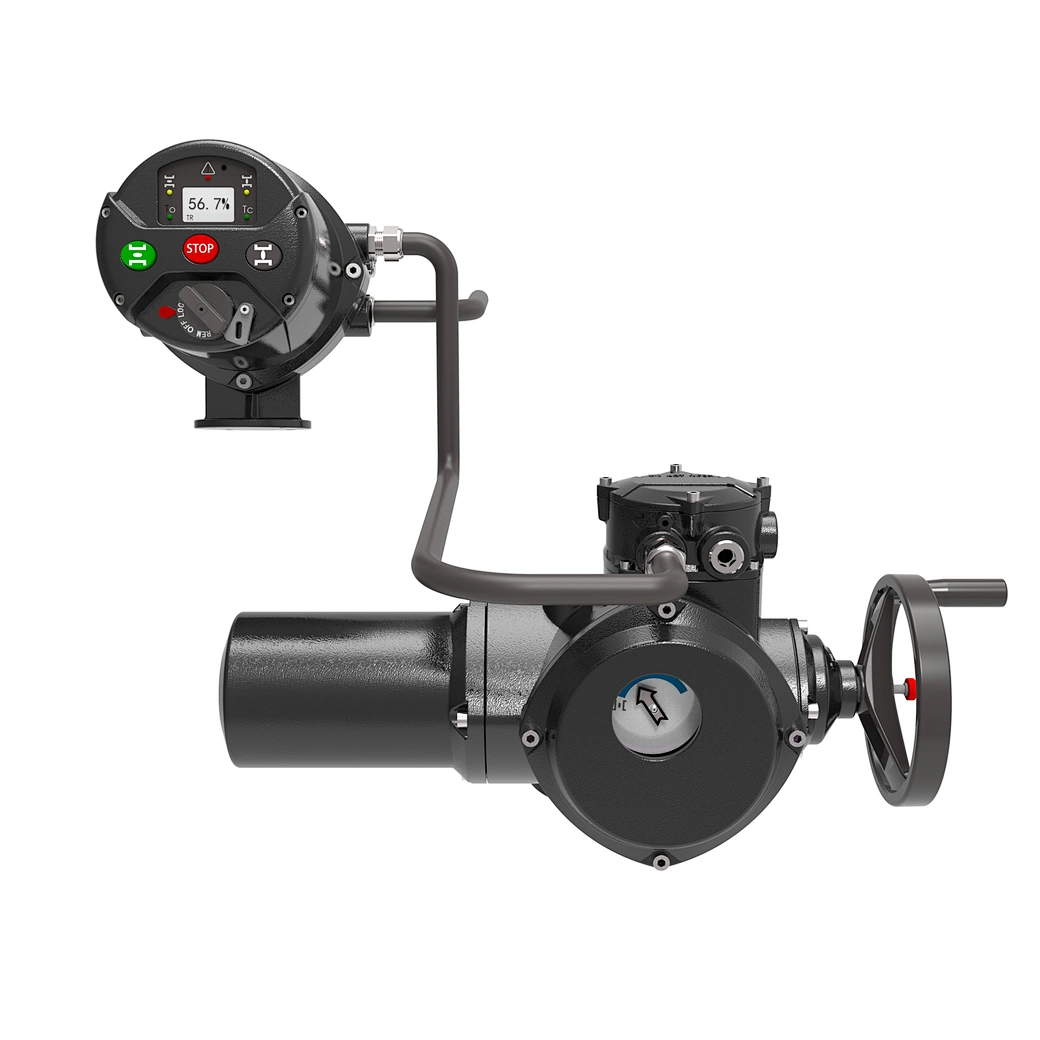
Modern electric Scotch Yoke actuators pair a high-torque servomotor or explosion-proof AC motor with a compact yoke mechanism, offering:
- Programmable torque profiling (e.g., soft seating to prevent valve damage)
- Real-time position and torque feedback via absolute encoders
- Integration with DCS/PLC systems via Profibus, Modbus, or HART
- Predictive maintenance through vibration and current monitoring
These are increasingly specified in offshore platforms (where hydraulic leaks are unacceptable) and hydrogen compression stations (where spark-free operation is mandatory). The result? The best of both worlds: the force density of classic mechanics + the intelligence of digital control.
What Are Its Key Limitations—and When Should You Not Use It?
No mechanism is universal. The Scotch Yoke has clear boundaries:
- Stroke Length: Practical only for short strokes (typically 90° rotation → linear strokes up to ~300 mm). Longer strokes require impractically large cranks.
- Speed: High-speed operation induces inertial forces in the yoke mass, limiting cycle rates to ~10–15 cycles/minute in heavy-duty versions.
- Size/Weight: For a given torque, it’s bulkier than a compact worm gear—challenging in space-constrained retrofits.
- Dynamic Control: While excellent for on/off or modulating service, it’s less suited than servo-linear actuators for micron-level positioning.
Thus, it’s ideal for valve automation, clamping, or test rigs—but not for pick-and-place robotics or precision machining axes.
How Do Engineers Ensure Long-Term Reliability in Harsh Environments?
Through robust design philosophy, not just stronger materials:
- Corrosion Resistance: 316SS or duplex housings, nitrided pins, and ISO 22810-compliant coatings for marine atmospheres.
- Lubrication Strategy: Permanent grease packing in sealed yoke cavities, or oil-bath systems for continuous-duty units.
- Thermal Expansion Management: Differential expansion between yoke and housing is accommodated via slip-fit bearings or bimetallic clearances.
- Fatigue Analysis: FEA models simulate 100,000+ cycles to validate yoke slot stress concentrations.
- Certifications: Compliance with SIL 3 (IEC 61508), ATEX, NEMA 4X, and ISO 15848-1 for low-emission service.
Many units in North Sea platforms have operated over 30 years without major maintenance—proof that simplicity, when engineered well, endures.
Why Is This “Old” Mechanism Thriving in the Age of Digital Transformation?
Because elegance solves real problems. The Scotch Yoke isn’t clinging to relevance—it’s being re-adopted because it offers:
- Inherent fail-safety (spring-return in <5 seconds for ESD valves)
- Zero drift (no fluid compressibility or gear lash)
- Low lifecycle cost (no filters, no fluid changes, minimal spare parts)
- Intrinsic safety (no sparks in pneumatic versions)
In an industry moving toward sustainability and reliability, the Scotch Yoke’s mechanical honesty—no hidden inefficiencies, no software glitches—makes it a trusted partner for critical operations.
So—Why Should You Care About a 400-Year-Old Motion Trick?
Because engineering isn’t about novelty—it’s about fitness for purpose. The Scotch Yoke endures not out of nostalgia, but because it solves a specific problem better than any alternative: converting rotary motion into high, reliable, linear force with unmatched efficiency and simplicity.
In a world racing toward complexity, sometimes the wisest choice is the one that’s stood the test of centuries—not just trends. And in the demanding realms of energy, infrastructure, and safety, that quiet, powerful truth is still moving mountains—one precise stroke at a time.






How Do Actuators Work?
Top European Manufacturers of Quarter-Turn Pneumatic Actuators
Related Article